

Kenya and the International Organization for Migration are seeking to strengthen cooperation against human trafficking, improve protection of Kenyans abroad and enhance support for victims returning home.
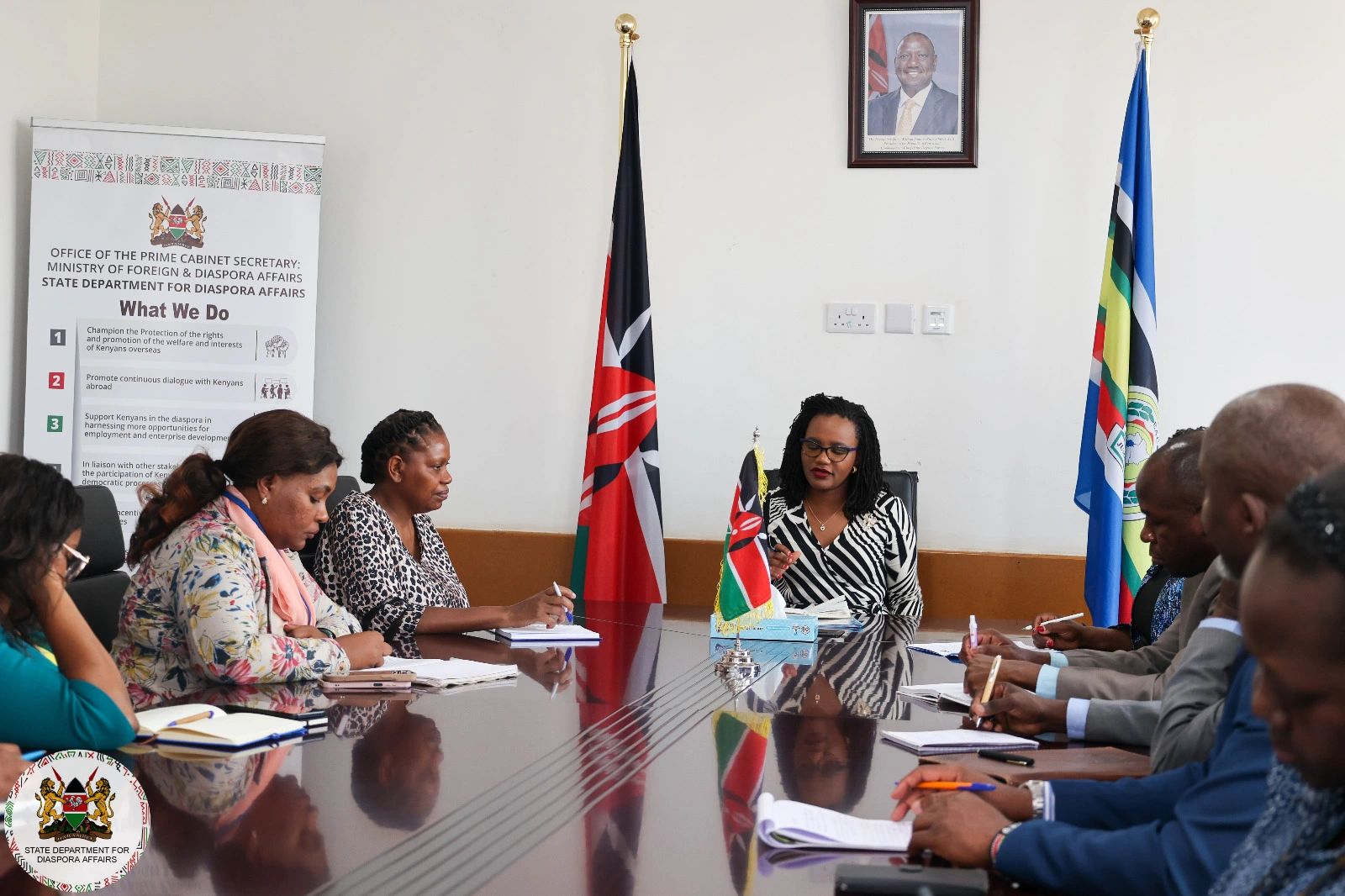
The renewed push emerged on Monday during a meeting between IOM Chief of Mission to Kenya Nomagugu Ncube and Diaspora Affairs Principal Secretary Roseline Njogu.


The two officials discussed measures to promote safe labour migration and hold recruitment agencies implicated in trafficking accountable.
The State Department of Diaspora Affairs said discussions also explored the reintegration of rescued trafficking victims, grassroots awareness campaigns and plans to convene a high-level stakeholders’ forum on human trafficking.
“They further discussed collaboration in the forthcoming commemoration of International Migrants Day and the rollout of the Kenya Diaspora Impact Platform,” the department said.
It added that the meeting reaffirmed the commitment of both the State Department for Diaspora Affairs and IOM to strengthening partnerships that promote safe migration and safeguard the rights, and welfare of Kenyans at home and abroad.
This comes amid growing international concern over gaps in protection systems for vulnerable people, with the UN Refugee Agency UNHCR warning that declining resources are weakening safeguards against exploitation and leaving vulnerable populations without essential support.
The 2026 Protection Eroded: The Human Cost of Underfunding report 2026, says underfunding is increasing protection risks for forcibly displaced people, including exposure to trafficking and exploitation when registration, documentation and other essential services are disrupted.
Although the report focuses on refugees, internally displaced people and stateless populations, its findings underscore the importance of functioning protection systems and support services for people vulnerable to exploitation.
The Kenya-IOM discussions placed particular emphasis on strengthening accountability for recruitment agencies implicated in trafficking, a key concern in efforts to ensure that people seeking employment opportunities abroad are not exposed to exploitative practices.
Safe and regular labour migration was also identified as an area for collaboration, alongside initiatives to equip communities with information on the dangers of human trafficking and the available avenues for assistance.
The proposed grassroots sensitisation campaigns are intended to raise awareness of trafficking risks, while the planned high-level stakeholders’ forum could provide a platform for government agencies and other actors to discuss coordinated responses.
The two sides also considered cooperation in the return and reintegration of rescued victims, recognising that protection efforts extend beyond identifying and rescuing people from exploitative situations.
Reintegration support can help survivors rebuild their lives after returning home, while coordinated assistance can address the challenges they face as they seek to regain stability.
The meeting also discussed collaboration ahead of the forthcoming commemoration of International Migrants Day, which provides an opportunity to highlight migration issues and the rights and welfare of migrants.
The rollout of the Kenya Diaspora Impact Platform was another item on the agenda, linking the engagement to wider efforts to strengthen cooperation with Kenyans living abroad.
PS Njogu and Ncube reaffirmed their commitment to partnerships aimed at promoting safe migration and safeguarding the rights and welfare of Kenyans at home and abroad.
The meeting was attended by Ambassador Hellen Gichuhi, Secretary for Diaspora Welfare and Partnerships; Dr David Katiambo, Director of Welfare and Rights; and officials from IOM Kenya and the State Department for Diaspora Affairs.