
Kenya has stepped up diplomatic efforts to secure the election of Supreme Court judge Njoki Ndung’u to the International Criminal Court, with lobbying efforts in Europe’s capital.
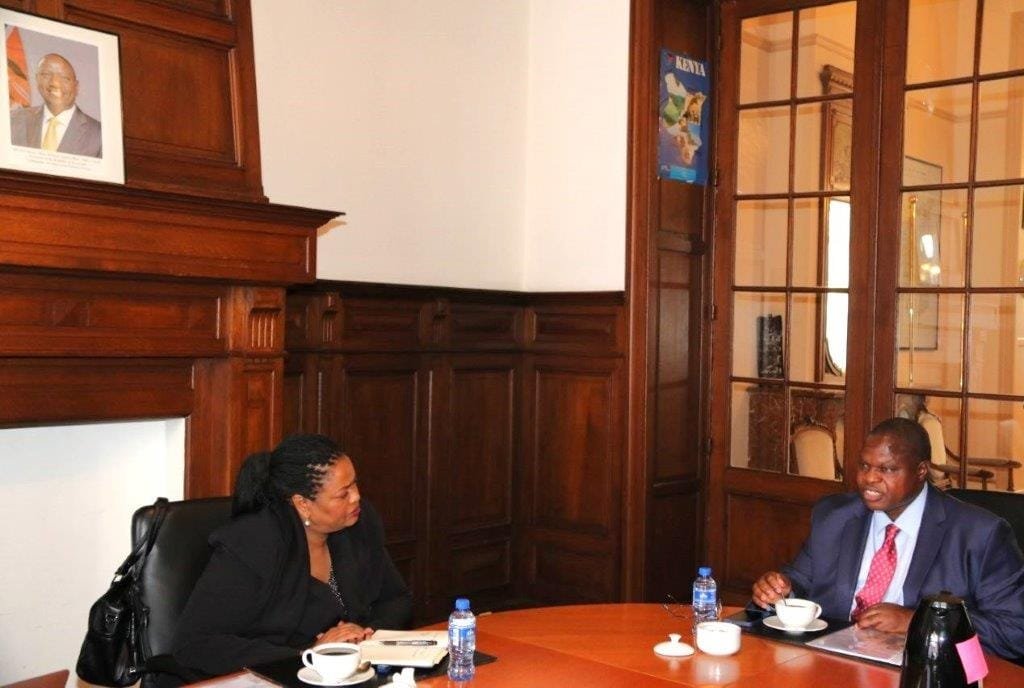
The Supreme Court judge arrived in Brussels on Monday for a four-day engagement with diplomatic missions to mobilise support for her candidature.
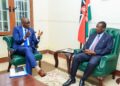
Kenya’s Ambassador to Belgium Joash Maangi said he had welcomed Justice Ndung’u to Brussels as she continues her campaign for a seat on the international court.
“I was pleased to welcome Lady Justice Njoki Ndung’u, Kenya’s candidate for election as Judge of the International Criminal Court, who is in Brussels for a four-day visit to engage with diplomatic missions and mobilise support for her candidature,” Amb Maangi said.
In a statement, Maangi cited her experience at Kenya’s Supreme Court, expertise in constitutional law and record in human rights advocacy as key qualifications for the position.
He said her election would bring an experienced African jurist to the court, with a commitment to strengthening its work and ensuring victims remain at the centre of justice.
The Brussels visit is part of a broader diplomatic campaign by President William Ruto’s administration to rally support for Kenya’s candidates to international judicial institutions.
Justice Ndung’u is seeking election to the ICC, which prosecutes individuals accused of genocide, crimes against humanity, war crimes and the crime of aggression.
Kenya is simultaneously campaigning for judge Phoebe Okowa to secure a full nine-year term at the International Court of Justice.
ICJ is the United Nations’ principal judicial organ, which settles legal disputes between states and gives advisory opinions on legal questions referred to it.
The two campaigns have been coordinated through Kenya’s diplomatic missions and bilateral engagements with foreign governments.
CAMPAIGN GATHERS PACE
Kenya’s lobbying for Justice Ndung’u have been gathering pace, with senior government officials, foreign affairs officials and President Ruto personally engaging foreign leaders to secure support.
In May, during the inaugural Africa Forward Summit in Nairobi, President Ruto introduced Justice Ndung’u to French President Emmanuel Macron and other African leaders, including Côte d’Ivoire’s Alassane Ouattara, Liberia’s Joseph Boakai and Sierra Leone’s Julius Maada Bio, while seeking support for her candidature.
The campaign extended to Addis Ababa in July, where Prime Cabinet Secretary and Foreign Affairs CS Musalia Mudavadi used bilateral meetings on the sidelines of the African Union’s 49th Ordinary Session of the Executive Council to lobby for both Kenyan candidates.
Mudavadi sought support from Cameroon’s Foreign Affairs Minister Lejeune Mbella Mbella, Rwanda’s Foreign Affairs Minister Olivier Nduhungirehe and Libya’s acting Foreign Affairs Minister Al-Taher Salem Al-Baour.
Justice Ndung’u also addressed the AU ministerial committee on African candidatures, outlining her experience in prosecution, Parliament, international engagements and the Kenyan Judiciary.
On July 17, a delegation led by Rose Wacuka, chief of staff in the Office of the Chief Justice, travelled to Brussels to advance Justice Ndung’u’s campaign.
Maangi has described Brussels as an important diplomatic platform for engaging potential supporters, given its concentration of international organisations, bilateral embassies and countries party to the Rome Statute, the treaty that established the ICC.
In June, Foreign Affairs Principal Secretary Korir Sing’Oei also appealed to members of the diplomatic corps in Nairobi to support Kenya’s candidates for the ICC and ICJ, linking the campaigns to the country’s commitment to international law and multilateral cooperation.
Parallel campaign for ICJ seat
Kenya’s simultaneous pursuit of positions at the ICC and ICJ has broadened its diplomatic campaign, with the government seeking to strengthen the country’s representation in international judicial institutions.
Justice Okowa is seeking a full term at the ICJ for the 2027–2036 period after being elected in November 2025 to fill a casual vacancy on the court.
Kenya formally launched her candidature in January 2026, with the Foreign Affairs ministry subsequently announcing that 26 countries had co-nominated her, providing a measure of international support for her campaign.
The ICJ election is scheduled for November 3, 2026, while the ICC election is due in December, putting both campaigns on a tight diplomatic timetable.
The two contests are separate, involving different courts, mandates and electoral processes. The ICJ election is conducted by the UN General Assembly and Security Council, while ICC judges are elected by the Assembly of States Parties to the Rome Statute.
The elections will be critical in testing Kenya’s reach of its diplomatic network and its ability to translate bilateral engagements into support at international level.
Kenya for the second time failed to secure the Africa Union Commission chairship in February 2025, and has also failed to secure wins at the World Trade Organisation as well as International Fund for Agricultural Development Kenya bid in July 2022.