
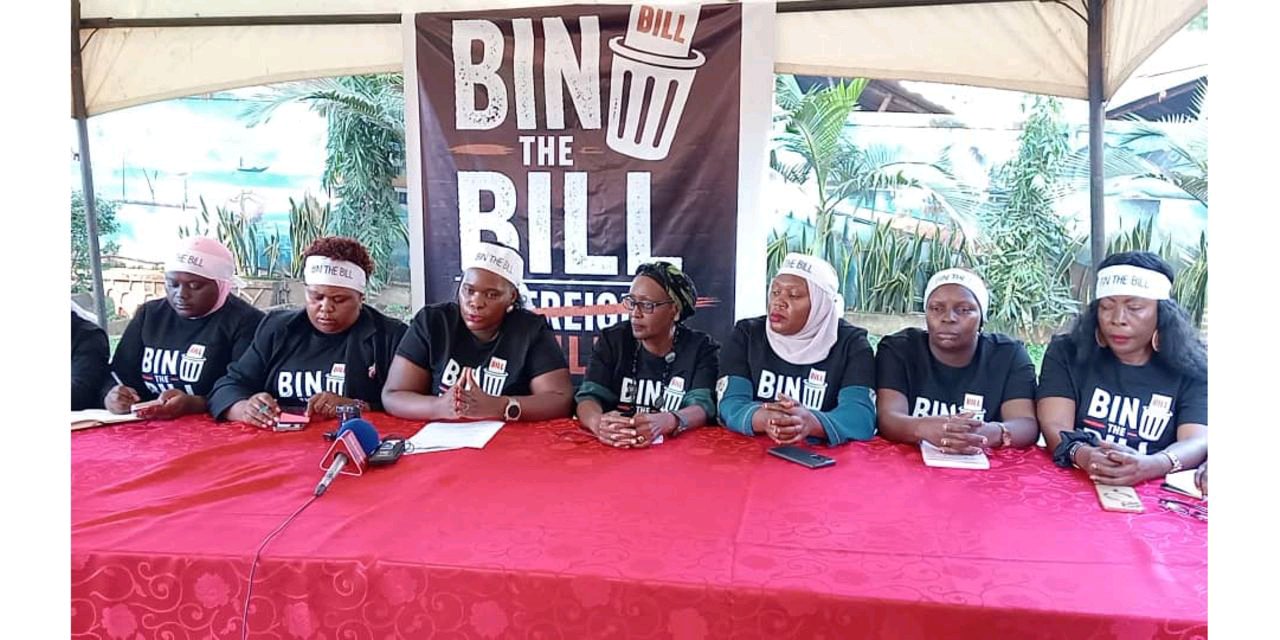
Uganda’s Parliament is considering the Protection of Sovereignty Bill, 2026, a proposed law that, if enacted in its current form, could significantly reshape not only the country’s civic space but the practice of journalism itself.
While the Bill has largely been framed as a regulatory tool targeting foreign influence on non-governmental organisations, a closer scrutiny suggests its reach extends far deeper. An analysis of the proposed law places journalists, media support organisations and even freelance reporters squarely within its scope, redefining them as potential subjects of state security oversight rather than independent actors.
The Bill expands the definition of an “agent of a foreigner.” Any individual or organisation that is “directly or indirectly” funded, supervised or supported by a foreign entity, including donors, international NGOs or multilateral institutions, could fall under this classification. For a media ecosystem where training programmes, reporting grants and safety initiatives are often donor-supported, this provision alone could fundamentally alter how journalism operates.
In practical terms, this means that a freelance journalist receiving a fellowship, a newsroom benefiting from training support, or a media development organisation running donor-funded programmes could all be required to register with authorities as foreign agents. The designation carries not just administrative implications, but reputational and legal risks that could discourage participation in such initiatives altogether.
The Bill further introduces a mandatory registration and vetting regime under the Ministry of Internal Affairs. Organisations and individuals would be required to disclose detailed information about their funding sources, staff, and activities, and undergo security-led due diligence processes. Approval could be denied or revoked on broadly defined grounds such as being deemed “not fit and proper” or posing a “security threat,” with limited clarity on oversight or avenues for appeal.
For media organisations, this creates a layer of operational uncertainty. Registration delays or refusals could disrupt ongoing programmes, while the absence of clear safeguards raises concerns about the independence of the process.
Equally consequential are the proposed restrictions on funding. Foreign funding above a specified threshold would require ministerial approval, alongside mandatory public disclosure of sources. Penalties for non-compliance are severe, including substantial fines, long-term imprisonment, and forfeiture of funds. For media development organisations that rely on timely and flexible funding — particularly during elections or in response to journalist safety needs — such constraints could prove debilitating.
According to Human Rights Watch, the bill emulates laws adopted in recent years by other rights-abusing governments, which have been deemed to violate international law.
“The bill is part of a broader campaign by the Ugandan government to clamp down on free expression and peaceful assembly, that has included arresting and bringing criminal charges against political opponents and their supporters, as well as other critics of government officials,” HRW said in a statement on. April 23.
Already, HRW noted, the 2016 Non-Governmental Organisations Act gives the government broad powers to suspend, blacklist, or revoke organizations’ licenses, and provides for excessive punitive measures for staff.
In its cautionary statement on April 20, Uganda Law Society warned that the Bill is designed to crush free speech, and turn ordinary criticism of government policy into the crime of “economic sabotage.”
“It turns Ugandans living abroad into “foreigners.” It cuts off funding to independent schools, hospitals, media and NGOs. Its rules are so vague and overbroad that the Government can jail almost anyone it dislikes. This is exactly the kind of law our own courts have consistently thrown out as unconstitutional,” President of Uganda Law Society Isaac Ssemakadde, SC, said.
Beyond funding and registration, several provisions intersect directly with routine journalistic work. The Bill prohibits influencing government policy or shaping public opinion against government positions without prior approval. This automatically raises questions about the legality of investigative reporting, policy analysis and public-interest journalism.
Election coverage could also be affected, with broad restrictions on influencing electoral processes potentially encompassing civic education, observation reporting and accountability journalism, especially where donor support is involved.
Perhaps most contentious is the clause criminalising the publication of information deemed to “weaken or damage the economic system.” In a context where reporting on corruption, public finance, or economic mismanagement is a core function of the media, the ambiguity of this provision could expose journalists to accusations of economic sabotage.
These measures undermine the freedom and independence of the media, and reinforce concerns about increased surveillance and legal pressure on newsrooms.
As a result, media houses and journalists may self-censor to avoid legal exposure, investigative reporting could decline, and organisations may scale back programmes that are perceived as sensitive.
The sustainability of independence media is also likely to be negatively affected, coming at a time media is struggling with revenue streams.
The impact on journalist safety is also notable, not necessarily through direct physical threats, but through heightened legal and administrative risks.
Committee to Protect Journalists has warned that the. provisions in the Bill could be used to imprison journalists critically reporting on economics, foreign policy, or elections for up to 20 years. It will also limit foreign media funding to about $100,000, and subject newsrooms to intrusive state oversight.
“Uganda’s Protection of Sovereignty Bill risks unleashing a dangerous legal weapon that authorities can easily turn against the press, under the guise of regulation and national security,” CPJ Africa Program Coordinator Muthoki Mumo said.
“If this bill is not stopped, journalists reporting in a manner that does not please President Yoweri Museveni’s 40-year-old administration could find themselves smeared with accusations of ‘economic sabotage’ and jailed as ‘agents of foreigners.’”
Journalistic organisations and associations who receive support to capacity build journalists are also facing potential hardships. Training programmes, reporting grants, youth digital initiatives and broader press freedom advocacy efforts could all face disruption. The Bill also complicates long-term plans, including partnerships and funding models tied to media development infrastructure.
And with te regional integration, the implications are likely to carry regional significance. Many media organisations across East Africa operate within interconnected funding and training ecosystems, often supported by international partners. A regulatory model that tightly restricts foreign-linked activity in one country could influence policy debates elsewhere, or affect cross-border collaborations and regional reporting initiatives.
The Bill also raises broader constitutional and diplomatic questions, particularly around freedom of expression, association and access to information, principles that underpin not only national legal frameworks but also regional and international commitments.