

BY MACHARIA WANGUI
Hunter-gatherer communities have renewed calls for official recognition, accusing the government of discrimination, forced evictions and exclusion from basic services.


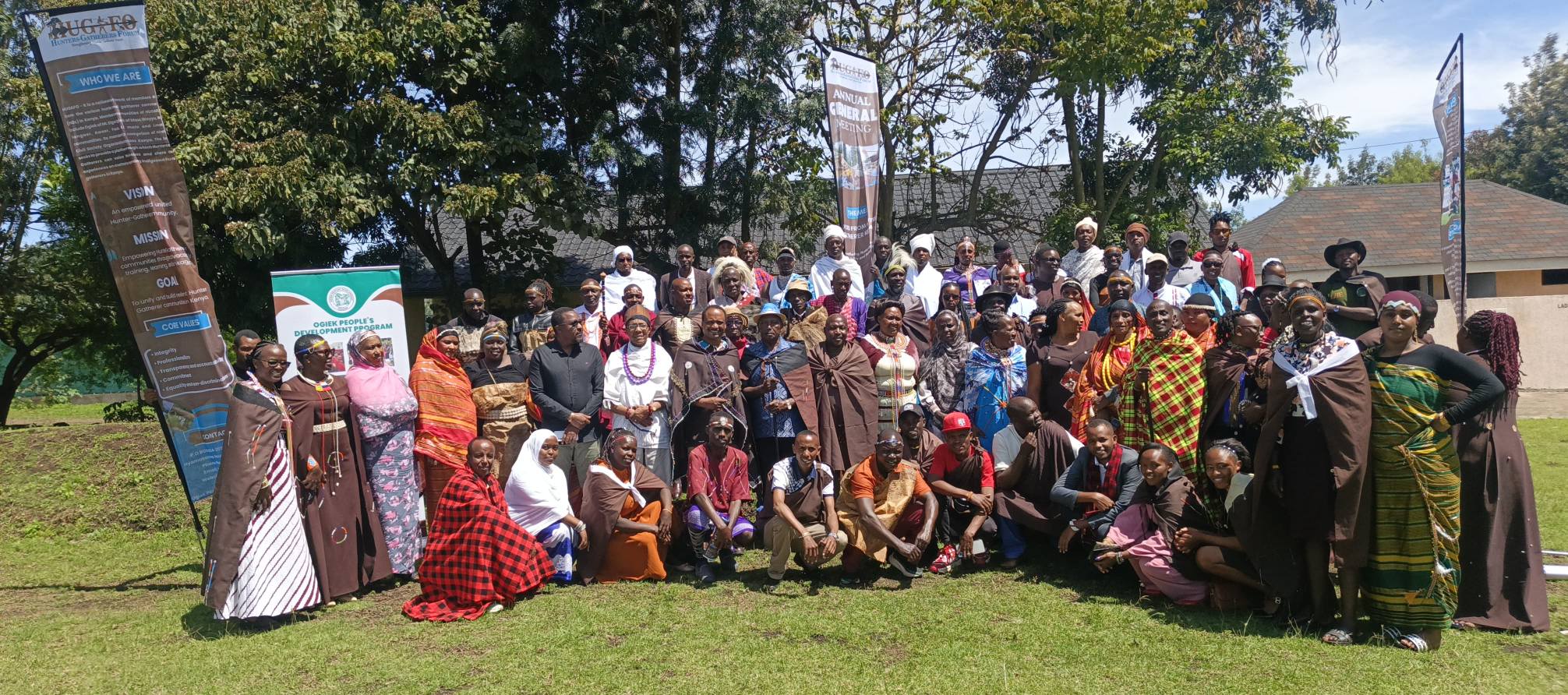
Speaking during the second Annual General Meeting of the Hunters and Gatherers Forum of Kenya (HUGAFO-K) in Nakuru on Friday, community leaders said groups living in forested areas continue to face systemic marginalisation despite constitutional protections.
The forum brought together representatives from communities including the Ogiek of the Mau Forest, Sengwer of Embobut, Waata of Marsabit, Aweer, Yaaku and El Molo.
Led by HUGAFO-K Secretary General and Ogiek People’s Development Programme Executive Director Daniel Kobei, members highlighted what they described as persistent injustices. These range from evictions and lack of legal recognition to limited access to healthcare, education and other public services.
“We are calling on the government to recognise hunter-gatherer communities, who are marginalised largely because their ancestral lands fall within forest areas. We continue to suffer evictions and endless litigation,” Kobei said.
Kobei argued that recognising these communities is not only a rights issue but also central to the full implementation of the Constitution. He noted that their political significance cannot be ignored, particularly in meeting the presidential vote threshold.
“The value of marginalised communities is high. No candidate can attain the constitutional threshold of 50 per cent plus one without every vote counting,” he said.
Former HUGAFO-K chairperson Dr Chris Galgalo of the Wayyu community echoed the concerns, citing a lack of representation in government, political parties and employment opportunities.
“We demand recognition and dignity. We matter, and if recognised, we can influence the country’s electoral matrix. Development cannot be achieved through discrimination,” Galgalo said.
Former presidential press aide Lee Njiru, who attended the meeting, criticised affirmative action policies targeting minority groups, arguing that they risk reinforcing stigma.
“Being a minority should not be equated with diminished citizenship,” Njiru said. “What is needed is equal access to facilities, amenities and opportunities to compete on a level playing field.”
Community representatives also raised concerns over conservation programmes, accusing donors and government agencies of sidelining indigenous populations, while implementing projects in their ancestral lands.
Elias Kimaiyo of the Sengwer community said conservation initiatives often lead to evictions instead of inclusion.
“There are billions allocated for conservation, yet hunter-gatherer communities are excluded. We should be part of conservation efforts, not victims of them,” Kimaiyo said.
Youth leaders at the forum also stressed the need for recognition and equal treatment. HUGAFO-K Vice Chairperson Judy Kipkenda said: “We exist, we are human, and we deserve to be treated like all other Kenyans.”
Livelihoods were also highlighted as a growing concern. Many hunter-gatherer communities depend on forest resources such as honey and game. However, members warned that deforestation is rapidly eroding these sources of income.
Simon Korir, a HUGAFO-K member, said honey production in the Mau Forest is declining due to extensive deforestation.
“Our livelihoods are under threat. Forest destruction is not only environmental—it is existential for our communities,” he said.
The government has gazetted December 18, 2026 as a national day for minority communities, to be marked in Marsabit county, where groups will showcase and celebrate their cultures.
However, participants at the Nakuru meeting said symbolic recognition must be matched with concrete policy action, including land rights protections, inclusion in decision-making, and equitable access to services.
The meeting was supported by the American Jewish World Service (AJWS) and brought together delegates from multiple counties.