

Nigerian businessman Aliko Dangote’s proposed $15–16 billion oil refinery in Lamu has opened a new front in Kenya’s energy debate, with climate campaigners warning the massive investment could lock the country into fossil fuels just as it seeks to build its clean-energy credentials.
Dangote is proposing a 700,000-barrel-per-day refinery in Lamu, with construction targeted to begin this year and completion expected around 2030.


President William Ruto has backed the proposal, arguing the refinery could help Kenya reduce its dependence on imported refined petroleum products.
But the project is facing growing scrutiny from climate campaigners, who say Kenya should be directing long-term investment towards renewable energy rather than expanding fossil-fuel infrastructure.
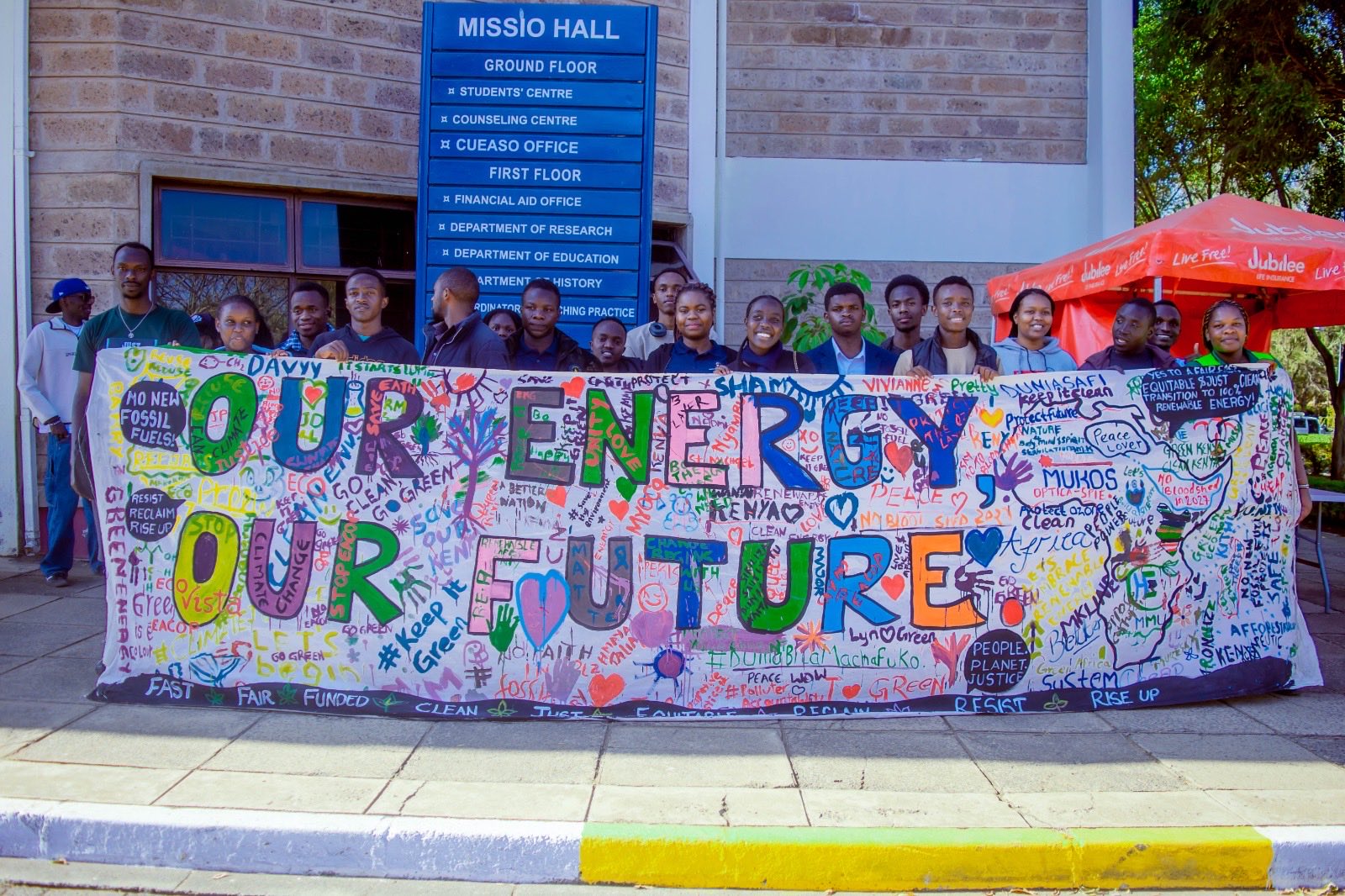
This emerged on Friday as Climate Action Network Africa (CAN Africa), alongside the Office for Justice, Peace and Integrity of Creation – Franciscans Africa, Kenya Wildlife Service, the Catholic University of Eastern Africa and other partners on Friday held a Climate Walk through Nairobi. The walk sought to amplify the call for a fair, fast and just transition away from fossil fuels and towards clean, renewable energy for all.
The campaigners singled out the expansion of fossil-fuel infrastructure in East Africa, including the proposed Lamu refinery, as evidence of what they see as a widening gap between climate commitments and investment decisions.
“We recognise that African countries are starting from very different energy realities, and some remain far more dependent on fossil fuels than others,” CAN Africa Campaign Lead Ajra Mohamed said.
“But Kenya already receives nearly four-fifths of the electricity supplied to its grid from renewable sources, giving it a strong foundation from which to move faster towards 100% clean renewable electricity.”
Mohamed warned that new fossil-fuel investments could commit Kenya to an energy pathway that becomes increasingly difficult to reverse.
“New long-term fossil-fuel investments risk pulling in the opposite direction,” she said, arguing that African governments should build on the continent’s renewable-energy potential rather than create another cycle of dependence on fossil fuels.
The Dangote proposal comes as the region is undergoing a major expansion of oil infrastructure.
Uganda is developing its oil fields while the 1,443km East African Crude Oil Pipeline linking Uganda to Tanzania’s Indian Ocean coast is nearing completion. The pipeline had reached 92.7 per cent completion by early September, according to the project company.
Uganda expects its oil developments to eventually reach peak production of about 230,000 barrels per day.
The Lamu refinery would give Kenya a major new role in the region’s petroleum industry, if implemented. With a proposed capacity of 700,000 barrels per day, it would be a substantial industrial undertaking, potentially positioning Kenya as a major refining and petroleum-products hub.
Ruto has presented the project primarily through the lens of energy security and reduced dependence on imported petroleum products.
The proposal, however, also faces questions around financing, crude supply, infrastructure and environmental concerns.
Those questions have taken on greater significance because of Kenya’s existing electricity mix.
Data from the Energy and Petroleum Regulatory Authority shows renewable sources accounted for 78.79 per cent of electricity supplied to the national grid between July and December 2025.
Renewables made up 80.60 per cent of installed generation capacity, while geothermal alone supplied slightly more than 40 per cent of electricity generated.
This has allowed Kenya to position itself as one of Africa’s renewable-energy leaders, particularly because of its extensive geothermal, wind, hydro and solar resources.
Climate campaigners now want the government to use that advantage to accelerate the transition to clean energy rather than expand the country’s fossil-fuel infrastructure.
At the Nairobi Climate Action, participants walked from the Kenya Wildlife Service headquarters along Langata Road to the Catholic University of Eastern Africa, where they held an artivism session depicting two competing energy futures.
One side represented continued fossil-fuel dependence, while the other promoted a transition to 100 per cent renewable energy.
The campaign formed part of the Global Week of Action to End Fossil Fuels, which began on September 14 and concluded this weekend.
The organisers are calling for an end to new fossil-fuel expansion, a rapid phase-out of existing fossil-fuel infrastructure and increased climate finance for developing countries.
Dangote’s proposed refinery represents a potentially transformative industrial investment at a time when the government is seeking to strengthen energy security, attract capital and expand manufacturing.
At the same time, its proposed scale raises difficult questions on how far Kenya should go in expanding its fossil-fuel economy, while positioning itself as a clean-energy leader.