
BY PAUL KURGAT
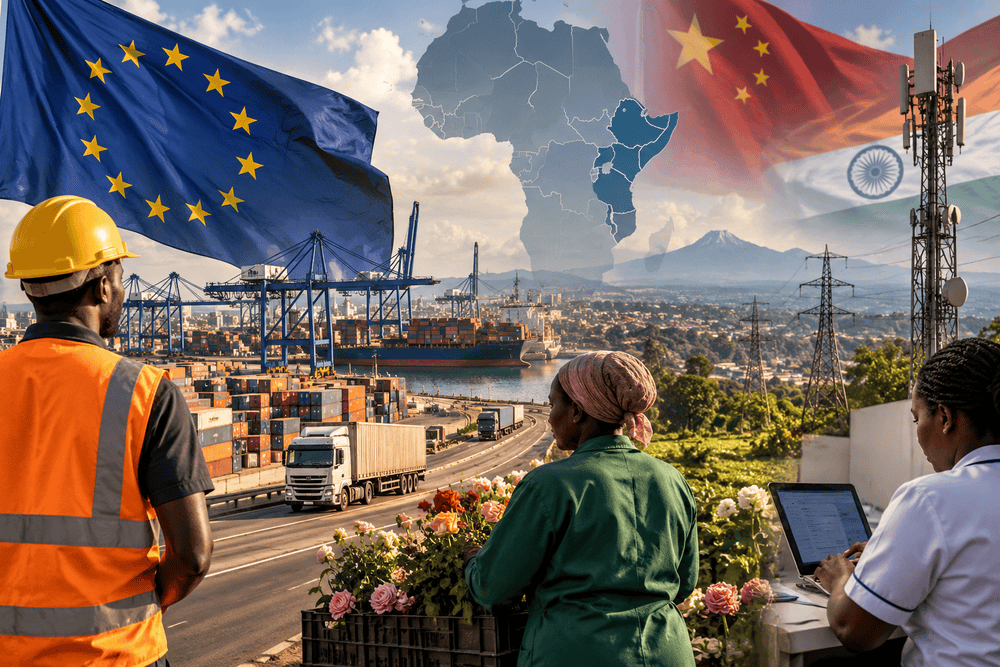
For a truck driver waiting to move cargo from Mombasa, a farmer in Naivasha trying to reach overseas markets, or a nurse in a rural clinic without reliable internet, geopolitics can seem distant.


Yet the struggle for influence between Europe, China and emerging powers is increasingly being fought through the roads, power lines and digital networks on which these livelihoods depend.
The European Union’s Global Gateway, launched in 2021, is more than a development programme. It is a foreign and security policy instrument designed to build resilient trade routes, reliable energy systems and trusted digital connections.
For Europe, supply-chain security matters. For East Africa, the more pressing question is whether these investments will create jobs, lower costs and improve daily life.
Disruptions in the Red Sea, tensions in the Horn of Africa and rising cyber risks have shown how a distant crisis can raise costs at an East African port or disrupt essential services. Investment and security can no longer be planned in separate rooms.
The arrival of EU Ambassador Andreas Peschke in Nairobi in September 2026 offers an opportunity to rethink the relationship. Peschke has identified trade, security, investment and multilateral cooperation as priorities.
I would propose what might be called a “Peschke Doctrine”—not an official EU doctrine, but a test for this new diplomatic chapter: Europe’s strategic interests and Kenya’s development priorities must advance together, or neither partnership nor investment will endure.
The stakes were visible in Naivasha this October, when Peschke discussed the FRESH Northern Corridor initiative to get Kenyan flowers and vegetables to international markets more efficiently. A farmer wants dependable transport and a fair price, not a geopolitical slogan.
In Kenya, Global Gateway supports the Kwa Jomvu–Mariakani road upgrade on the Northern Corridor and plans to expand high-speed connectivity to more than 3,000 public institutions.
In Tanzania, European partners are helping improve the Port of Dar es Salaam and develop the Kakono hydropower project. Uganda’s Nalubaale–Kiira hydropower rehabilitation is another regional initiative.
The Zambia–Tanzania power interconnector seeks to strengthen electricity trade between southern and eastern Africa. These are not merely construction projects; they are instruments of trade security, climate resilience and regional integration.
But Europe has entered a crowded field. China’s Belt and Road Initiative has reshaped Africa’s infrastructure ambitions, including Kenya’s railway investments. BRICS, enlarged to include Ethiopia and Egypt, is a diplomatic and economic grouping rather than a single infrastructure programme, but it signals that African states have more choices. India, Gulf investors and other emerging powers are also offering finance, markets and technology.
That competition need not frighten Kenya. It should strengthen our bargaining position. We should not be compelled to choose between Brussels and Beijing.
We should choose partnerships by the quality of their financing, technology transfer, environmental safeguards and long-term national benefits. Infrastructure should connect African economies, not trap them in rival geopolitical camps.
The greatest threat to Global Gateway may be neither China nor BRICS. It may be public mistrust. A road that bypasses local traders, a power project that displaces families without fair compensation, or a digital programme that excludes underserved communities can breed resentment even when foreign partners call it a success.
Public acceptance cannot be manufactured by ribbon-cutting ceremonies. The European Parliament itself has urged stronger local participation, transparency and accountability. That is sound advice.
This is where research must leave the library and enter the policy room. Our universities, think tanks and independent researchers should prepare concise, evidence-based policy briefs on each major project: Who pays? Who carries the debt? Who gets contracts and jobs? What happens to local businesses, women, young people and the environment? These assessments should inform county consultations, parliamentary oversight and diplomatic negotiations—not appear after disputes erupt.
Kenya also has a remarkable but underused resource: former ambassadors, high commissioners and senior diplomats. They have negotiated in difficult capitals, read changing alliances and learned that a handshake at a summit is only the beginning.
Working with researchers through the Foreign Service Academy, they could provide independent strategic assessments, mentor younger diplomats and help distinguish genuine opportunities from expensive promises.
Security in the twenty-first century is not only about armies and borders. It is also about whether ports function, electricity flows, information remains secure and citizens believe that international agreements serve them.
Global Gateway can help make East Africa more connected and more resilient. But its ultimate success will not be measured in European announcements or kilometres of tarmac. It will be measured in the dignity, opportunity and trust it delivers to African people.
The author is an expert consultant in foreign and security policy based at Moi University, Eldoret