• Careers
  • Advertise
  • Contact us
Monday, October 26, 2026
  • Login
DiploBrief
Advertisement
  • Home
  • News
  • Politics
  • Business
  • Foreign
    • EAC
    • Horn of Africa
    • AU
    • Middle East
    • China Briefs
  • Diaspora
  • Diplomat’s Corner
  • Untold Stories
No Result
View All Result
DiploBrief
No Result
View All Result
Home Middle East

Israel election: A new face, same politics of war

The Brief by The Brief
26th October 2026
in Middle East, Opinion
0
Israel election: A new face, same politics of war

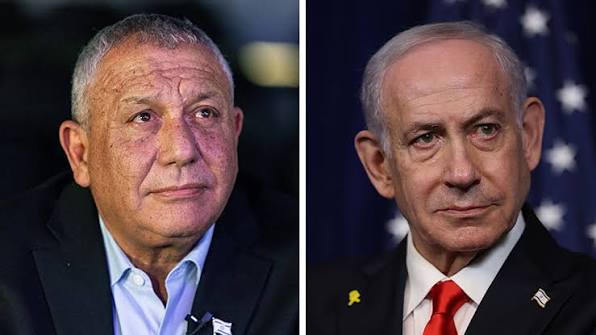
Polling published on Friday suggests Gadi Eisenkot (left) is in a tight race with incumbent Benjamin Netanyahu (right)

Share on FacebookShare on Twitter

BY GWYNNE DYER

According to the 1970s anarchist slogan, ‘No matter who you vote for, the government always gets in’.


Related posts

Kenya must turn Europe-China rivalry into development gains

Kenya must turn Europe-China rivalry into development gains

26th October 2026
Abiy Ahmed’s  Nobel Peace Prize and Ethiopia Cycle of War

Abiy Ahmed’s Nobel Peace Prize and Ethiopia Cycle of War

30th September 2026

That’s certainly true for the election in Israel on Tuesday, October 27, even if the winner is not Prime Minister Binyamin (‘Bibi’) Netanyahu himself. All the other party leaders, says Israeli journalist Anshel Pfeffer, are just ‘wanna-Bibis’.

Or rather, all the rest except one. Former general Gadi Eisenkot, the main opposition candidate, is the ‘anti-Bibi’, says Pfeffer. He’s a working-class hero who joined the army as a private and worked his way up to chief of staff of the Israel Defence Forces. He retired and went into politics only four years ago, he’s modest and honest, what’s not to love?

Eisenkot certainly stands out among the party leaders in terms of style, but not so much in terms of actual policies. He was realistic enough to know that ‘total victory’ over Hamas was not likely, but his ‘Dahiya’ strategy of causing “immense damage and destruction” (in Lebanon in the 2006 war) foreshadowed the cataclysm that the IDF has inflicted on Gaza since 2023.

He supports Jewish settlement in the occupied Palestinian territories and he opposes the ‘two-state solution’ to the Israeli-Palestinian conflict (as do all the wanna-Bibis). He wants a full investigation of the intelligence failures that enabled Hamas to commit the massacres of Jewish civilians on 7 October 2023, like every other party leader (except Netanyahu himself).

Moreover, even if Eisenkot won the largest number of seats in the Knesset (parliament) and was asked to form a government, he would have to form a coalition with other parties that are farther to the right than his own Yashar Party. The next Israeli government will probably be just as expansionist, and just as willing to go to war again, as the present one is.

How did it come to this? How did ‘gallant little Israel’ turn into the militaristic ‘dwarf superpower’ that torments the Middle East today? I don’t usually have recourse to ‘great man’ theories of history, and I don’t think that Binyamin Netanyahu is a great or even a good man, but he has had a huge influence on Israel and the entire Middle East.

You could make the shallowest dive possible into the past and explain Israel’s brutal current behaviour (see, for example, the recent revelations about killing Palestinian civilians in Gaza) as vengefulness for the massacres of Israelis by Hamas three years ago.

You could dig a little deeper and blame the deepening ethno-nationalism of the younger generation of Israelis, driven by their experience of many long, small, indecisive wars rather than the brief, infrequent and triumphant wars of their parents’ generation. (Their extremism often shocks their parents.)

Or you could go all the way back to the turning point of 1995, when unspoken collaboration between Israeli and Palestinian hard-liners, both opposed to the two-state solution, managed to kill the peace deal at a time when it really was within reach.

And every time Netanyahu is there, making sure that the fear never fades (he has been warning that Iran is on the brink of getting a nuclear weapon for 34 years now) and the threat of war always seems close. That’s his ticket to power, and it has made him prime minister of Israel for more than half of the past twenty-five years.

Incredibly, he is still in the running for prime minister in the current election campaign despite the fact that all the ugly details about his failure to foresee Hamas’s 2023 attack have been spilling out in the media.

He was given warnings about it well beforehand, with specific details, by Egypt’s intelligence chief Abbas Kamel and by Mohamed bin Zayed Al Nahyanian, the President of the United Arab Emirates. Kamel even flew to Israel to emphasise the urgency of the matter. Netanyhu did nothing about it, nor did he pass any of the warnings on to the IDF or Israeli intelligence.

Did he want the attack to happen (presumably underestimating its scale) in order to exploit it for some domestic political purpose? Did he just forget to mention it? There are many possible explanations, but none of them show him in a good light.

Yet Netanyahu is still there, trailing Eisenkot’s Yashar Party by a bit in the polls but definitely still in the race. The Israeli public knows about his little lapse of memory, but a great many of them don’t care. Some 46 percent  of Israeli voters think Netanyahu is best suited to be prime minister, compared to 29 per  cent for Eisenkot.

And 80 per cent would like to restart the war in Lebanon.

_______________________________

Gwynne Dyer’s new book is ‘Intervention Earth: Life-Saving Ideas from the World’s Climate Engineers’.  The previous book, ‘The Shortest History of War’, is also still available.

Tags: Benjamin NetanyahuGadi EisenkotIsrael Elections
Previous Post

How mistrust crippled Kenya’s mission in eastern DRC — ex-commander

Next Post

Kenya must turn Europe-China rivalry into development gains

The Brief

The Brief

Your platform for foreign, regional and diplomatic news and analysis

Next Post
Kenya must turn Europe-China rivalry into development gains

Kenya must turn Europe-China rivalry into development gains

Kenyans in Russia war crisis missing from Mudavadi’s Moscow agenda

Kenyans in Russia war crisis missing from Mudavadi’s Moscow agenda

Please login to join discussion
ADVERTISEMENT

YOU MAY ALSO LIKE

Mudavadi, Wetang’ula, Karua blast government for asking Kenyans stranded in China to pay for evacuation

Mudavadi, Wetang’ula, Karua blast government for asking Kenyans stranded in China to pay for evacuation

7 years ago
Sudan war: Ruto, Burhan term Jeddah process slow, to convene urgent IGAD Summit

Kenya-Sudan row escalates as Nairobi claps back at Burhan’s junta

1 year ago
We can’t disclose SGR contract to media, China Ambassador says

We can’t disclose SGR contract to media, China Ambassador says

7 years ago
Fairmont Norfolk hotel closes down, fires all employees over Covid-19 economic impact

Fairmont Norfolk hotel closes down, fires all employees over Covid-19 economic impact

6 years ago

BROWSE BY CATEGORIES

  • AU
  • Business
  • China Briefs
  • Climate change
  • Culture
  • Diaspora
  • Diplomat's Corner
  • EAC
  • Featured
  • Finance
  • Foreign
  • Horn of Africa
  • Lifestyle
  • Middle East
  • National
  • News
  • Opinion
  • Politics
  • Recent
  • Uncategorised
  • United Nations
  • Untold Stories

BROWSE BY TOPICS

AfDB Africa African Union Al Shabaab AU China Climate change coronavirus COVID-19 DP William Ruto DRC EAC Eastern DRC Ethiopia EU Horn of Africa IGAD Kenya Kenya diaspora M23 Mike Sonko Monica Juma Moussa Faki Musalia Mudavadi President Uhuru Kenyatta President William Ruto Raila Odinga Riek Machar Rigathi Gachagua RSF Russia Rwanda Rwanda-DRC Somalia Somaliland South Sudan Sudan Sudan war Trade Uganda Uhuru Kenyatta UN UNSC US William Ruto

POPULAR NEWS

  • UNFPA boss faces abuse of office, nepotism allegations

    UNFPA boss faces abuse of office, nepotism allegations

    0 shares
    Share 0 Tweet 0
  • The double-faced life of famed sharpshooter Dafton Mwitiki

    0 shares
    Share 0 Tweet 0
  • Ruto KDF changes signal next military chief

    0 shares
    Share 0 Tweet 0
  • Willy Bett new envoy to China, Peter Munyiri in India as President Ruto finally names diplomats

    0 shares
    Share 0 Tweet 0
  • Women, CAS political rejects biggest winners in Ruto’s envoy jobs

    0 shares
    Share 0 Tweet 0

DiploBrief

Your platform for foreign, regional and diplomatic news and analysis

Follow us on social media:

Tel: +254 769 256 833

Email : editor@thebrief.co.ke

About us

  • About Us
  • Advertise with us
  • Sponsored Post
  • Guest Writer
  • Careers
  • Contact us

Categories

  • AU
  • Business
  • China Briefs
  • Climate change
  • Culture
  • Diaspora
  • Diplomat's Corner
  • EAC
  • Featured
  • Finance
  • Foreign
  • Horn of Africa
  • Lifestyle
  • Middle East
  • National
  • News
  • Opinion
  • Politics
  • Recent
  • Uncategorised
  • United Nations
  • Untold Stories

Recent News

Kenyans in Russia war crisis missing from Mudavadi’s Moscow agenda

Kenyans in Russia war crisis missing from Mudavadi’s Moscow agenda

26th October 2026
Kenya must turn Europe-China rivalry into development gains

Kenya must turn Europe-China rivalry into development gains

26th October 2026
  • Privacy policy

Copyright© 2024 DiploBrief

No Result
View All Result
  • Home
  • News
  • Politics
  • Business
  • Foreign
  • Diaspora
  • Diplomat’s Corner
  • Untold Stories

Copyright© 2024 DiploBrief

Welcome Back!

Login to your account below

Forgotten Password?

Retrieve your password

Please enter your username or email address to reset your password.

Log In
imunify-bot-check