
The Lamu Port is finally stepping into its long-anticipated strategic role, as global shipping disruptions linked to the Middle East crisis drive high-value cargo to its berths.
In the clearest sign yet of shifting maritime patterns, the second car carrier MV Grande Florida docked at Lamu on Wednesday carrying 3,800 vehicles from Yokohama, Japan.


The vessel, operated by Grimaldi Group, was originally bound for Port of Jebel Ali I Dubai, UAE, but was diverted due to ongoing instability affecting traditional Gulf routes.
Its arrival brings the total number of vehicles handled at the port to over 4,200 within days, a notable surge for a facility that has long struggled to shake off concerns over underutilisation.
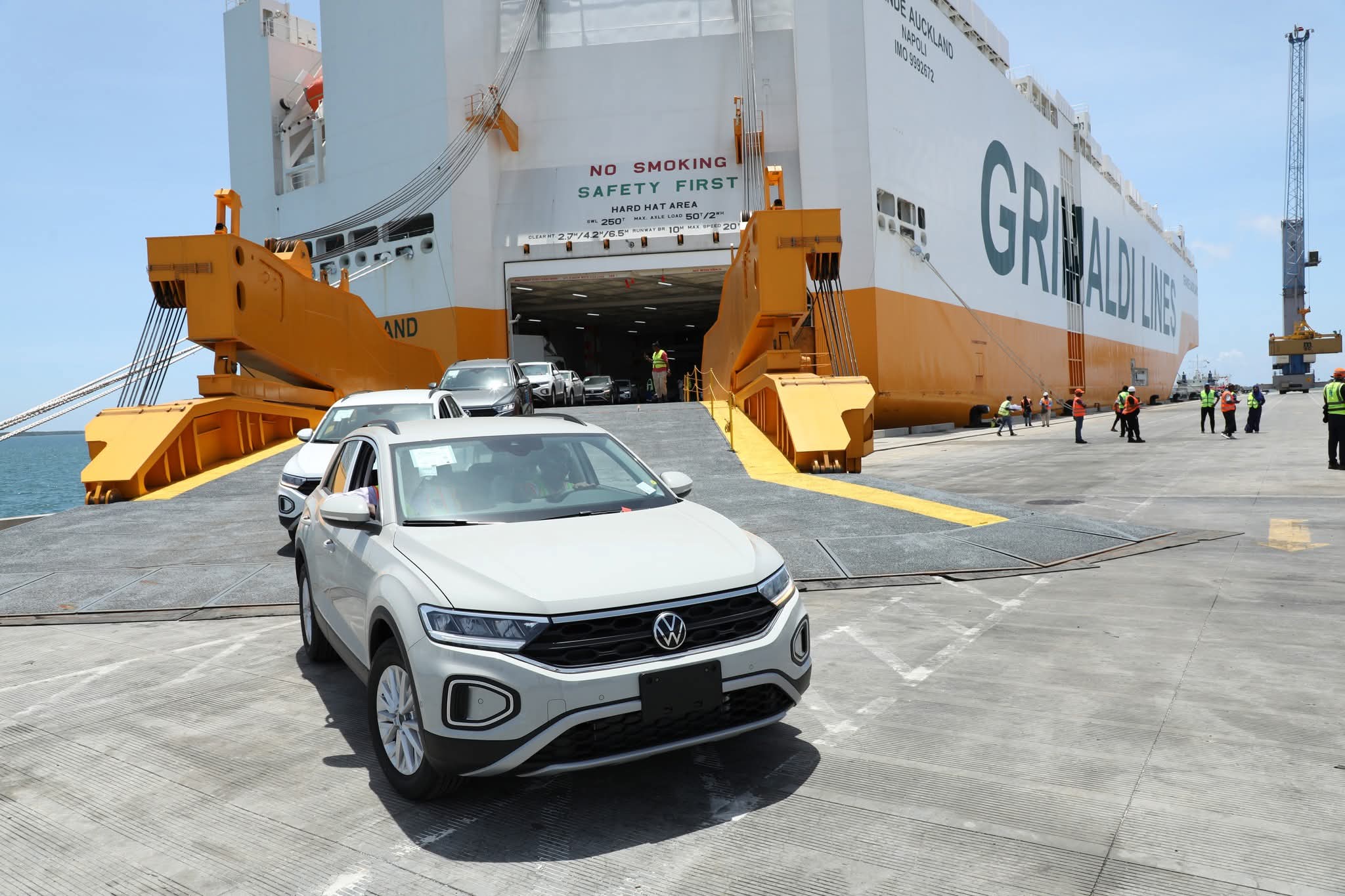
Earlier on March 10, another car carrier, MV Grande Auckland, made its maiden call at the port, offloading 469 vehicles manufactured in Europe — cargo that had also been scheduled for discharge in Dubai before being rerouted.
So far, 43 vessels have docked at Lamu Port since January, suggesting a steady uptick in activity that is beginning to validate years of heavy public investment under the LAPSSET Corridor.
For years, Lamu Port has been framed as a project of future promise — strategically located but commercially quiet. Now, global disruption appears to be offering it a real-time test of relevance.
“This is the kind of traffic the port was built for,” said Munir Minas, Chartering and Business Development Manager for Africa at Nisomar Shipping Agency, pointing to growing confidence among international shipping lines.
According to industry players, Lamu’s appeal lies in a mix of geography and performance. Its proximity to Middle Eastern markets makes it a natural fallback option when Gulf ports face disruption, while its ability to securely handle high-value cargo — such as motor vehicles — is helping build trust among operators.
The current diversions are particularly significant because they involve high-value, time-sensitive cargo, suggesting that shipping lines are not just experimenting with Lamu, but actively relying on it.
The port is still operating at only 30 to 40 per cent of its Phase One capacity, meaning it has significant room to absorb additional traffic. At full utilisation, Lamu could handle up to 500,000 TEUs annually — a scale that would significantly boost Kenya’s overall port throughput.
This positions Lamu as a potential complement to Port of Mombasa, creating a dual-gateway system that enhances Kenya’s competitiveness along the Indian Ocean trade corridor.
Strategically located near the main East–West shipping lanes linking Asia, the Middle East, Africa and Europe, Lamu has always held geographic promise. What has been missingis consistent cargo flow.
That may be changing.
Shipping agents are already making fresh inquiries about docking space, raising the prospect that the current wave of diversions could extend beyond a short-term spike.
Still, the key question is whether this moment can be sustained. Much will depend on how long disruptions persist in the Middle East — and whether Lamu can convert emergency diversions into long-term shipping contracts.
For now, however, the port appears to be doing what it was built to do: absorbing global shocks and turning them into strategic opportunity.
Lamu Port may finally be finding its moment.