
• Careers
  • Advertise
  • Contact us
Saturday, May 2, 2026
  • Login
DiploBrief
Advertisement
  • Home
  • News
  • Politics
  • Business
  • Foreign
    • EAC
    • Horn of Africa
    • AU
    • Middle East
    • China Briefs
  • Diaspora
  • Diplomat’s Corner
  • Untold Stories
No Result
View All Result
DiploBrief
No Result
View All Result
Home Horn of Africa

IGAD study warns extremists are using climate crisis for recruitment

The Brief by The Brief
2nd May 2026
in Horn of Africa
0
IGAD study warns extremists are using climate crisis for recruitment

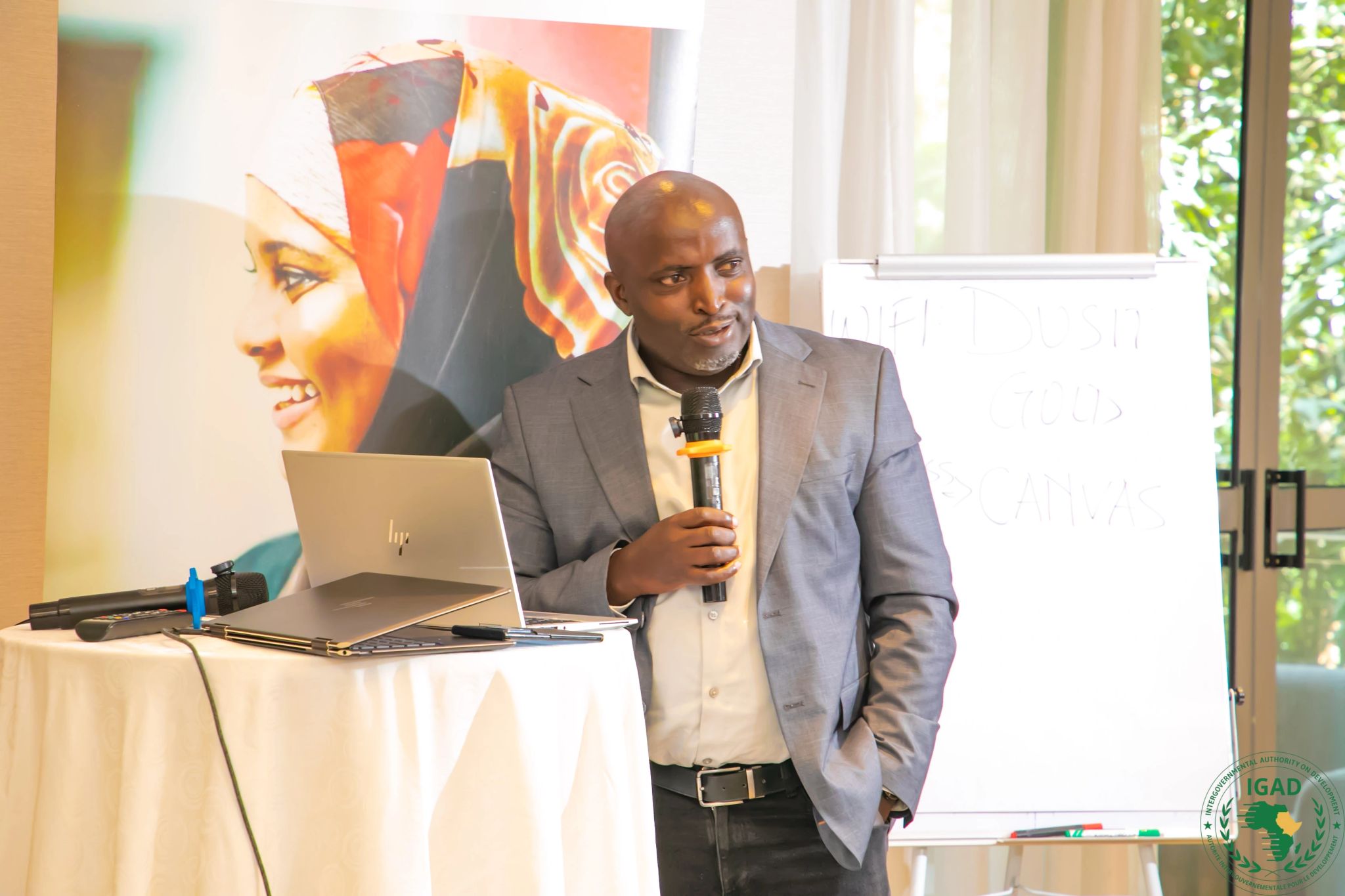
Researcher George Githinji during the launch of the report

Share on FacebookShare on Twitter

A new regional study has raised alarm over how quickly violent extremist groups such as al Shabaab are exploiting climate-related hardships across the Horn of Africa, often outpacing government response systems and turning environmental stress into recruitment tools.

The research by the IGAD Centre of Excellence for Preventing and Countering Violent Extremism finds that by the time drought, displacement, and livelihood losses are formally captured in Early Warning and Early Response systems, extremist actors have already reframed these crises into narratives that mobilise communities.
Related posts

Fresh US sanctions expose external actors fuelling Sudan war as regional risks deepen

Fresh US sanctions expose external actors fuelling Sudan war as regional risks deepen

18th April 2026
Kenya’s concern over flow of arms into Sudan faces scrutiny over RSF links

Kenya’s concern over flow of arms into Sudan faces scrutiny over RSF links

10th April 2026

According to the study, this delay creates a dangerous window in which grievances linked to climate shocks are weaponised, particularly in fragile regions such as in Northeastern where state presence is weak and communities face prolonged environmental stress.

Presenting the findings at a sub-regional workshop in Nairobi, researcher George Githinji said the gap between data collection and community perception is where extremist groups gain ground.

“By the time material grievances are recorded, narratives have already formed,” Giyhinji said.

He warned that these narratives, which are often rooted in identity, marginalisation, and survival, can quickly be adapted for recruitment.

The study highlights that while EWER systems are effective at detecting physical indicators such as drought, vegetation decline, livestock loss and displacement, they largely fail to capture how affected communities interpret these shocks.

It is this “narrative gap,” the report notes, that allows extremist organisations to insert themselves as alternative sources of meaning, protection or justice.

Across the Horn of Africa, the research identifies nine dominant extremist narratives emerging from climate-related stress. These include economic hardship, religious and ideological framing, perceived injustice and corruption, political exclusion, state marginalisation, identity and belonging, historical conflict, exploitation of vulnerable youth, and resistance to foreign influence.

Climate shocks generate and fuel multiple narratives simultaneously, making communities more susceptible to layered and adaptive messaging by armed groups.

The report notes that arid and semi-arid lands make up nearly 70 per cent of the Igad region and sit at the intersection of climate exposure, governance fragility and ongoing conflict. In such environments, environmental stress acts less as a direct cause of violence and more as a multiplier of existing vulnerabilities.

In this regard, extremist groups are increasingly framing climate hardship through religious, ethnic and political lenses, deepening divisions and amplifying grievances.

“Climate stress does not only produce scarcity, but also narratives of survival, marginalization and identity loss that can escalate into violence,”  Betty Oboy, from Peace and Reconciliation Commission official in South Sudan, said.

The study calls for a shift from purely data-driven early warning systems to approaches that incorporate “narrative sensing”, tracking how communities understand and communicate their experiences in real time.

It also urges governments to respond more quickly to early signals, deploying both material support and counter-narratives before extremist actors fill the vacuum.

Among the indicators that systems should prioritise are resource competition, displacement, livelihood insecurity, youth unemployment and perceived absence of the state.

Without timely intervention, the experts say, these conditions risk being translated into powerful narratives that legitimise violence and attract recruits, particularly among marginalised youth.

Tags: climate crisisextremismIGAD
Previous Post

Diplomacy association backs Bill to curb political envoys, urges swift tabling

Next Post

US envoy warns of ‘trust crisis’ in Kenyan media over foreign paid content

The Brief

The Brief

Your platform for foreign, regional and diplomatic news and analysis

Next Post
US envoy warns of ‘trust crisis’ in Kenyan media over foreign paid content

US envoy warns of ‘trust crisis’ in Kenyan media over foreign paid content

Please login to join discussion
ADVERTISEMENT

YOU MAY ALSO LIKE

Prominent Highlights from Kenya’s 2019  Budget

Prominent Highlights from Kenya’s 2019 Budget

7 years ago
Somalia revokes licenses for two Kenyan airlines over miraa

Somalia revokes licenses for two Kenyan airlines over miraa

6 years ago
Uhuru mourns Nkurunziza as outstanding leader, who worked for peace, stability

Uhuru mourns Nkurunziza as outstanding leader, who worked for peace, stability

6 years ago
Kenya’s envoy to Cuba presents credentials as ties deepen

Kenya’s envoy to Cuba presents credentials as ties deepen

4 years ago

BROWSE BY CATEGORIES

  • AU
  • Business
  • China Briefs
  • Climate change
  • Culture
  • Diaspora
  • Diplomat's Corner
  • EAC
  • Featured
  • Finance
  • Foreign
  • Horn of Africa
  • Lifestyle
  • Middle East
  • National
  • News
  • Opinion
  • Politics
  • Recent
  • Uncategorised
  • United Nations
  • Untold Stories

BROWSE BY TOPICS

Aden Duale AfDB Africa African Union Al Shabaab AU China Climate change coronavirus COVID-19 DP William Ruto DRC EAC Eastern DRC Ethiopia EU Horn of Africa IGAD Kenya Kenya diaspora M23 Mike Sonko Monica Juma Moussa Faki Musalia Mudavadi President Uhuru Kenyatta President William Ruto Raila Odinga RSF Russia Rwanda Rwanda-DRC Somalia Somaliland South Sudan Sudan Sudan war Trade Uganda Uhuru Kenyatta Ukraine UN UNSC US William Ruto

POPULAR NEWS

  • UNFPA boss faces abuse of office, nepotism allegations

    UNFPA boss faces abuse of office, nepotism allegations

    0 shares
    Share 0 Tweet 0
  • Ruto KDF changes signal next military chief

    0 shares
    Share 0 Tweet 0
  • The double-faced life of famed sharpshooter Dafton Mwitiki

    0 shares
    Share 0 Tweet 0
  • Willy Bett new envoy to China, Peter Munyiri in India as President Ruto finally names diplomats

    0 shares
    Share 0 Tweet 0
  • Women, CAS political rejects biggest winners in Ruto’s envoy jobs

    0 shares
    Share 0 Tweet 0

DiploBrief

Your platform for foreign, regional and diplomatic news and analysis

Follow us on social media:

Tel: +254 769 256 833

Email : editor@thebrief.co.ke

About us

  • About Us
  • Advertise with us
  • Sponsored Post
  • Guest Writer
  • Careers
  • Contact us

Categories

  • AU
  • Business
  • China Briefs
  • Climate change
  • Culture
  • Diaspora
  • Diplomat's Corner
  • EAC
  • Featured
  • Finance
  • Foreign
  • Horn of Africa
  • Lifestyle
  • Middle East
  • National
  • News
  • Opinion
  • Politics
  • Recent
  • Uncategorised
  • United Nations
  • Untold Stories

Recent News

US envoy warns of ‘trust crisis’ in Kenyan media over foreign paid content

US envoy warns of ‘trust crisis’ in Kenyan media over foreign paid content

2nd May 2026
IGAD study warns extremists are using climate crisis for recruitment

IGAD study warns extremists are using climate crisis for recruitment

2nd May 2026
  • Privacy policy

Copyright© 2024 DiploBrief

No Result
View All Result
  • Home
  • News
  • Politics
  • Business
  • Foreign
  • Diaspora
  • Diplomat’s Corner
  • Untold Stories

Copyright© 2024 DiploBrief

Welcome Back!

Login to your account below

Forgotten Password?

Retrieve your password

Please enter your username or email address to reset your password.

Log In