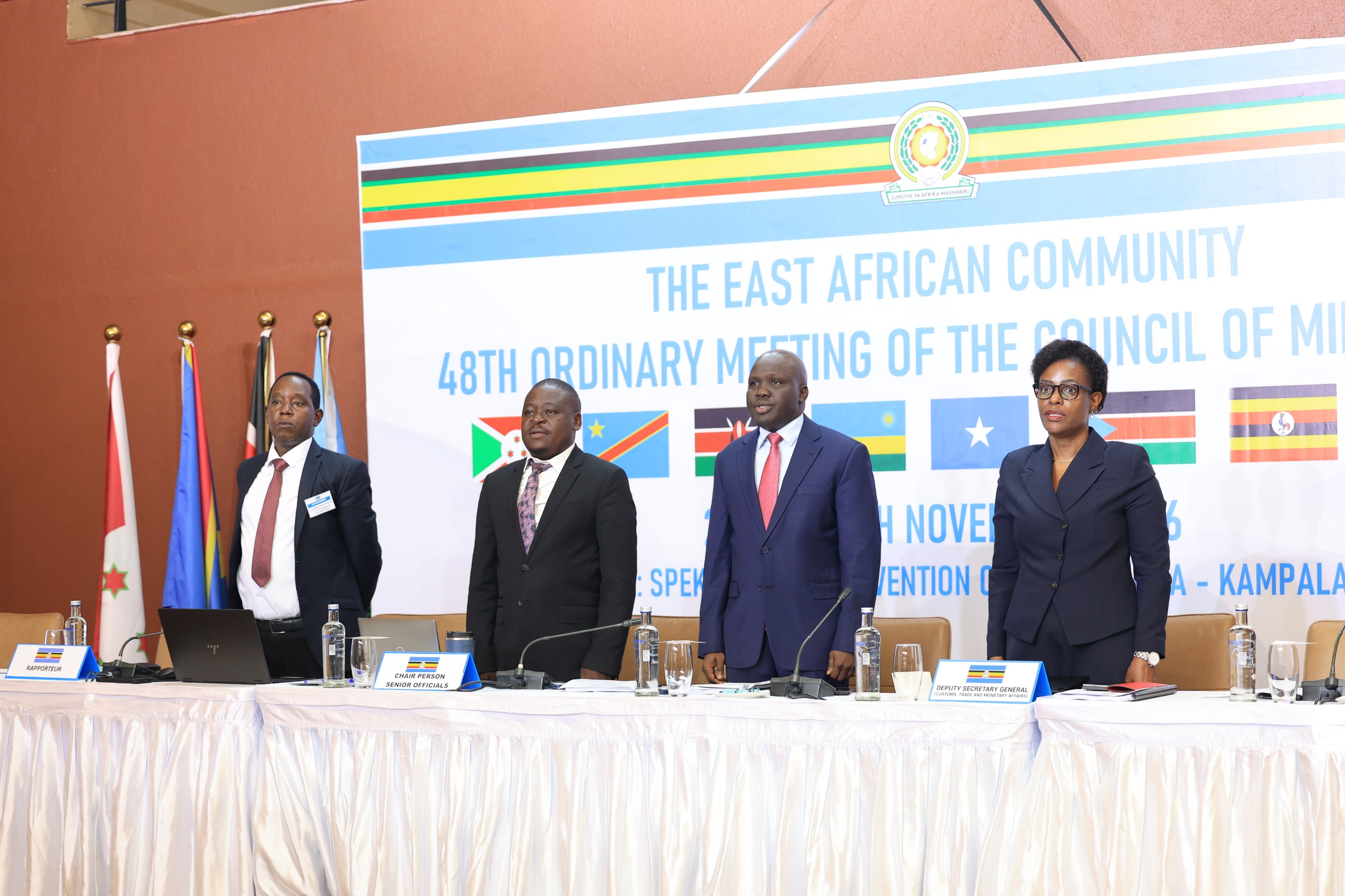
The East African Community is under pressure to demonstrate the value of regional integration as ministers from eight member states meet in Kampala, Uganda, for their 48th Ordinary Meeting.
Amid mounting financial constraints, persistent trade disputes and slow implementation of regional agreements, the EAC Council of Ministers is expected to consider measures to strengthen regional trade, facilitate cross-border movement and expand economic opportunities.
The meeting, which started on Monday, comes at a difficult moment for the eight-member organisation, which is grappling with more than $125 million (approximately Sh16 billion) in unpaid contributions from partner states, exposing the financial pressures undermining its operations.
The arrears, reported in October, exceed the EAC's entire approved budget of $110.86 million for the 2026-27 financial year. Only 17 per cent of assessed contributions for the current financial year had been remitted, raising concerns about the bloc's capacity to finance its institutions and regional programmes.
The funding crisis has previously disrupted operations, with members of the East African Legislative Assembly and staff going for months without salaries, while parliamentary activities and other institutional programmes faced interruptions.
Beyond the financial challenges, the Community continues to struggle with trade protectionism among member states, undermining one of the central objectives of its Common Market Protocol.
In August, the EAC's Regional Monitoring Committee identified persistent non-tariff barriers as a major impediment to regional commerce, with Tanzania accounting for the largest share of reported restrictions.
The barriers include import restrictions, additional charges, regulatory requirements and other measures that increase the cost and complexity of moving goods across borders.
A June 30 deadline set by EAC Heads of State for eliminating outstanding non-tariff barriers had largely passed without the expected progress, exposing the difficulties of enforcing regional commitments against competing domestic economic interests.
Kenyan exporters have faced challenges accessing some neighbouring markets, with restrictions and regulatory requirements affecting trade in agricultural and manufactured products.
The bloc's difficulties are also reflected in its record of implementing decisions.
According to the EAC Secretariat, partner states and regional institutions have fully implemented 2,587 of the 3,697 decisions and directives issued during the first 47 meetings of the Council of Ministers, representing approximately 70 per cent.
However, 272 decisions, equivalent to 7.36 per cent, remain unimplemented, while another 618 are still under implementation.
The figures highlight a persistent implementation gap, with governments often agreeing on regional measures whose execution subsequently encounters domestic policy, administrative and political obstacles.
Against this backdrop, the Kampala meeting will review outstanding decisions and consider policy, legal, financial and institutional issues affecting the Community.
At the centre of the talks is the need to strengthen the regional market, ease the movement of goods and people across borders and create a more competitive environment for trade, investment and employment, EAC Secretariate said in a statement on Monday.
The Council will also consider interventions aimed at improving the region's productive capacity and resilience, particularly in infrastructure development, agriculture, food security, climate resilience, digital transformation and social development.
The discussions will feed into implementation of the EAC's Seventh Development Strategy for 2026/27–2030/31, which prioritises increased intra-regional trade, improved connectivity, climate resilience, political integration and stronger regional institutions, it added.
The strategy comes as the bloc seeks to deepen economic cooperation among its eight members — Kenya, Uganda, Tanzania, Rwanda, Burundi, South Sudan, the DRC and Somalia.
However, the expansion of the Community has also increased the complexity of coordinating national policies and addressing political and security differences among partner states.
The conflict between Rwanda and the DRC has exposed the limitations of regional mechanisms in addressing security tensions, while disagreements among member states over trade restrictions have repeatedly tested the commitment to economic integration.
The CoM, the EAC's principal policy-making organ, therefore faces the challenge of reconciling national interests with the collective objectives of the regional bloc.
The meeting began with a session of senior officials running from November 23 to 26, followed by the Coordination Committee meeting on November 27 and 28. The ministerial session is scheduled for December 1.