The killing of a 65-year-old Kenyan woman in Moyale on November 2 exposed the dangers of a conflict unfolding across the border, where a longstanding territorial dispute has displaced tens of thousands of Ethiopians and forced thousands of Kenyan families to flee their homes.
More than a month after fighting erupted between armed groups linked to Ethiopia's Oromia and Somali regional administrations, the confrontation has evolved into a cross-border security and humanitarian crisis, threatening lives, livelihoods and stability in Kenya's northern frontier.
Amina Guchi was killed after being struck by a suspected stray bullet while at Marsabit County government offices, as fighting continued in neighbouring Ethiopia.
Guchi’s death has been followed by further incidents involving stray ammunition and unexploded explosives landing on Kenyan territory, heightening fears among residents living along the porous border.
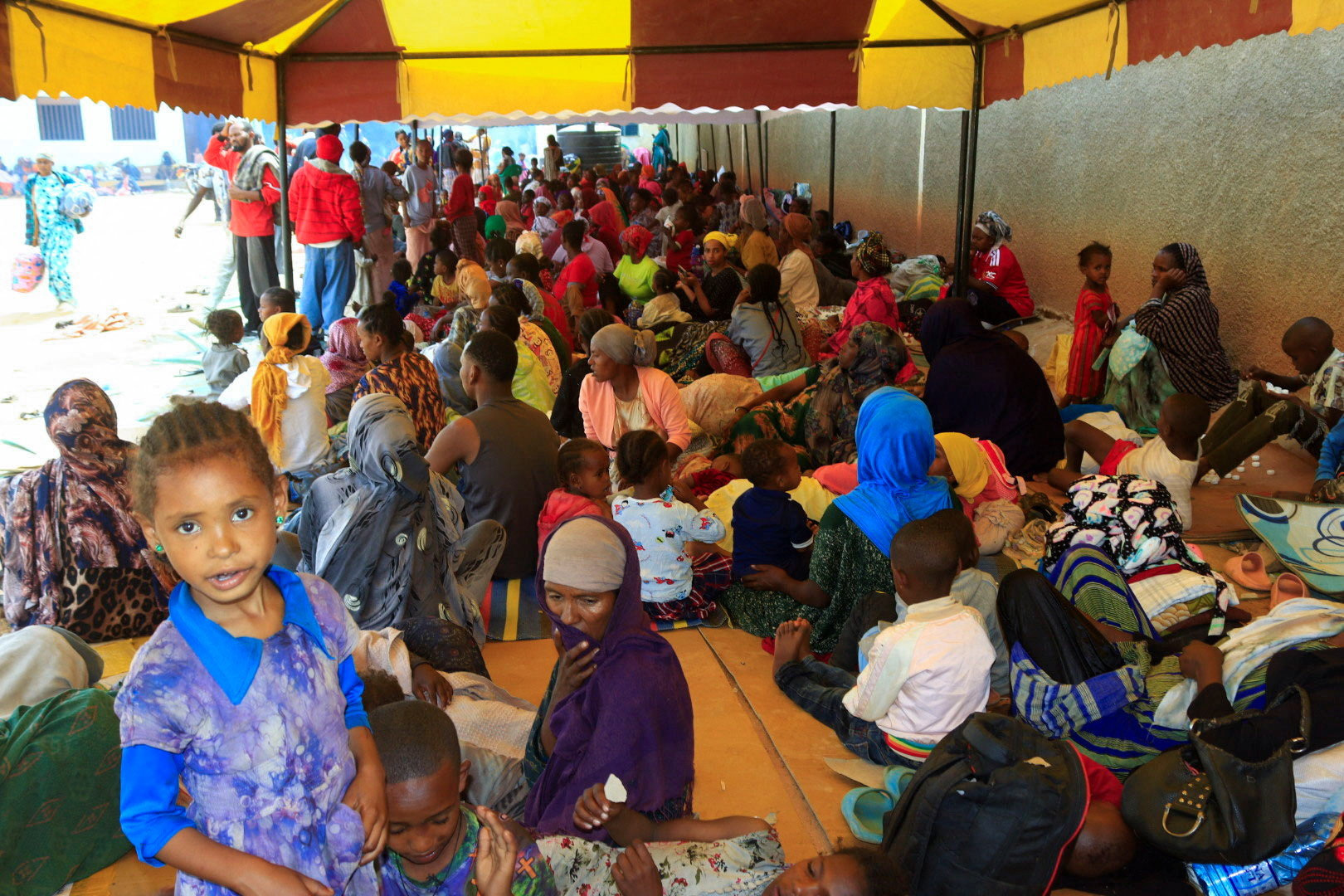
The scale of the crisis is becoming increasingly evident. An estimated 60,000 Ethiopians have crossed into northern Kenya since late October, according to Plan International, while more than 10,000 Kenyans living along the border have reportedly been displaced.
The displacement of Kenyan citizens adds a new dimension to the crisis, with communities that would ordinarily provide refuge to people fleeing violence now becoming victims of the conflict.
Marsabit Governor Mohamud Ali said a government-led rapid needs assessment had established that approximately 10,000 Kenyans had fled their homes because of stray bullets and rocket-propelled grenades spilling over from Ethiopia.
The fighting has also disrupted cross-border trade and livelihoods, while forcing Kenyan authorities to strengthen security deployments in the affected areas.
Inspector General of Police Douglas Kanja visited Moyale in November and announced the deployment of additional security personnel to protect residents and monitor the border.
The Kenya Defence Forces have also been involved in dealing with unexploded ammunition.
On November 11, military personnel destroyed unexploded rocket-propelled grenades that had landed in the area, amid concerns that further projectiles could endanger civilians.
The humanitarian consequences are equally troubling.
In a November 18 statement, Plan International warned that thousands of families arriving in Moyale were in urgent need of food, clean water, shelter, healthcare and protection.
An assessment by the International Organization for Migration found that 71 per cent of displaced households surveyed did not have enough food, identifying food as their most urgent need.
Families are also struggling to access clean water, adequate shelter, healthcare and psychosocial support, with many temporarily accommodated in schools and churches.
The crisis has been particularly disruptive for children, many of whom have been separated from their parents, forced out of school and uprooted from their communities.
Plan International cited the case of Jillo, an 18-year-old living in a camp in Moyale with her eight siblings after being separated from her parents.
"When I compare where I come from, where there was light, and the camp where there is none, I feel the change. It is a shock. I feel insecure," she said.
George Otim, Plan International Kenya Country Director, said the situation was not improving a month after the violence erupted, warning that children were facing an uncertain future without urgent humanitarian support.
The organisation has deployed response teams to Moyale, providing dignity kits and protection assistance while preparing to scale up its intervention.
Its Ethiopia operations are also preparing to expand humanitarian assistance in Borena Zone, although continued fighting and disrupted roads are limiting access to affected communities.
The public health situation is another growing concern.
The World Health Organization reported 38 measles cases in Moyale's temporary protection sites, including 19 new cases during the week ending November 15.
The outbreak comes amid overcrowded accommodation, inadequate sanitation and pressure on already stretched health facilities.
UNHCR, the International Organization for Migration, Unucef and the World Food Programme have appealed for $8.9 million to provide emergency assistance to displaced families, including food, shelter, clean water and healthcare.
The European Union has separately announced €550,000 (approximately Sh78.3 million) in emergency humanitarian assistance for people fleeing the fighting into Kenya, to be channelled through UNHCR and the Kenya Red Cross.
But the conflict is not simply an ethnic disagreement. It is rooted in decades of unresolved disputes over land, administrative boundaries, political authority and access to resources.
Ethiopia operates an ethnic-based federal system introduced under its 1994 Constitution, which came into force in 1995. It gives regional administrations considerable authority over local governance, security, resources and political representation.
However, the arrangement has fuelled competing territorial claims, particularly along the boundary separating Oromia, home to the Oromo community, and the Somali Regional State, predominantly inhabited by ethnic Somalis.
East, Horn and Southern Africa Senior Advocate for Refugees International Abdullahi Boru says the ethnic federalism arrangement is under "tremendous strain".
"We have discussed this about the Oromia, Amhara, Tigray and Somali regions. And unless there are changes, it becomes a very difficult issue," Boru said.
Africa Policy Institute chief executive Prof Peter Kagwanja warns that the latest confrontation is only "the tip of the iceberg", arguing that Ethiopia is experiencing its third civil war.
"The uniqueness of this conflict that is now between two communities is a reflection of the larger problem in Ethiopia," Kagwanja said, calling for a political system that is accountable to citizens beyond electoral victories.
In its September 2009 report, Ethiopia: Ethnic Federalism and Its Discontents, the International Crisis Group challenged the tendency to explain such confrontations purely through ethnic differences.
"These are routinely described as 'ethnic conflicts', but they are more often the result of rivalry over state resources than of irreconcilable ethnic differences," the organisation observed.
It added that "many conflicts have become more protracted as struggles over land, political power and administrative control become intertwined".
Attempts to resolve the competing territorial claims date back decades. In 2004, Ethiopia held a referendum in disputed areas along the Oromia-Somali boundary to determine which regional administration residents wanted to join.
However, the exercise failed to settle the dispute. In its February 2019 report, Managing Ethiopia's Unsettled Transition, Crisis Group noted that 80 per cent of voters in the disputed territory had chosen Oromia administration.
"The results have never been respected," it stated, identifying Moyale among the areas where tensions persisted.
The latest escalation began in October when the Somali regional administration opened an office and raised its regional flag in a disputed part of Ethiopian Moyale.
The move was opposed by members of the Oromo community, who viewed it as an attempt to extend Somali regional authority into territory claimed by Oromia.
A confrontation involving Somali regional police and Oromo militias followed. A 13-year-old Oromo girl was killed during the initial clashes before violence spread to other localities.
The Borana, predominantly Oromo pastoralists, and the Garre, a Somali clan, have longstanding connections across the Kenya-Ethiopia border. Their historical tensions involve competition over grazing land, water and territorial administration.
Moyale straddles the international boundary, with families, communities and commercial activities spread across both countries. The Borana also maintain strong social and family connections across the border, making Kenya a natural refuge for those fleeing violence.
The clashes have consequently become a diplomatic concern for Nairobi.
Prime Cabinet Secretary Musalia Mudavadi has said Kenya was engaging the Ethiopian government over the situation, including discussions with his Ethiopian counterpart on restoring calm and allowing displaced families to return home.
There have also been efforts to broker a cessation of hostilities through Ethiopian federal intervention.
On November 19, residents and the Ethiopian Red Cross reported that gunfire had stopped following the reported deployment of federal security forces between the rival sides.
The World Food Programme's November 20 situation report subsequently described a ceasefire as holding since November 17, although it warned that the security situation remained fragile.
However, a November 23 report by Horn Frequency alleged fighting had resumed following the collapse of a four-day ceasefire.
The uncertainty has complicated humanitarian operations and prospects for the return of displaced families. Kenyan authorities are also prioritising the relocation of displaced people from school-based shelters before schools reopen.
John Burugu, a refugee affairs expert, says Kenya is under an obligation to receive, protect and provide documentation to displaced Ethiopian nationals as a signatory to the 1951 UN Convention relating to the Status of Refugees and the 1969 OAU Convention Governing the Specific Aspects of Refugee Problems in Africa.
"The stakeholders — UNHCR, government and other humanitarian sector actors — must act swiftly and make the necessary decisions. Time is of essence before the situation of the displaced community from Ethiopia escalates to a worse humanitarian situation," Burugu says.
The arrival of tens of thousands of Ethiopian refugees, the displacement of Kenyan citizens, the threat posed by stray ammunition and the disruption of cross-border commerce demonstrate how unresolved territorial disputes in neighbouring countries can quickly become national security concerns.
And if the situation recurs, Moyale risks remaining exposed to recurring violence, even if temporary ceasefires succeed in silencing the guns.