Kenya and the European Union have concluded technical negotiations on a landmark data-sharing arrangement that could unlock new opportunities for digital trade, boost technology investments and strengthen Kenya's position as a regional business process outsourcing hub.
The agreement, which seeks to facilitate the cross-border transfer of personal data between Kenya and the 27-member bloc, marks the first arrangement of its kind between the EU and an African country.
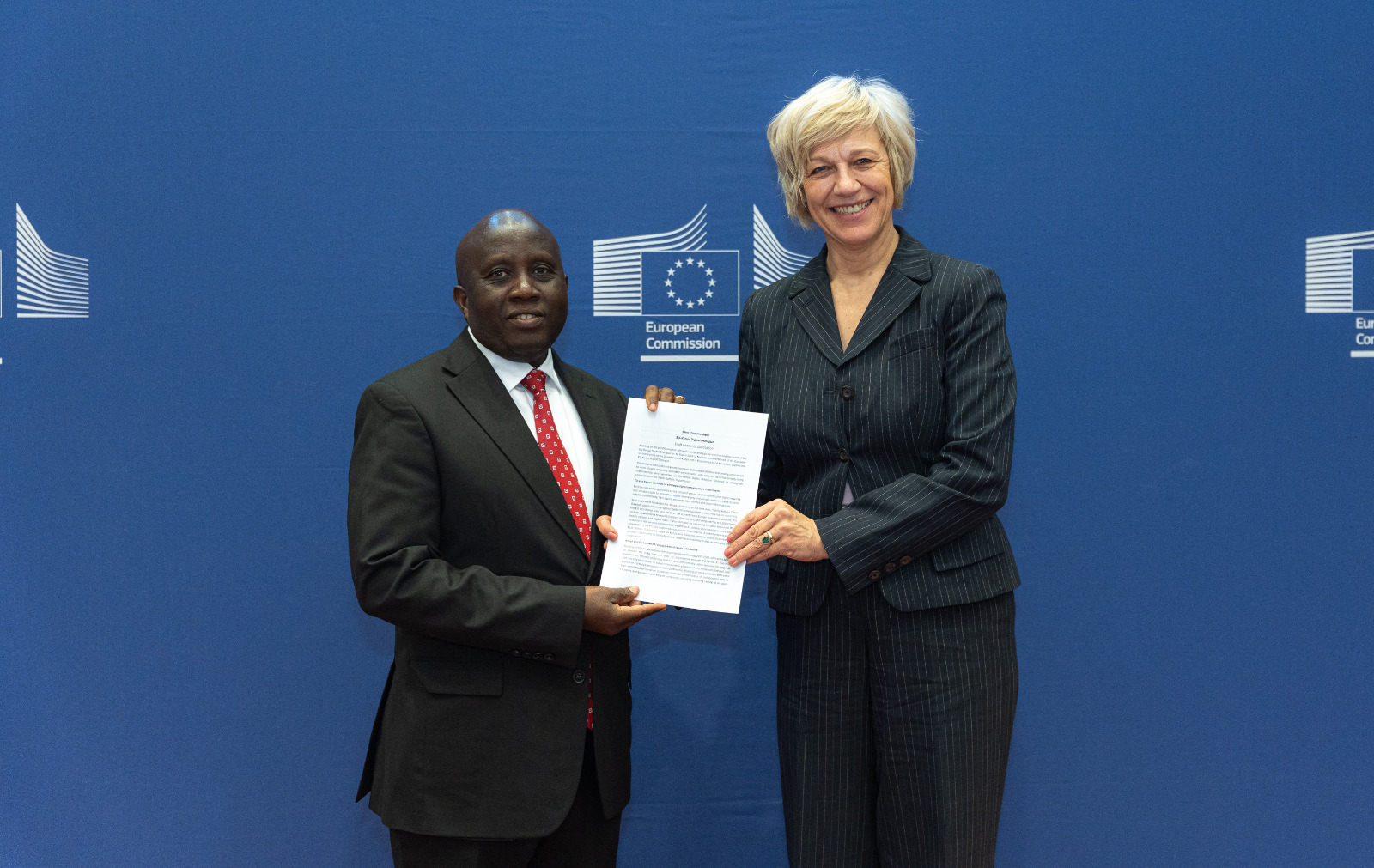
The two sides announced the breakthrough following the EU-Kenya Digital Dialogue in Brussels on November 23–24, where representatives of the European Commission and the Kenyan government agreed to advance cooperation in digital infrastructure, artificial intelligence, digital identity and online safety.
In a joint communiqué on Tuesday, the two parties confirmed they had "positively concluded the technical adequacy negotiations", paving the way for the respective formal processes towards adopting adequacy decisions.
"Once adopted, the mutual adequacy arrangement would facilitate trusted cross-border transfers of personal data and trade between Kenya and the European Union," the communiqué stated.
The deal will have significant implications for Kenyan companies seeking to expand their digital services into European markets, especially those involved in information technology, financial services, customer support, data processing and business process outsourcing.
Data adequacy is key in international digital trade because it provides a framework for transferring personal information between jurisdictions while maintaining the required standards of data protection.
An adequacy arrangement could reduce regulatory barriers for Kenyan businesses handling information belonging to European customers, and strengthen confidence among European companies seeking to outsource services or establish commercial partnerships in the country.
The negotiations, which began in 2024, have also helped strengthen mutual understanding of the data protection frameworks governing the two jurisdictions.
Both sides must, however, first complete their respective formal adoption processes before the adequacy decisions take effect.
The breakthrough comes as Kenya and the EU seek to deepen commercial ties through the digital economy, with the latest dialogue identifying opportunities to connect businesses, expand infrastructure and strengthen technology ecosystems.
As part of the initiative, the EU Digital SME Alliance and Digital Transformation Centre Kenya launched a business-to-business matchmaking partnership to facilitate commercial arrangements between European and Kenyan small and medium-sized enterprises.
The initiative is expected to support innovation-driven enterprises, create opportunities for youth employment and entrepreneurship, and improve access to markets for technology companies from both sides.
The partnership will target the growth of Kenya's digital services exports and business process outsourcing sector while opening new markets for European SMEs.
The two sides said the initiative builds on opportunities expected from the forthcoming data adequacy arrangement, which would facilitate trusted cross-border data flows and strengthen digital trade.
Beyond trade, the EU and Kenya are also seeking to position the country as a regional digital infrastructure and connectivity hub under EU's Global Gateway investment strategy.
The dialogue reviewed a Team Europe investment pipeline that includes plans to expand 3,000 kilometres of aerial fibre and extend internet connectivity to 3,000 schools, health centres and digital hubs.
The pipeline also includes an upcoming initiative to provide Wi-Fi hotspots in 400 remote communities and a guarantee-backed investment in Kenyan internet service provider PoA! Internet.
The two sides also discussed the possible extension of the Blue Raman submarine cable to Kenya and Tanzania, an initiative they consider a strategic opportunity to diversify connectivity routes.
Artificial intelligence also featured prominently in the discussions, with Kenya and the EU agreeing to deepen links between their respective AI ecosystems through partnerships involving AI Factories.
The cooperation will prioritise locally relevant and commercially viable applications, particularly in agriculture and language diversity, while exploring an advanced AI talent partnership.
The partners further committed to exploring an open-access AI computing facility in Kenya to expand access to computing infrastructure for startups, small businesses and research institutions.
The proposed EU-Kenya compute bridge is intended to enable local innovators to develop and commercialise artificial intelligence solutions rather than remain consumers of technologies developed elsewhere.
"Both sides want to take the EU-Kenya partnership to the next level, making Kenya a Global Gateway champion and a regional digital infrastructure and connectivity hub," the communiqué stated.
The dialogue also advanced cooperation on digital public infrastructure, including trusted digital identity, interoperability and the development of digital public services.
Both parties agreed to strengthen technical exchanges on online safety and platform governance, with particular attention to protecting minors online.
The latest meeting builds on the EU-Kenya Strategic Partnership and the launch of the Digital Dialogue in Nairobi on March 18, 2026, providing a framework for translating bilateral digital cooperation into concrete investment and commercial opportunities.