

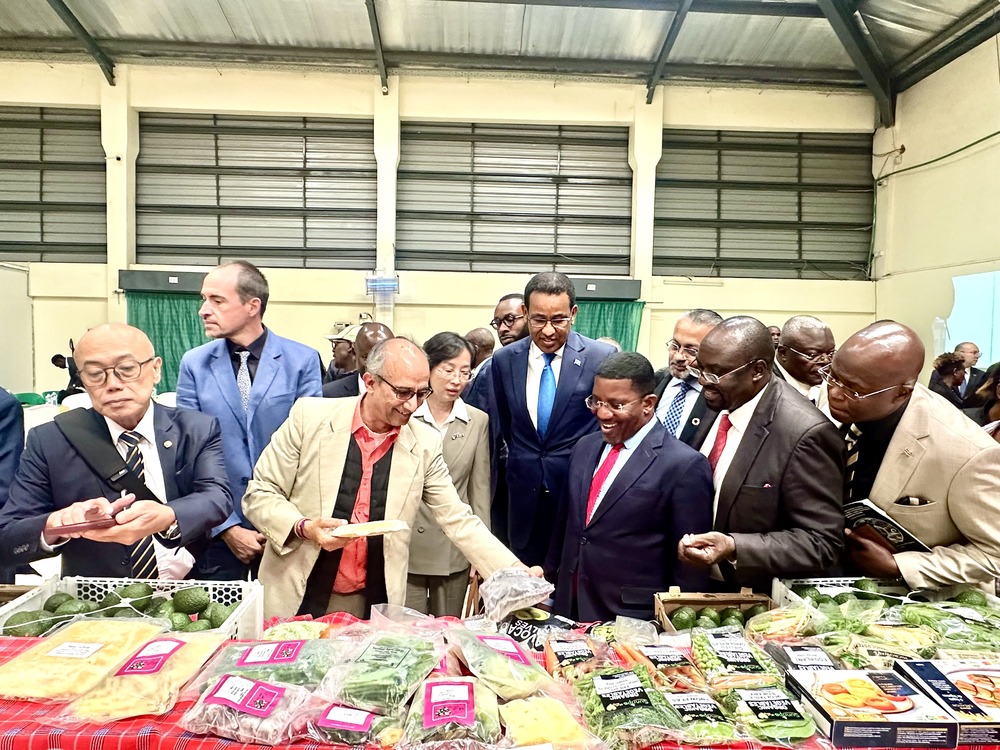
Kenyan coffee exports to China surged by nearly 140 per cent between May and August, providing an early indication of the potential impact of Beijing’s zero-tariff policy on the country’s agricultural exports.
Official data show Kenya exported 1.71 million kilogrammes of unroasted green coffee to China during the four-month period, up from 712,610 kilogrammes in the same period last year, representing a 139.66 per cent increase.


The value of the coffee shipments nearly doubled, rising from ¥49.82 million Yuan in May-August 2025 to ¥98.31 million during the same period this year, an increase of 97.33 per cent.
The increase follows China’s introduction off the zero-tariff treatment for products from 53 African countries with which it has diplomatic relations, including Kenya, from May 1.
The policy is emerging as an important opportunity for Kenyan agricultural exporters seeking to deepen their presence in the Chinese market, with coffee among the commodities showing the strongest early growth.
Chinese Ambassador to Kenya Guo Haiyan said the tariff changes were designed to give African products greater access to China’s huge consumer market.
“Starting from May 1st this year, China has launched a zero-tariff policy for 53 African countries having diplomatic relations with China, providing greater access to the Chinese market for distinctive African products,” Guo said.
Speaking at a China-Africa forum in Naivasha on Thursday, Amb Guo specifically cited Kenyan avocados, Ugandan coffee, Tanzanian honey and Somali seafood as examples of African products that could benefit from the policy.
Guo described the initiative as using tariff “subtraction” to promote trade “addition” and improve livelihoods.
The latest coffee figures demonstrate the tariff is already contributing to a significant increase in Kenyan shipments.
Coffee was not the only Kenyan agricultural product to record strong growth.
Kenyan avocado exports to China increased from 2.31 million kilogrammes between May and August 2025 to 3.76 million kilogrammes during the same period this year, representing a 63.22 per cent increase.
The value of avocado exports rose by 59.65 per cent, from ¥27.03 million to ¥43.16 million.
Combined, coffee and avocado exports increased from about 3.02 million kilogrammes to 5.47 million kilogrammes, while their combined value rose from approximately ¥76.86 million to ¥141.47 million.
For Kenya, the figures provide an early test of whether preferential access to the Chinese market can help diversify its export destinations and narrow a longstanding trade imbalance with China.
The key challenge for Kenyan farmers and exporters is converting increased market access into sustained participation in the Chinese market and greater value for Kenyan producers.
Amb Guo said China wanted the zero-tariff policy to go beyond simply increasing shipments.
“China is ready to work with African countries to ensure the benefits of zero-tariff policy and development outcomes reach the Chinese and African peoples,” she said, adding that Beijing wanted to “promote the upgrading of China-Africa cooperation across the entire industrial chain.”
Her reference of the entire industrial chain is significant for Kenya’s coffee sector, where the country has traditionally exported large quantities of green coffee rather than capturing the higher value associated with roasting, branding and finished coffee products.
Greater access to China could thus create opportunities not only for increased shipments of raw coffee but also for Kenyan companies to explore processing, branding and other forms of value addition.
The growth in shipments will need to be matched by reliable supply, consistent quality, compliance with Chinese import requirements and efficient logistics if Kenya is to establish a lasting foothold in the market.
The policy also comes at a time when China is seeking to deepen commercial engagement with African economies by expanding access for African products while encouraging greater cooperation across industrial and agricultural value chains.
Guo said China would continue working with African countries to ensure that the benefits of the new trade arrangements were widely shared and that Africa strengthened its own drivers of development.