
Kenya is facing renewed scrutiny over its human rights record after the African Commission on Human and Peoples’ Rights highlighted persistent failures to translate legal protections for indigenous communities into tangible results.
Citing the struggles of the Ogiek and Endorois peoples, chairperson of the Commission’s Working Group on Indigenous Populations/Communities and Minorities in Africa Dr Litha Musyimi-Ogana said indigenous communities continued to face barriers to decision-making, public services and remedies. This is even where legal frameworks and decisions had recognised their rights.

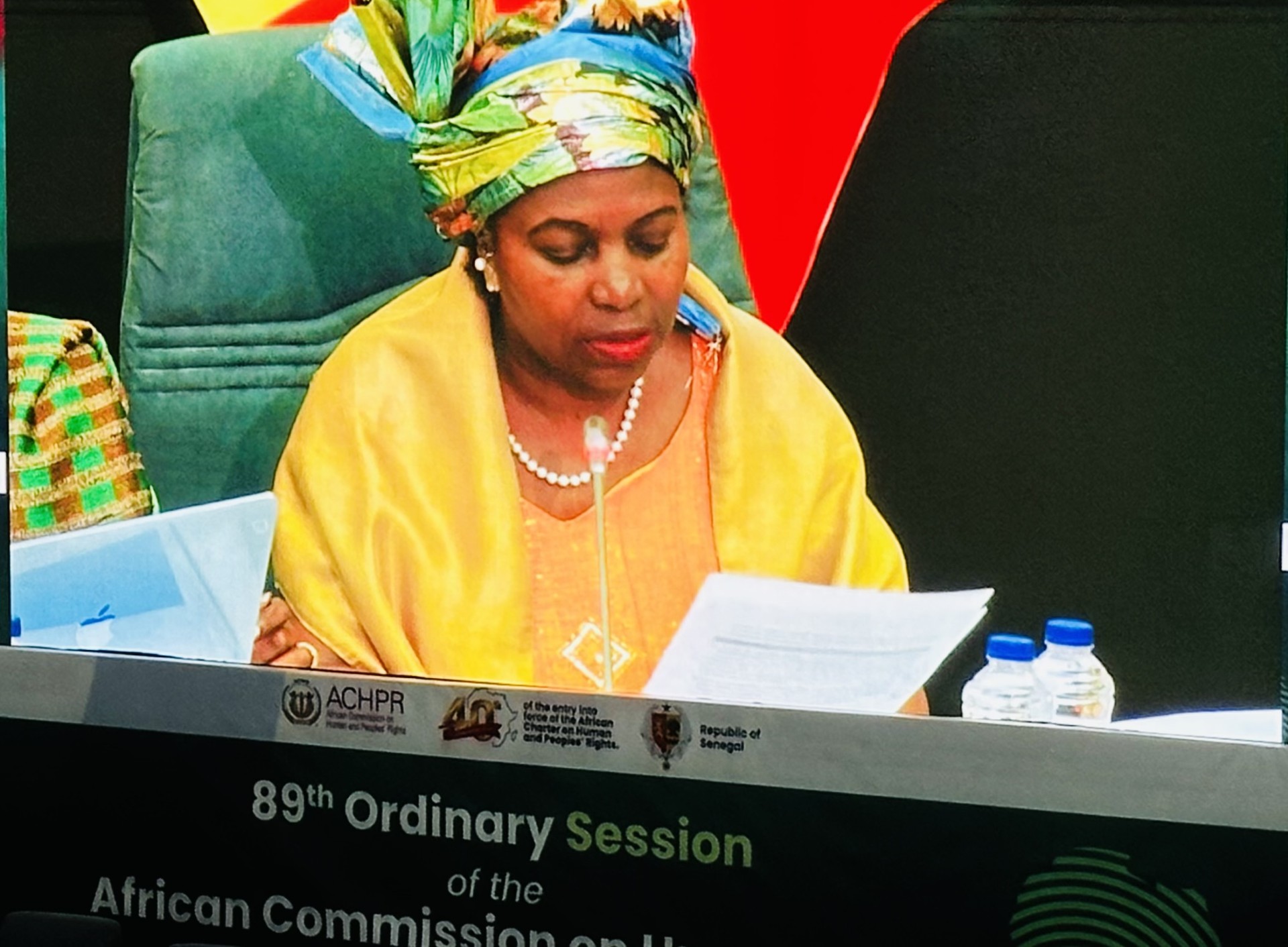
In her activity report presented during the Commission’s 89th Ordinary Session in Dakar, Senegal, Musyimi exposed the gap between Kenya’s constitutional commitments and its record in implementing regional human rights decisions.
“Another major challenge we found is the gap between formal guarantees and their implementation,” Musyimi-Ogana said, citing the Ogiek and Endorois as examples.
The criticism comes despite landmark decisions by African human rights institutions in favour of the two communities, raising questions about why years of legal battles have not delivered full redress.
OGIEK RULING UNIMPLEMENTED
The Ogiek are an indigenous community whose ancestral lands lie in the Mau Forest Complex. They secured a landmark victory in 2017 when the African Court on Human and Peoples’ Rights found that Kenya had violated several of their rights, including those relating to property, natural resources, culture and development.
The court issued reparations orders in 2022, requiring compensation and measures to address the violations suffered by the community.
However, implementation remained outstanding when the court revisited the case.
In December 2025, the African Court found that Kenya had failed to comply with key orders and directed the government to immediately pay Sh157.85 million in compensation for material and moral prejudice.
The court also ordered further action on the recognition of the Ogiek as an indigenous people, the demarcation and titling of their ancestral land, and the establishment of a community development fund.
The ruling was a damning indictment of the government’s record in implementing the earlier decisions. It demonstrated that even a landmark judgment by a continental court could leave a community waiting for compensation and meaningful protection years later.
The continuing dispute over the Ogiek’s ancestral territory has also placed conservation policy under scrutiny, particularly where forest protection measures intersect with community land rights and livelihoods.
ENDOROIS STILL SEEKING REDRESS
The Endorois community has faced a similarly prolonged struggle over ancestral land around Lake Bogoria.
In 2010, the African Commission found that Kenya had violated the community’s rights in connection with its displacement and loss of access to ancestral territory. It recommended measures including recognition of land ownership, compensation and access to sacred sites.
The decision was an important recognition of the community’s collective rights, cultural identity and entitlement to benefit from resources in its traditional territory.
Yet implementation has remained a longstanding concern, with questions persisting over land restitution, compensation and the community’s participation in decisions affecting its ancestral lands.
The two cases expose the limitations of a human rights system in which communities can win legal recognition but still struggle to obtain the remedies intended to make those victories meaningful.
The delays have prolonged uncertainty over land, access to resources, cultural practices and the ability to determine the communities’ economic future.
GOVERNMENT URGED TO CHANGE COURSE
Musyimi urged African states to strengthen constitutional, legislative, policy and administrative measures protecting indigenous communities.
She also called for their active participation in decisions concerning conservation, extractive industries, climate measures and other issues affecting their lives.
The recommendations carry particular significance for Kenya, where decisions involving forests, land, natural resources and development can directly affect communities whose identities and livelihoods are closely linked to ancestral territories.
The Commission wants governments to move beyond formal recognition and ensure indigenous peoples have a meaningful voice in decisions affecting their communities.
That means addressing implementation failures, ensuring access to remedies and making sure that conservation and development policies do not sideline the rights of affected populations.
AFRICA-WIDE INDIGENOUS MAP PLANNED
The Commission is also planning an indigenous map of Africa to help identify the locations of indigenous communities across the continent.
Musyimi said the initiative would improve understanding of where these populations live and help inform measures to protect their rights.
The map could provide a useful basis for research, policymaking and targeted interventions.