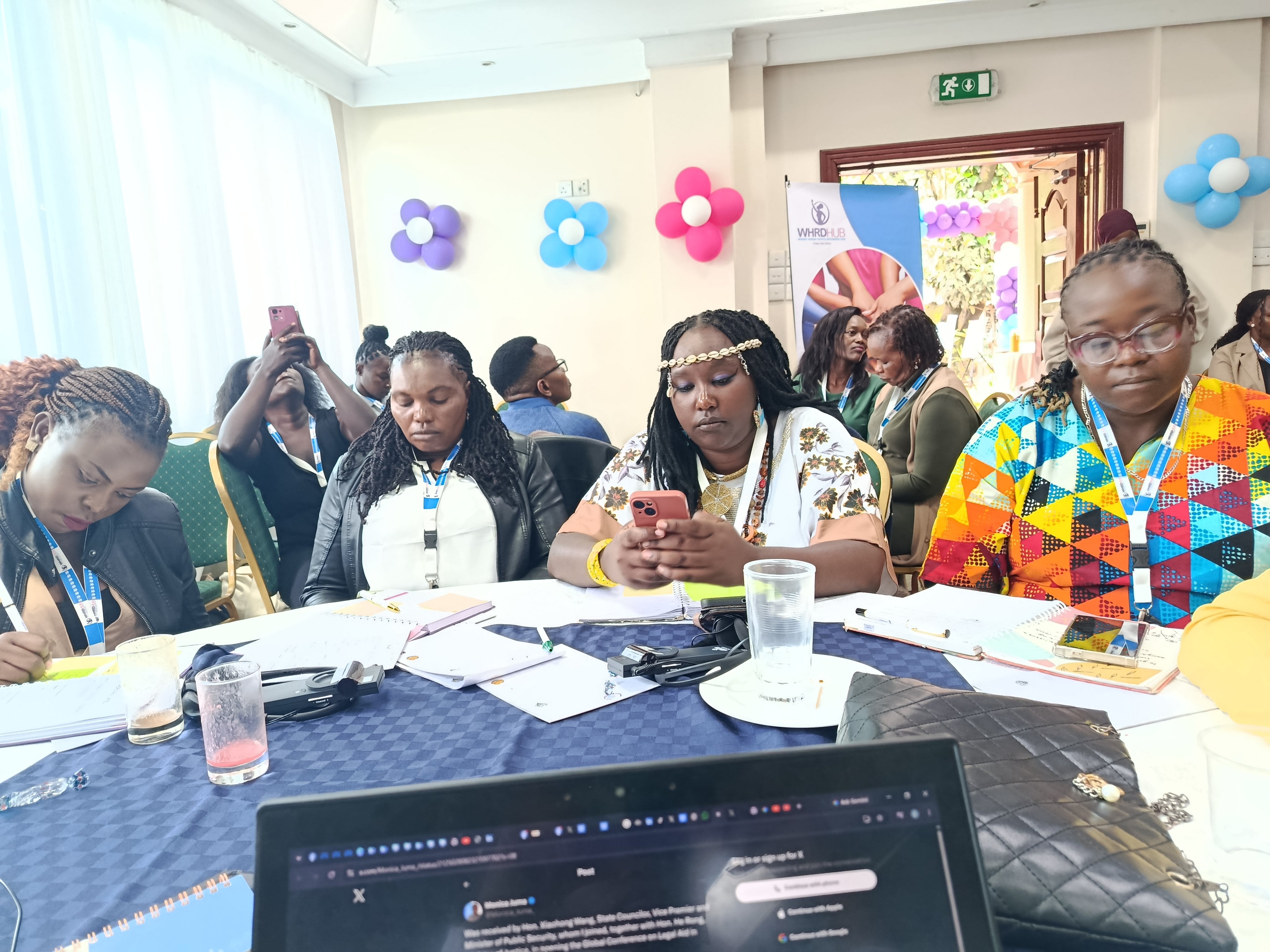
Women human rights defenders and aspiring politicians are facing growing threats from political intimidation, gender-based violence, economic vulnerability and online harassment ahead of Kenya's 2027 General Election, a regional summit has warned.
Participants at the Women Human Rights Defenders Summit 2026 on Monday said inadequate protection systems, poverty and shrinking resources risk undermining women's participation in political and civic processes.
The five-day summit in Nairobi from November 23 to 27 has brought together women human rights defenders, women leaders, civil society organisations and other stakeholders from Kenya and across Africa to discuss women's rights, leadership, safety, economic justice and movement building amid an evolving civic and political environment.
Opening the summit, Women Human Rights Defenders Hub founder and director Salome Nduta said expectations placed on women to lead and protect their communities must be matched with adequate security and financial support.
“We cannot talk about leadership without safety. You cannot provide protection without resources,” Nduta said.
The discussions highlighted the multiple forms of intimidation confronting women seeking political office, including threats, personal attacks, gender-based violence and the use of private information to undermine their credibility.
Participants also warned that poverty makes women particularly vulnerable to electoral manipulation, including vote buying, while restrictive cultural practices continue to limit their ability to contest for leadership positions.
In pastoralist communities, clanism and age-based discrimination were identified as additional barriers, alongside low literacy levels, long distances to polling stations and what participants described as an inferiority complex among some women aspiring to leadership.
The summit also examined how women with disabilities nominated to reserved political seats face hostility based on arguments that they do not need votes to occupy public office.
Participants noted that such attitudes undermine affirmative action and reinforce discrimination against women seeking representation through constitutionally recognised mechanisms.
The discussions further exposed weaknesses in Kenya's response to sexual and gender-based violence, which participants said continues to discourage women's participation in public life.
Approximately 50 per cent of sexual violence cases in Kenya are closed following the withdrawal of survivors rather than being resolved through the justice system, the Summit heard.
Prolonged court processes, inadequate survivor support and limited access to safe shelters were identified as contributing factors.
Participants raised concern that Kenya has fewer than 10 shelters available for survivors of sexual and gender-based violence, leaving many women without safe accommodation when escaping abusive environments.
They called for trauma-informed counselling, pro-bono legal assistance and emergency cash transfers for survivors forced to leave their homes following violence, particularly those living in informal settlements.
Digital safety was another major concern, with participants highlighting the difficulties social media platforms face in identifying and moderating abusive content expressed in African languages.
They argued that inadequate content moderation exposes women activists and political aspirants to online harassment and intimidation, potentially discouraging their participation in public affairs.
The summit also examined the role of religious and cultural leaders in challenging discriminatory attitudes and creating acceptance of women's political leadership.
Participants questioned the involvement of some religious leaders in partisan campaigns, arguing they should instead provide moral leadership and publicly support women's participation in politics.
They also criticised the practice of mobilising women as campaign cheerleaders, often in exchange for small gifts, without giving them meaningful opportunities to influence political decisions.
In remarks delivered on her behalf by Lady Justice Hellen Omondi, Chief Justice Martha Koome said Kenya's constitutional democracy remained a work in progress, 16 years after the promulgation of the 2010 Constitution.
In the speech, CJ Koome raised concerns over protests, unlawful killings, abductions, disappearances, arrests and intimidation of human rights defenders.
Koome underscored the importance of protecting the right to peaceful assembly under Article 37 of the Constitution, addressing gender-based violence and safeguarding women human rights defenders.
She also emphasised the need for judicial preparedness and greater inclusion of women as the country approaches the 2027 elections.
Meanwhile, Nduta announced that the Hub was developing an online portal to monitor and document human rights violations, with the aim of strengthening reporting and referral mechanisms for women defenders facing threats.
The platform is expected to connect reported violations to relevant response mechanisms, although its effectiveness will depend on the commitment and endorsement of partner organisations.
Participants called for women human rights organisations to decentralise their operations beyond major cities and establish stronger support networks in rural communities, where many violations remain underreported.
The regional discussions also drew lessons from Tanzania, Malawi, Zambia, South Sudan and Guinea-Bissau, with delegates highlighting the need for stronger solidarity and coordinated protection mechanisms ahead of electoral processes.
The summit aims to strengthen collective approaches to protecting women defenders, supporting their wellbeing and advancing their participation in leadership and democratic processes despite shrinking resources.