

Slovenia is stepping up efforts to expand its economic footprint in East Africa, with Kenya emerging as a potential gateway for its businesses seeking opportunities across the region.
The European country is preparing to send a 20-member business and institutional delegation to Nairobi later this month, alongside an official visit by Foreign Minister Tone Kajzer, in a renewed push to deepen bilateral relations.


The visit, scheduled for November 24–29, will focus on trade, investment and development cooperation, with particular attention to sectors including agriculture, renewable energy, water management, digital technology, healthcare and sustainable infrastructure.
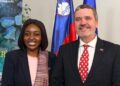
Kenya’s Mission in Vienna, represented by Deputy Head of Mission Amb. Valerie Rugene, participated in a briefing with Kajzer ahead of the visit on Wednesday.
Rugene said the meeting was timely ahead of the minister’s forthcoming visit to Kenya.
The main business programme will take place on November 26 and 27, bringing together Slovenian companies, development institutions and Kenyan public and private sector players.
The programme will include a bilateral business conference, business-to-business and business-to-government meetings, as well as sector-specific engagements.
The business meeting is organised by the Slovenian Chamber of Commerce and Industry, SPIRIT Slovenia and the Ministry of Foreign and European Affairs under the Team Slovenia/Global Gateway framework.
The delegation is expected to explore opportunities for Slovenian companies to establish partnerships, identify local business partners and participate in investment and development projects in Kenya and the wider East African market.
“Priority areas include water and environmental management, climate resilience, smart agriculture, food security, agro-processing, digitalisation, cybersecurity, renewable energy, pharmaceuticals, medical technology and skills development,” a diplomat told DiploBrief..
The breadth of the programme reflects Slovenia’s interest in combining commercial diplomacy with development cooperation, particularly in areas where its technological expertise could complement Kenya’s development priorities.

The trip builds on efforts initiated in November 2024 when then Slovenian Foreign Minister Tanja Fajon visited Kenya, becoming the first high-level representative from Ljubljana to make such a visit.
During her meeting with Prime Cabinet Secretary and Foreign Affairs CS Musalia Mudavadi, Fajon announced Slovenia’s intention to cover Kenya diplomatically and consularly from its embassy in Addis Ababa, Ethiopia.
The two countries also agreed to strengthen political dialogue and explore economic opportunities in renewable energy, agriculture, pharmaceuticals, tourism, beekeeping, waste management and water management.
Fajon identified considerable potential for cooperation, saying: “I see great potential in renewable energy, agriculture, pharmaceuticals, tourism and beekeeping.”
She also pointed to existing Slovenian companies operating in Kenya, including CTC Group in housing construction, Geocodis in interactive portals, Roto Group in water storage tanks, Tevel in industrial production and Waboost in water technology.
A further push came in May 2025 when Slovenian President Nataša Pirc Musar made the first-ever state visit to Kenya by a Slovenian head of state.
During the visit, President William Ruto and Pirc Musar witnessed the signing of an MoU establishing a framework for political consultations between the two states.
The deal was intended to institutionalise diplomatic engagement, strengthen cooperation between foreign service personnel and provide a platform for addressing shared priorities.
The two leaders also identified opportunities in artificial intelligence, digital governance, pharmaceutical production and sustainable agriculture, building on Slovenia’s expertise in technology and environmental management.
Trade between the two states reached €2.7 million in 2024 (approximately Sh394 million), representing a 50 per cent increase from the previous year.
Kenya is thus seeking to use its position as a regional commercial and logistics hub to attract more European investment, while Slovenian businesses are looking beyond their domestic market for partnerships and new opportunities.
The importance of the relationship was reinforced in September this year when the two sides advanced preparations for the inaugural political consultations.
MFA Director General for Political and Diplomatic Affairs Amb. Josphat Maikara discussed with Slovenia’s Non-Resident Ambassador to Kenya, Kristina Radej the preparations for the consultations and opportunities to expand trade and investment.
The two sides also explored cooperation in digital transformation, climate action, agriculture, education, research, healthcare and labour mobility.
Existing development cooperation provides a foundation for the expanding relationship.
Slovenia has supported the Aqua Twin project, which uses satellite technology and digital modelling to improve river basin management, as well as a Joint Health Care Assistance project.
Its development cooperation has also included efforts to strengthen climate resilience in Kenya’s arid regions through soil conservation, ecosystem restoration and support for local honey production, particularly involving women beekeepers.
The forthcoming visit offers Nairobi an opportunity to attract investment, access new technologies and diversify economic partnerships within Europe.
On the other hand, Kenya offers Ljubljana access to one of Africa’s most established commercial hubs and a potential entry point into the wider regional market.
The November visit will thus provide an opportunity to test whether the two states can move beyond diplomatic goodwill towards a more substantive economic partnership.