
Germany has announced a $32 million (Sh4.13 billion) investment in African Trade and Investment Development Insurance, signalling a strategic shift toward deeper economic engagement with Kenya and the wider African continent through risk-sharing financial tools.
The agreement, signed in Nairobi on Tuesday, places the Kenyan capital at the centre of a growing push by European governments to use development finance and insurance mechanisms—not just aid—to unlock private investment across Africa.

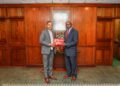
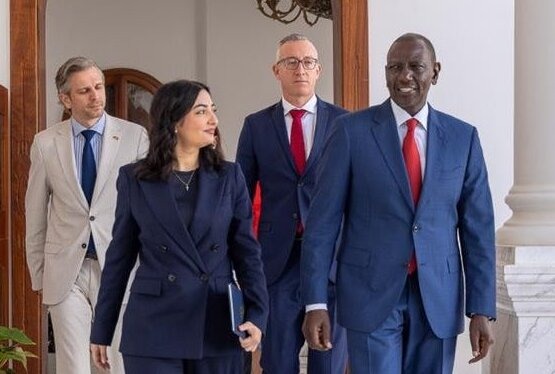
Announcing the investment during her visit to Nairobi, German Minister for Economic Cooperation and Development Reem Alabali-Radovan said the move is designed to strengthen economic ties while boosting investor confidence in key African markets, including Kenya.
“Through this funding, we are sending a clear signal of strengthening economic cooperation not only with Kenya but also with Africa. We are investing in order to boost confidence in markets like Kenya and mobilise private capital for visionary projects,” Alabali-Radovan said at the embassy in Nairobi.
Alabali-Radovan noted that at least 120 German companies are currently operating in Kenya, underlining the country’s importance as a regional investment destination for Europe’s largest economy.
With the new investment, KfW Development Bank—acting on behalf of the German government—becomes ATIDI’s 13th institutional shareholder. The move gives Berlin a direct role in the governance of one of Africa’s most influential risk mitigation agencies, which provides political risk and credit insurance to investors operating in frontier markets.
The minister also underscored that health remains a central pillar of Germany’s development cooperation with Kenya, pointing to continued support across the sector.
“Our commitment is not just to the Global Fund and Gavi, but the health sector in general. We are looking forward to strengthening economic cooperation, especially here in Kenya, in the health sector,” she added.
Beyond the investment itself, the deal reinforces Nairobi’s growing status as a regional hub for development finance and economic diplomacy. As host to ATIDI, the city is increasingly becoming a focal point for structuring and channelling capital into African markets.
It also positions Kenya as a key partner in Germany’s evolving Africa strategy.
With ATIDI’s main role being reducing risks that often deter foreign investors, Germany’s entry is expected to increase the volume of guarantees available to companies looking to invest in countries such as Kenya.
This could prove significant in addressing long-standing investor concerns around currency volatility, rising public debt and political risk, factors that have historically raised the cost of capital or slowed project implementation.
By cushioning such risks, the expanded capacity is likely to make Kenya a more attractive destination for German and European capital, particularly in sectors such as renewable energy, infrastructure, manufacturing and small business development.
ATIDI estimates that the partnership could unlock up to $500 million in trade and investment between German companies and African markets, a portion of which is expected to flow into East Africa’s largest economy.
Germany already maintains a strong development footprint in Kenya, largely implemented through KfW financing in areas such as green energy, climate resilience and SME support. The new equity stake marks a shift toward more systemic support, creating conditions conducive for private sector-led investment rather than relying solely on public financing.
This aligns with a broader European strategy of using public financial institutions to catalyse private capital flows into emerging markets.