
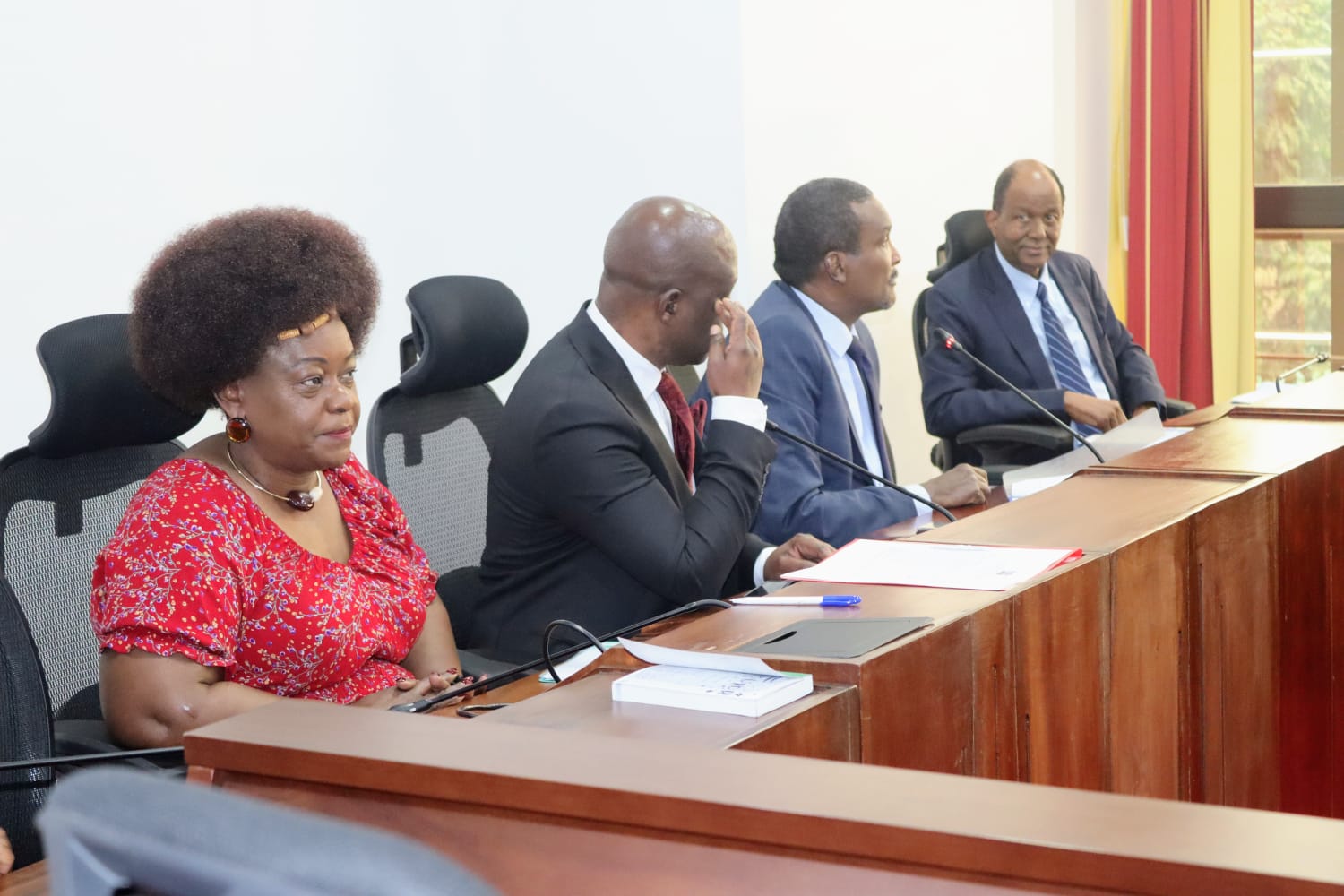
The Departmental Committee on Defence, Intelligence and Foreign Relations has raised queries over the rate of political appointees in Foreign Service and the economic viability of Kenya’s mission in Vatican.
This emerged during the vetting of President William Ruto’s nominee for the inaugural Ambassador to the Vatican, Julius Mbijiwe.

Mbijiwe is the Chief of Staff in the Meru county, having served as Mwangathia MCA between 2013 to 2022.
Committee members led by chairman Nelson Koech raised concerns over the high number of political appointees to the foreign service as opposed to career diplomats.
They termed the trend as worrying even as they rallied behind a proposed law seeking to limit political appointees to 30 percent.
The Foreign Service (Amendment) Bill, 2025, sponsored by Mwingi West MP Charles Nguna, proposes a 70/30 split between career diplomats and non-career political appointees for ambassadorial roles to enhance professionalism.
This initiative aims to amend the Foreign Service Act, 2021 (Cap 185E), which only mandates a “fair balance” in diplomatic appointments.
“There is a proposed law before the National Assembly on a 70:30 ratio in diplomatic appointments, whereby 70 per cent of diplomats are drawn from diplomatic roles and 30 per cent from other fields.
“Do you support this proposition because you are now employed as the Chief of Staff in Meru county, yet there are career diplomats who have been waiting for a long time for an opportunity to serve?” Koech posed.
Additionally, the MPs raised concerns over Mbijiwe’s lack of formal diplomatic experience, particularly at a time when career diplomats have lament career stagnation at the headquarters.
“You have never served anywhere in any diplomatic position, save for your faith that you profess, what other advantage or opportunities do you envisage to leverage and be of benefit top our country? Kinangop North MP Kwenya Thuku posed.
Mbijiwe, however, defended the inclusion of professionals from diverse fields in diplomatic roles. He said experience from other fields, including politics, also contributes to diplomacy..
MPs also queried that economic value of having a fully-fledged embassy in the Vatican, which has previously been covered by the embassy in Rome, Italy.
At the same time, former Kenya revenue Authority Commissioner General Humphrey Wattanga has asked for 30 days before appearing for vetting.
This is even as his nomination was abruptly changed from South Africa to Canada.
Wattanga’s extension request could, however, affect the committee timelines, as Parliament must consider and report on a nomination within 14 days of notification.
If that deadline lapses without a decision, the nominee is deemed approved by default under Section 8 of the Public Appointments Parliamentary Approval Act of 2011.
The recent queries by MPs and the confusion around Wattanga’s nomination is only the latest in a growing list of diplomatic appointment setbacks during President Ruto’s tenure.
In a rare double rejection, two nominees to the Ghana High Commission post have declined the position in quick succession.
Former West Mugirango MP Vincent Kemosi turned down his nomination in April 2024, citing personal and compelling family matters.
Months later, former ICT Cabinet Secretary Margaret Nyambura also declined the same posting after her December 2024 appointment again citing personal reasons.
Concerns over competence have also persisted. In April 2024, the committee rejected the nomination of Charles Githinji Keru as Consul-General to Goma in the DRC citing a lack of qualifications and inadequate understanding of regional and economic issues.
Ciommittee members said the nominee struggled to explain basic concepts during vetting, reinforcing concerns about the growing trend of politically connected but underqualified candidates being proposed for diplomatic roles.
Another case involves the Kinshasa ambassadorial post, which remained in limbo for over a year after nominee Shem Amadi failed to secure audience to present credentials following his nomination in early 2024.
President Ruto was forced to nominate former Principal Secretary Peter Tum to the position in March 2025, in what was seen as an attempt to stabilise Kenya’s diplomatic presence in the region.