

By GWYNE DYER
Making predictions in print is rarely a good idea, and saying ‘I told you so’ is always rude, but rules are made to be broken. On 10 June, one week before the short-lived ‘Memorandum of Understanding’ on the Middle East war was signed, I wrote a piece on that war that predicted what would happen next.


It said: “The next few months should be eventful but not alarming: ceasefires made, broken and remade on the US-Iran front, while Gaza rots….Come September, however, things will probably start to get exciting, because the elections will create deadlines. Not for Iran, of course, but for Trump and for Netanyahu.”
I’m not claiming any great insight here. To the contrary, I’m pointing out that the probable course of events was so obvious as to be almost inevitable. The Iranians had already won just by not losing, and Donald Trump had no cards left to play.
It wasn’t yet clear that his cartoonish defence secretary, Pete Hegseth, had already managed to squander most of America’s large stockpile of precision-guided bombs and missiles with no visible effect on Iranian strategy, but that doesn’t really matter anyway. American weapons are of no relevance so long as Iran can keep control of the Strait of Hormuz.
So Trump oscillated between fantasy diplomatic breakthroughs and pointless military threats through the whole summer, while most of us got on with our lives and relatively few people were killed. However, September was bound to follow, and with it comes the prospect of national elections in both Israel (27 October) and the United States (3 November).
As things stand now, Netanyahu’s coalition will lose its majority in the Knesset. He could even end up in jail. Trump’s presidency is not at stake in these ‘mid-term’ elections but his party could easily lose control of the House of Representatives, which would open the door to impeachment proceedings.
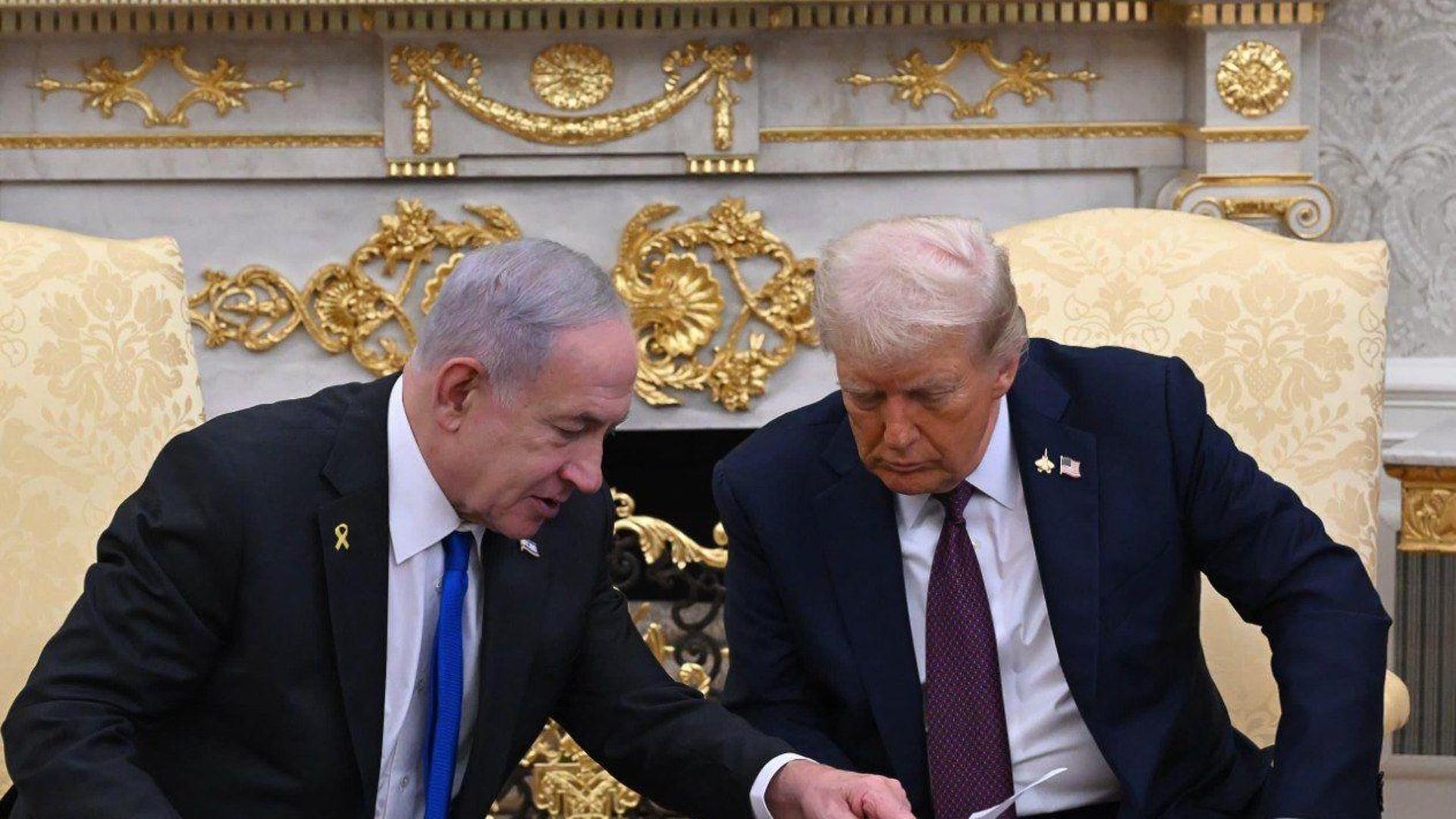
Either man would benefit greatly from a military victory right about now – and although Trump is still cross about the way Netanyahu suckered him into a surprise attack on Iran that backfired, the two do have a way of egging each other on into doubtful enterprises that neither man might risk alone.
So what kind of enterprises are we talking about here? The context is military, and the lead would have to come from the United States because America has 35 times the population of Israel. There are really only two things Trump could do that might persuade Iran’s rulers to compromise on their claim to control the Strait of Hormuz.
One is a mass aerial onslaught on all the foundations of Iran’s status as a poor but ‘developed’ country: industry, transport, electrical power, oilfields, water supply, desalination plants, etc. “Bomb them back to the Stone Age,” as US Air Force General Curtis LeMay once put it (referring to Vietnam).
But Trump has already tried that once – “A whole civilisation will die tonight,” as he declared last April – only to call it off at the last minute when the Iranians didn’t waver in their defiance. He still has lots of ‘dumb bombs’ to carry out his threats, but he’d actually have to start the mass killing next time before anybody would take him seriously.
The only remaining alternative, for a leader desperate to end a war that he should never have started, is a threat to drop a single low-yield nuclear warhead in some sparsely populated part of the target country – or maybe skip the threat, because your credibility is shot. Just explode the bomb first, and then invite the enemy for talks.
This is an evergreen topic in strategic circles. From the very beginning of the nuclear era, strategic theorists have struggled to find ways to make nuclear weapons ‘useful’. That is to say, usable for purposes beyond mere deterrence against an attack by another nuclear power.
Never mind the hypocrisy of two countries that have had nuclear weapons for several generations (60 years for Israel, 80 years for US) dropping a nuclear bomb on a country that has never had one, on the grounds that it might get one some day. Just consider what Iran would do next.
It would do nothing. Absolutely nothing, except to make clear the horror of what the Americans and/or the Israelis had done. Every American alliance would be wrecked, every deal would be null and void.
The Good Old Days when ‘international law’ meant something (not much, but something) may be gone, but neither the United States nor Israel has a real nuclear option against Iran. The tricky bit is how to ensure that people like Donald Trump and Pete Hegseth understand that they don’t have that option.
Gwynne Dyer’s new book is ‘Intervention Earth: Life-Saving Ideas from the World’s Climate Engineers. The previous book, ‘The Shortest History of War, is also still available.