
BY AGNES GITAU
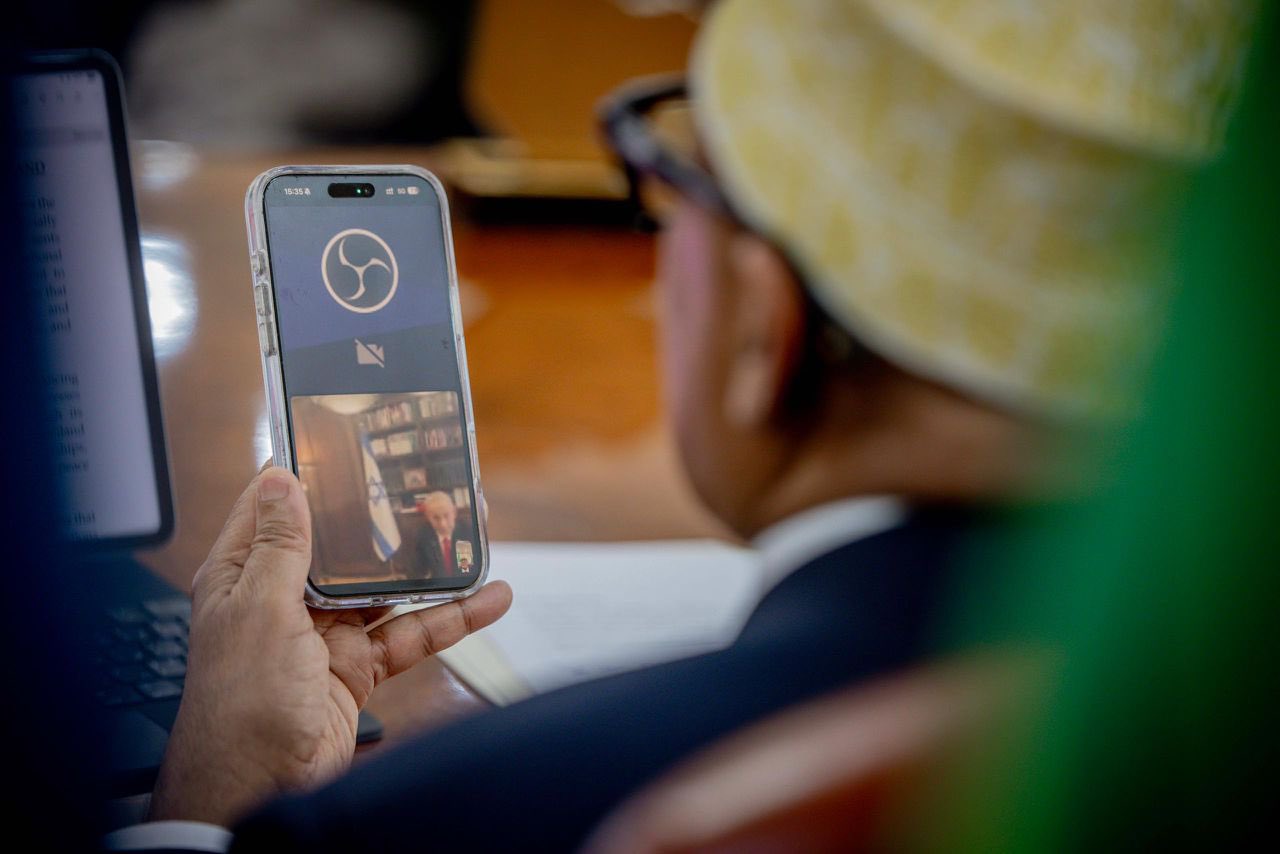
When PM Benjamin Netanyahu telephoned Hargeisa on December 26 to inform Somaliland president Abdirahman Mohamed Abdullahi that Israel would become the first country to recognise his territory’s independence, the decision may have looked like bold diplomacy from Jerusalem.

However, from the Horn of Africa, it looked like a dangerous ignorance of a region where external interventions have a grim habit of producing outcomes nobody intended.
Having worked in this region’s policy space for two decades, I have watched well-intentioned policymakers arrive with solutions to problems they do not fully understand. Israel’s recognition of Somaliland fits this pattern with uncomfortable precision. It addresses Israel’s strategic imperatives: a Red Sea foothold, intelligence cooperation, potential naval access near the Bab el-Mandeb strait whilst externalising all the messy consequences onto countries that were never consulted.
The immediate reaction telegraphed the trouble ahead.
Somalia recalled its ambassador and promised legal action, whilst 21 Muslim-majority countries signed a joint condemnation.
Notably, however, the UAE, Bahrain, and Morocco, who are signatories of the Abraham Accords, remained conspicuously silent. Even US President Donald Trump, when asked whether Washington would follow suit, gave a dismissive “No”. He then added, “Does anyone know what Somaliland is, really?”
More damaging still, a senior Israeli official warned anonymously that recognising Somaliland whilst the rest of the world considers it integral to Somalia fundamentally undermines Israel’s decades-long argument against Palestinian statehood, exposing a logical inconsistency that will not be lost on international audiences or future diplomatic negotiations.
Trump’s contempt is hardly new. During a Cabinet meeting — whilst attacking Minnesota congresswoman Ilhan Omar — he described Somalia as barely a country where people “just run around killing each other” with “no structure,” which is crude but not entirely divorced from reality.
As of April 2025, Kenya hosted 849,625 refugees, 54% of them Somali. Roughly 460,000 of them are concentrated in Dadaab, whilst Ethiopia shelters approximately 380,000 Somalis and Uganda another 69,533, populations that have been there for decades. This has created parallel economies and made every Somali crisis a regional one.
INTERNAL CONTRADICTIONS NOBODY ACKNOWLEDGES
What the cheerleaders for recognition, including Britain’s Gavin Williamson, who claims it would “literally transform 5.7 million lives overnight” consistently ignore is that Somaliland itself is not the unified success story they present it as.
The Dhulbahante clan have long searched for alternatives to Isaaq-dominated governance, including joining Puntland where their Darod-Harti family ties run deeper. Somaliland only took control of Las Anod in October 2007 by driving out Puntland forces in what locals remember as occupation.
Since then, according to the Raad Peace Research Institute, gunmen have assassinated over 120 prominent community leaders, politicians, intellectuals, businessmen in what the Dhulbahante population attributes to Hargeisa’s systematic effort to silence dissent.
When opposition politician Abdifatah Abdullahi Abdi was shot dead leaving a mosque on December 26, 2022, protests finally erupted across the city. Somaliland police opened fire on demonstrators, killing more than 20 people. And when Dhulbahante elders declared the formation of SSC-Khatumo in February 2023 and announced their intent to reunify with Somalia, Somaliland forces shelled the city for six months. Amnesty International reported indiscriminate bombardment that damaged schools, mosques, and hospitals whilst displacing between 153,000 and 203,000 people. Up until August 2023, SSC-Khatumo forces had expelled Somaliland from Las Anod after capturing the Gooja’ade military base.
Today, the Dhulbahante-majority areas operate autonomously under SSC-Khatumo (renamed North Eastern State in July 2025), which is aligned with Mogadishu rather than Hargeisa. A military stalemate holds along a frontline roughly 100 kilometres from Las Anod.
Israel has just recognised a state that does not control its claimed eastern territories, faces not only the SSC-Khatumo secession but also potential uprisings in Awdal region, where the Isse and Gadabursi clans feel similarly marginalised.
In July 2025, it saw deadly clashes erupt between SSC-Khatumo and Puntland over claims to eastern Sanaag, a reminder that even Somalia’s federal member states cannot agree on borders.
ETHIOPIA’S SHADOW AND REGIONAL POWDER KEG
In January 2024, Ethiopia signed a memorandum with Somaliland to lease 19km of coastline for 50 years in exchange for implied future recognition, Mogadishu erupted, and Egypt and Turkey — rivals to Ethiopia over the Nile dam and Red Sea influence — rallied behind Somalia until Turkish mediation produced the Ankara Declaration in December 2024.
Crucially, the agreement made no mention of the memorandum’s status, Ethiopia has not confirmed its cancellation, and Somaliland maintains its stand, which means Israel’s recognition lands precisely when Ethiopia had just stepped back from the brink.
From Addis Ababa’s perspective, landlocked Ethiopia desperately needs sea access; from Mogadishu’s perspective, this looks like dismemberment by a neighbour 10 times its size. From Cairo’s perspective, anything strengthening Ethiopia threatens Egyptian interests over Nile water, and from Ankara’s perspective, Turkish investments in Somalia, including a major military base, are being undermined. Every move creates counter-moves.
A gift for Al-Shabaab?
When the Ethiopia-Somaliland memorandum was signed, Al Shabaab’s spokesman Ali Mohamud Rage promised “blood will be spilled over it,” urging Somalis to “fight against those conquering your country, similar to how the Jews conquered Palestine”.
Already, the militant group on Saturday vowed to fight any attempt by Israel “to claim or use parts of Somaliland” following Jerusalem’s recognition of the breakaway territory
“We will not accept it, and we will fight against it,” Al Shabaab said in a statement.
This means Israel’s recognition hands the militants perfect propaganda. They have long portrayed themselves as the only force defending Somali sovereignty against external manipulation, and Netanyahu has just validated their narrative.
Regional analysts worry that if conflict morphs from a Somaliland-Dhulbahante dispute into confrontation between Darod and Isaaq clan families, unrest could ripple into Ethiopia, which hosts millions of ethnic Somalis in the Ogaden region. Clan conflicts have never respected international borders in the Horn of Africa.
INTELLIGENCE DIMENSIONS AND DARKER SUBTEXTS
Media outlets, including Channel 12, reported that Mossad Director David Barnea personally advanced the recognition and that Somaliland’s president made multiple secret visits to Israel, including meetings with Netanyahu and Defence Minister Israel Katz in October. This confirms that this was no spontaneous decision but rather the culmination of years of Israeli intelligence cultivation.
The strategic logic is straightforward: Since October 2023, Houthi rebels have attacked commercial shipping in solidarity with Gaza, Israel has struck back at Yemeni ports, and a relationship with Somaliland offers proximity, intelligence sharing, and potential staging grounds, with technology transfers—surveillance systems, drone detection—already flowing and Somaliland declaring full control of its airspace in November using Israeli equipment.
Israeli media reported that initial discussions emerged around potential Palestinian resettlement from Gaza to Somaliland, and whilst both governments have denied this, when Trump floated relocating Gaza’s residents in February, Somaliland was specifically mentioned.
Foreign ministers from Egypt, Turkey, and Djibouti warned against recognising Somaliland as a stepping stone to forcibly transferring Palestinians, and whether or not those discussions were serious, the suspicion now exists in a region where Al Shabaab builds its entire recruitment narrative around resistance to foreign interference — catastrophic messaging.
PATTERN RECOGNITION AND WHO BEARS THE COSTS
Trump’s “No” suggests Washington will not follow, and the UAE, Bahrain, and Morocco stayed silent for a calculated reason: they have no interest in fracturing the African Union consensus or picking fights with Egypt and Turkey over Somalia. Which leaves Israel isolated with its recognition, although embassies will be opened and ambassadors exchanged. In Hargeisa, many genuinely view this as historic vindication. But the costs will be borne elsewhere.
Kenya will absorb more refugees when instability increases, Ethiopia will face harder choices about its Somalia policy, Uganda will manage security spillovers, and Mogadishu will lurch further toward Egypt and Turkey, potentially hosting Egyptian troops, a development that terrifies Addis Ababa. Al Shabaab will recruit more fighters by pointing to yet another example of external powers carving up Somali territory.
The AU’s position reflects hard-won wisdom. The 1964 Organisation of African Unity decision to respect colonial borders was an explicit choice to prevent the continent fracturing into ethnic enclaves. Eritrea’s war, Biafra’s failure, and Sudan’s fragmentations have demonstrated what happens when those lines become negotiable. Every African state with internal ethnic tensions watches Somaliland nervously, knowing recognition could embolden their own secessionists.
I have seen this pattern before. In 2011, when South Sudan gained independence with overwhelming international support, it was hailed as triumph. However, within three years, the country descended into civil war that killed hundreds of thousands and displaced millions.
The lesson, apparently unlearned, is that external powers championing state creation rarely stick around for state-building, and they certainly do not remain to manage the refugee crises, regional destabilisation, or militant recruitment that follows.
WHAT THOSE OF US WHO REMAIN MUST MANAGE
Israel can claim this advances the Abraham Accords’ spirit, and Somaliland’s leaders can celebrate recognition. But the mothers in Dadaab camp who have spent decades raising children in temporary shelters that became permanent homes, the Ethiopian officials managing ethnic Somali populations, and the Kenyan border communities dealing with instability know better because they have seen this before. External actors redraw maps from comfortable capitals, confident in their strategic logic, announce their decisions with fanfare, then vanish when consequences arrive.
Those of us who work in the region and understand that the underlying dynamics shape outcomes more than diplomatic communiqués, will be left managing what follows. Netanyahu will move on to other priorities, Trump will dismiss the whole affair, but Kenya will still be managing Dadaab, Ethiopia will still be navigating Mogadishu, Uganda will still be absorbing refugees, and Al-Shabaab will still be recruiting young men who see foreign interference as proof that violence is the only language outsiders understand.
This is not the first time distant decision-makers have reshaped African borders with little regard for local consequences, and unless patterns change, it will not be the last. Those of us working in the region grow weary of explaining why strategic logic so often leads to outcomes nobody wanted and everyone must endure.
Agnes Gitau is Managing Partner at GBS Africa and Executive Director of the Eastern Africa Association (UK & EU). She advises on trade, policy, and geopolitical risk in Africa and serves on the board of Frontier Africa Reports