

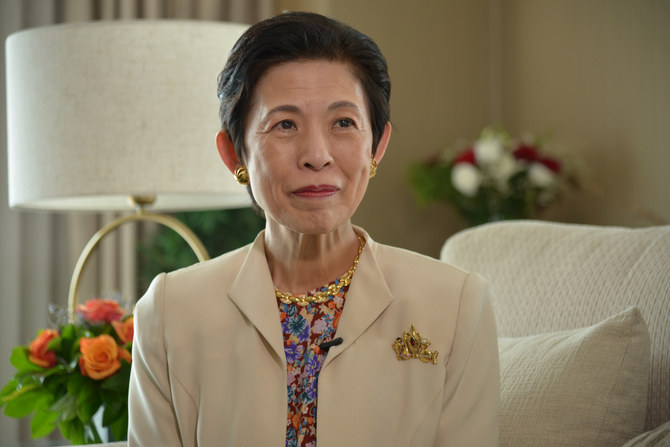
Princess Takamado of Japan has called for indigenous peoples and local communities to be placed at the centre of global conservation efforts, arguing that protecting nature cannot be separated from protecting the people who depend on it.
Speaking at the United Nations Office at Nairobi, the Japanese royal and conservation advocate said efforts to protect ecosystems would only succeed when communities living in those areas are empowered to take responsibility for their own environment.


“It’s all very well for us to say that particular areas need to be protected, but ecosystems also sustain the lives of people who inhabit those areas,” Princess Takamado said.
She said conservation organisations should work to ensure indigenous peoples, local communities and youth groups take it upon themselves to protect their environment, while also creating sustainable livelihood opportunities.
Princess Takamado serves as the honorary President of BirdLife International, and has been championing global nature conservation and migratory bird protection since 2004.
She is in Nairobi for the BirdLife International Global Partnership Meeting and the second Global Flyways Summit taking place in from September 7-11.
In her special address, Princess Takamado placed people at the centre of a presentation otherwise dominated by the plight of birds, biodiversity loss, pollution and climate change.
The royal, who has worked with BirdLife International for more than two decades, argued that conservation cannot be sustained simply through decisions made by governments or international organisations.
Instead, she said, local communities need to become active partners in protecting ecosystems, with conservation efforts also recognising the economic realities of the people living in them.
The approach reflects the increasingly important role of community participation in environmental protection, particularly in areas where ecosystems provide food, water, livelihoods and other services to surrounding populations.
She noted that birds provide an important way of understanding the wider connections in conservation.
She described birds as indicators of the health of the environment, arguing that damage to ecosystems that affects birds can ultimately have consequences for human societies.
She particularly gave the example of the collapse of India’s vulture population.
The widespread use of a veterinary drug on cattle led to the deaths of millions of vultures after the birds consumed carcasses containing the drug. The resulting loss of vultures, which had provided a natural sanitation service by disposing of animal carcasses, was followed by wider ecological and public health consequences.
The lesson, she suggested, is that environmental problems rarely remain confined to wildlife.
Princess Takamado also highlighted the importance of international cooperation because many environmental challenges cross national borders.
Migratory birds, she noted, move between countries without recognising the political boundaries created by humans. Their survival therefore depends on countries working together to protect habitats along migration routes.
BirdLife International operates through a global partnership of conservation organisations working in about 120 countries, allowing national organisations to combine their expertise and networks around common conservation objectives.
Science and reliable data are another essential component of that partnership, she said.
She also linked the future of conservation to young people, arguing for sustainable livelihood opportunities that can give communities an economic incentive to protect their natural environment.
The appeal comes as environmental pressures become increasingly interconnected, from habitat destruction and pollution to climate change.
Princess Takamado warned that humanity’s growing impact on the planet was already changing the conditions on which wildlife depends.
She ended her presentation on a note of optimism, invoking the image of birds as a symbol of hope and arguing that hope should become an incentive for action.
“If we’re so intelligent that we can get people on the moon, we should be able to at least slow down climate change,” she said.