

BY MACHARIA WANGUI
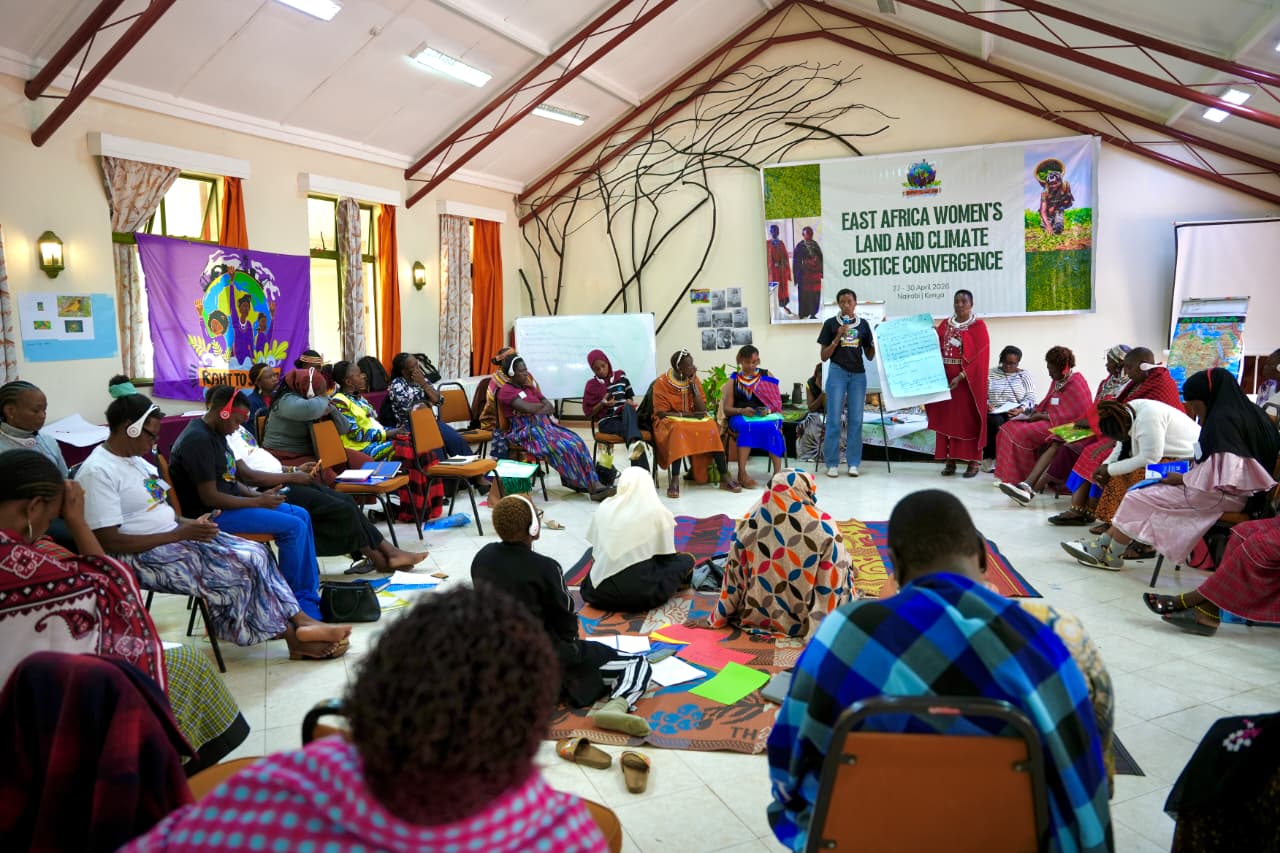
Women from across East Africa are demanding urgent land rights reforms, greater accountability in large-scale development projects, and protection of water sources.


Meeting in Limuru, the women — who were largely drawn from indigenous, marginalized and minority groups— said they are bearing the heaviest burden of climate shocks, while remaining excluded from land ownership and decision-making processes.
The women warned that climate change is worsening inequality and displacing vulnerable communities, adding that without secure land rights, climate justice will remain out of reach.
“When drought hits, women and children suffer first. When floods come, they are the most affected,” participants said, pointing to recurring disruptions in northern Kenya, including the displacement of learners from El Molo Primary School in Loiyangalani in Marsabit county due to climate-related impacts.
Speakers at the forum criticised what they described as poorly structured and “over-ambitious” development projects across the region, arguing that many have been implemented at the expense of community land rights.
These projects, they said, have reduced access to grazing land and water sources—resources critical to livelihoods, particularly for pastoralist communities.
The Lake Turkana Wind Power Project—Africa’s largest wind energy installation—was cited as a key example. While widely regarded as a milestone in renewable energy, community representatives say its implementation exposed legal loopholes that led to land dispossession.
“Grazing within the project area has effectively become a crime,” Alice Lesepen, a community member from Marsabit, said.
“We demand our land back. Our communities were shortchanged during allocation, and shrinking grazing land is now fuelling conflict.”
Across the region, similar concerns are emerging.
In Uganda, women in Bugweri District say rare earth mineral extraction has polluted water sources, forcing them to travel long distances in search of clean water.
“When operations are ongoing, water turns black for days. The gas and dust pollute rain and water sources, and our complaints are not heard,” Josphine Mpindi, a resident of Makuutu sub-county, said.
In Tanzania, communities in mineral-rich areas report deforestation and contamination of water catchment zones linked to extraction activities. Some water sources have reportedly changed colour due to mineral deposits, leaving women—despite living near these sources—walking further distances to access safe water.
Participants also pointed to entrenched patriarchal systems that continue to sideline women in land ownership and compensation processes. Even where land is acquired for development, they said, women are often excluded from negotiations and benefit-sharing frameworks.
Activists and civil society organisations at the forum are now calling for sweeping reforms, including legal recognition of women’s land rights, transparency in land acquisition processes, environmental safeguards, and the inclusion of women in land governance and climate policy decisions.
They argue that failure to address these issues risks deepening inequality and fuelling resource-based conflicts across the region.
“Climate justice must include land justice,” one participant, who did not want. to be named, said. “Without it, women will continue to carry the heaviest burden of both climate change and development.”