
Opaque political party funding remains Africa’s weakest governance area, raising concerns about the influence of undisclosed financiers on democratic competition, a new report has found.
The Integrity Narratives 2026 report by the African Institute for Development Policy (AFIDEP) finds that the continent’s average score for political finance has never exceeded 10 out of 100, highlighting persistent weaknesses in transparency and oversight of money flowing into political parties.


The report warns that “Undisclosed party funding leaves room for opaque influence and patronage,” identifying political finance as a critical accountability gap across the continent.
The findings come as African countries grapple with declining election integrity and questions about the independence of institutions charged with safeguarding democratic competition.
The report’s assessment of 55 African Union member states found that the continent’s average election performance score fell to 26.8 in 2025, below the 29 recorded in 2014. Its research covered the period from September 2023 to June 2025 and assessed how governance institutions operate in practice, rather than simply examining the laws on paper.
“Transparency about sources of funding for political parties, on the other hand, have been the worst performing sets of indicators and it appears there is a profound dearth of institutional capacity and oversight mechanisms to catalyse improvement,” the report says.
The findings say that without adequate disclosure of who finances political parties, voters may struggle to establish whose interests political leaders represent and whether financial contributions create obligations that influence decisions after elections.
KENYA’S 2027 TEST
In Kenya, campaign financing has long presented a regulatory challenge, with previous attempts to enforce spending limits and disclosure requirements frustrated by legal and procedural obstacles.
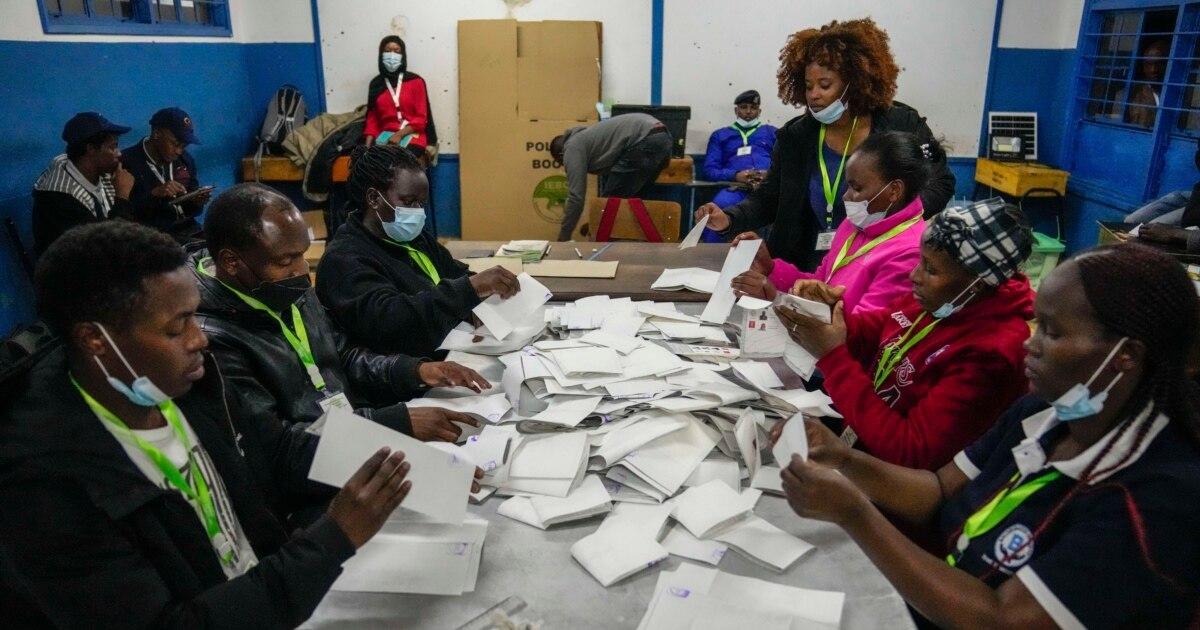
The Independent Electoral and Boundaries Commission gazetted the Election Campaign Financing Regulations, 2026, in August, setting out a framework for regulating campaign contributions, expenditure and financial reporting ahead of the 2027 polls. The regulations followed years of difficulty implementing the Election Campaign Financing Act.
The new framework places the spotlight on whether campaign finance rules can be enforced consistently, including requirements for authorised persons to manage campaign funds and submit financial returns. The commission’s task will be to ensure that the rules are followed and that financial disclosures allow meaningful scrutiny of political spending.
The challenge is significant because campaign funding can shape who is able to compete for elective office. Candidates with access to substantial financial resources may have advantages in organising, advertising and mobilising supporters, while those with fewer resources may struggle to reach voters.
Researchers from the Brookings Institution have warned that weak campaign finance regulation risks making elections more expensive and exclusionary, undermining democratic accountability. They argue that opaque funding can also create opportunities for wealthy interests to exert disproportionate influence over political and policy decisions.
The implications extend beyond the campaign period. Where funding sources and expenditure are not adequately scrutinised, citizens may find it harder to assess whether public decisions are made in the wider public interest or influenced by private financial interests.
WEAK DISCLOSURE, WIDER ACCOUNTABILITY GAPS
AFIDEP’s findings suggest that the problem is not simply a lack of rules, but the weakness of institutions responsible for enforcing them.
The report says Africa’s central governance challenge is “no longer the absence of institutions, laws or continental commitments, but the gap between formal institutional architecture and effective implementation.”
It recommends routine disclosure of party funding, alongside greater protection for oversight institutions from political interference and stronger capacity to enforce accountability.
The report also highlights the importance of independent electoral management bodies. It records an average score of 25.5 for protection against political interference in electoral management bodies, while the indicator on election agencies’ timely publication of publicly accessible reports scored 30.5. Equitable access for candidates and parties to state-owned media scored 24.5.
The indicators point to broader weaknesses in the conditions needed for transparent and fair political competition.