
South Sudan’s December 22 elections face mounting credibility risks, with unresolved political disputes, stalled security arrangements and delayed voter registration, the regional peace deal monitor has warned.
In its third-quarter report covering July to September 2026, the Reconstituted Joint Monitoring and Evaluation Commission, which monitors implementation of the country’s 2018 peace agreement, warned that the challenges facing the transition could undermine public confidence in the polls.
“Political disagreements, incomplete security arrangements, delayed transitional reforms, humanitarian pressures and resource constraints highlighted the complexity of managing the transition while preparing for elections,” the report paints the electoral preparations picture, which threatens preparations for the country’s first general election since independence.
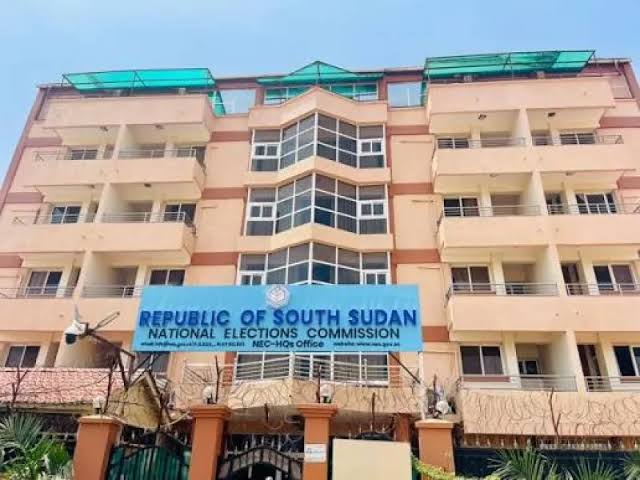
The warning comes as the National Elections Commission races to organise the vote within a compressed timetable. As of September 30, voter registration had not begun and the country had no electoral register, despite the election date being less than three months away.
“The non-commencement of voter registration placed immense pressure on the remaining timeline for electoral activities,” RJMEC said.
On October 28, NEC chairperson Gabriel Bol Deng said registration was expected to begin in early November, while acknowledging resource shortages affecting voter education, registration and logistics. “Everything is set, we will launch it and move quickly to carry out the voter registration across the country,” he said.
This leaves the commission with just over a month to register voters and complete other preparations before the scheduled poll.
Beyond the logistical challenge, RJMEC warned that the credibility of the elections would depend on the security environment and whether political actors could resolve their differences through an inclusive process.
The report noted that President Salva Kiir’s government had amended the Revitalised Agreement on the Resolution of the Conflict in South Sudan (R-ARCSS), the transitional constitution and the National Elections Act to facilitate elections without waiting for the completion of a permanent constitution and a national census.
The government also dissolved the transitional administration and appointed a caretaker government in September. RJMEC noted that the changes were accompanied by considerable political and institutional challenges.
The monitor said electoral credibility was closely linked to peace and security, warning that “Continuing armed confrontations, incomplete security arrangements, intercommunal violence, active armed groups and concerns regarding civic and political space risked weakening public confidence in the transition.”
The report added that these conditions could affect voter registration, campaigning, candidate safety, access to polling and public acceptance of the results.
The government launched an Inter-Party Dialogue on September 24 to build consensus around the elections. However, RJMEC said participation remained limited, with factions affiliated with detained or exiled Sudan People’s Liberation Movement-in-Opposition (SPLM-IO) leaders excluded from the process.
The monitor said it continued to encourage a broader dialogue involving all signatories to the peace agreement and other groups.
The report also highlighted the lack of progress in implementing transitional security arrangements, a central component of the peace agreement intended to establish a unified security structure.
Although the security situation showed some improvement following a unilateral ceasefire declaration by the South Sudan People’s Defence Forces chief of defence forces, sporadic clashes continued in several locations.
RJMEC reported that most security implementation mechanisms had stalled, with the Ceasefire and Transitional Security Arrangements Monitoring and Verification Mechanism (CTSAMVM) the exception. It said no progress had been registered in implementing the Transitional Security Arrangements and disarmament, demobilisation and reintegration.
The report warned that unresolved security issues could undermine the safety of voters, candidates and election workers, as well as the ability of citizens to participate freely.
Financial constraints add another layer of uncertainty. South Sudan’s proposed 2026/27 budget allocated 183.99 billion South Sudanese pounds for pre-election and general election activities, alongside 29.10 billion pounds for peace implementation. However, RJMEC stressed the need for timely and adequate funding for electoral institutions and outstanding peace commitments.
The report also highlighted delays in transitional justice, constitutional and governance reforms, warning that holding elections would not automatically resolve the obligations left unfinished under the peace agreement.
In its conclusion, RJMEC said developments during the quarter had “undermines confidence in the peace process and credibility of the upcoming elections.”
The monitor called on South Sudan’s political leaders to recommit to the peace agreement, widen civic and political space, resolve disputes through dialogue and ensure that remaining preparations are coordinated.