
National Assembly Speaker Moses Wetang’ula wants EAC leaders to reconsider two decisions affecting the remuneration and selection of East African Legislative Assembly members, warning their implementation could raise legal and constitutional questions.
Wetang’ula urged the Bureau of EAC Speakers to recommend that the decisions, adopted by the Heads of State Summit on March 7, 2026, be returned to the regional leaders for further consideration. He noted that implementing the proposals could require amendments to the EAC Treaty and national laws, a process that will take time.

Wetamng’ula’s proposal comes as he urged member states to honour their financial obligations to the EAC, warning that institutional reforms will have limited impact if governments continue to default on their commitments.
“Even if we amend the Treaty, would the Partner States defaulting in their remittances start to honour their obligations to the Community?” he posed.
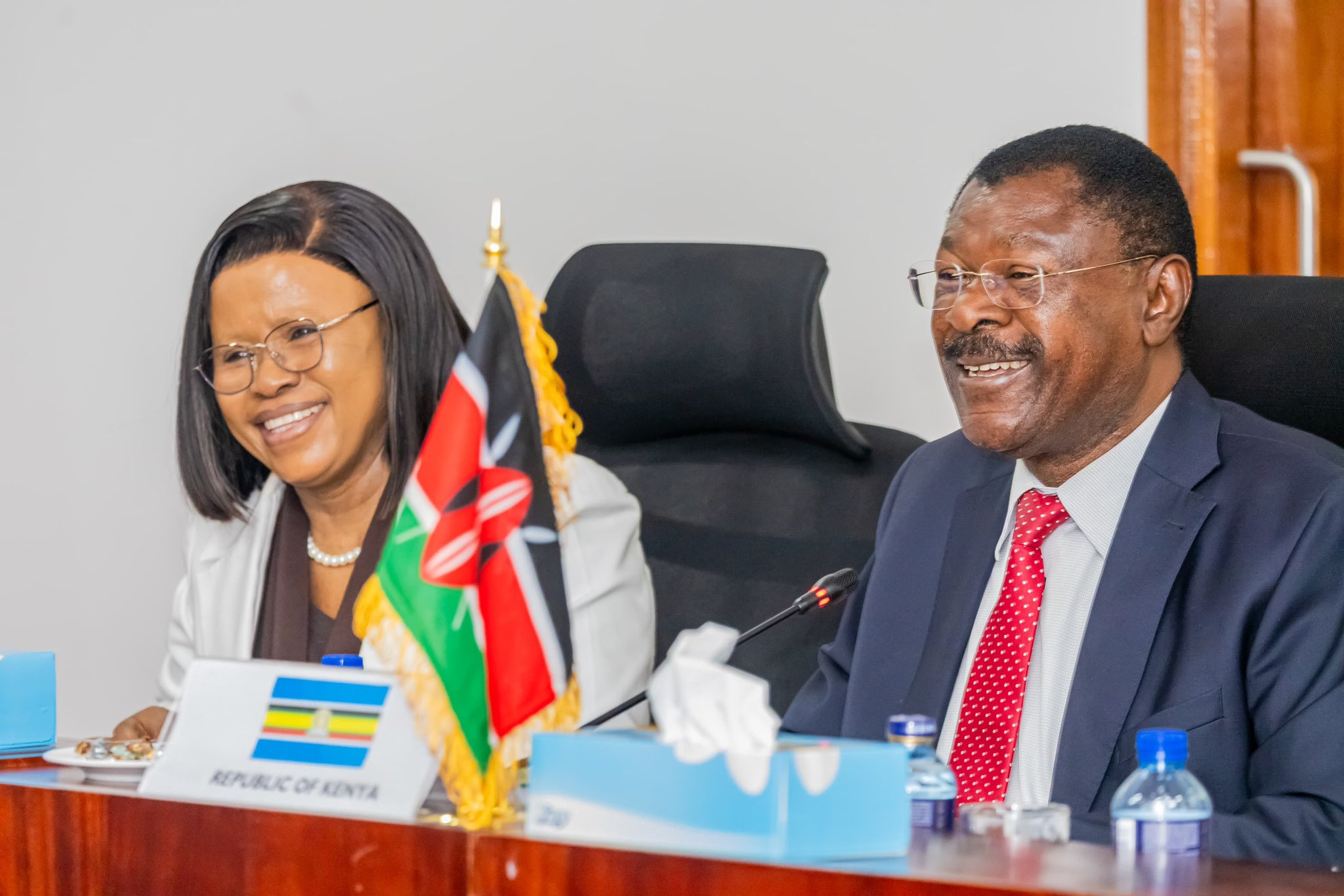
Wetang’ula spoke on Thursday during an extraordinary meeting of the Bureau of EAC Speakers and EALA at Parliament Buildings in Nairobi, where regional parliamentary leaders considered the proposed changes.
Under the proposed arrangement, national assemblies would assume responsibility for paying EALA members from December 2027, while Partner States would cover their travel and daily subsistence costs. The Community would retain responsibility for sitting allowances.
Wetang’ula said the proposals raised legal, financial and administrative questions that required further scrutiny before implementation.
He argued that changes to members’ terms and conditions of service must comply with the EAC Treaty, which provides for the Summit to determine those terms on the recommendation of the Council of Ministers.
“Like many other Partner States, the Republic of Kenya believes in the rule of law. Not just a belief, but we live the law,” he said.
The Speaker cautioned that transferring responsibility for determining EALA members’ terms of service to individual national assemblies could undermine uniform treatment across the regional institution and raise questions about its independence.
Such an arrangement could create differences in remuneration and employment conditions among members serving in the same regional Assembly, depending on the national systems responsible for paying them.
Wetang’ula also raised concerns about taxation, constitutional requirements and the proposed placement of EALA members under Kenya’s Parliamentary Service Commission.
He said implementation could require amendments to the EAC Treaty, the Constitution and relevant national legislation, highlighting the need to establish the legal implications before the changes take effect.
The proposed changes to the selection of EALA members also raise questions about compliance with the Treaty. Wetang’ula cited Article 50, which governs their election and bars serving national legislators from simultaneously serving in the regional Assembly.
He warned that amending the Treaty and securing ratification by all Partner States would take time, reinforcing his call for the Heads of State to reconsider the decisions before implementation.
Kenya is consulting the Executive, including the Attorney-General’s office, the Ministry of East African Community Affairs and the National Treasury, to develop a common position on the proposals.
Beyond the dispute over EALA’s institutional arrangements, Wetang’ula called on Partner States to fulfil their financial commitments, saying the effective functioning of regional institutions depends on shared responsibility.
He reaffirmed Kenya’s commitment to meeting its obligations, confirming that the country had already honoured its financial commitment towards the 16th Inter-Parliamentary Games, scheduled to take place in Arusha, Tanzania, from December 4 to 15, 2026.
The commitment followed an agreement reached at the Bureau’s previous meeting on October 2. Wetang’ula urged other participating countries to remit their contributions in good time to facilitate the event.
“I wish to urge you, let every decision we take today be a decision that will lead to nurturing, preserving, deepening and widening our EAC integration agenda,” he said.
He added that regional leaders had a collective responsibility to strengthen EAC institutions and ensure that their decisions served the interests of citizens across the bloc.
The meeting brought together Senate Speaker Amason Kingi, EAC Bureau Chairperson and Somalia’s Federal Parliament Speaker Abdulkadir Mohamed Nur, Uganda’s Parliament Speaker Jacob Marksons Oboth and EALA Speaker Joseph Ntakirutimana, alongside clerks and secretaries-general of national legislatures.