
The launch of the Sh2 trillion Dangote East Africa Petroleum Refinery in Lamu on Wednesday exposed the competing energy interests within the region, with only a handful of top African leaders attending a project billed as a major East African investment.
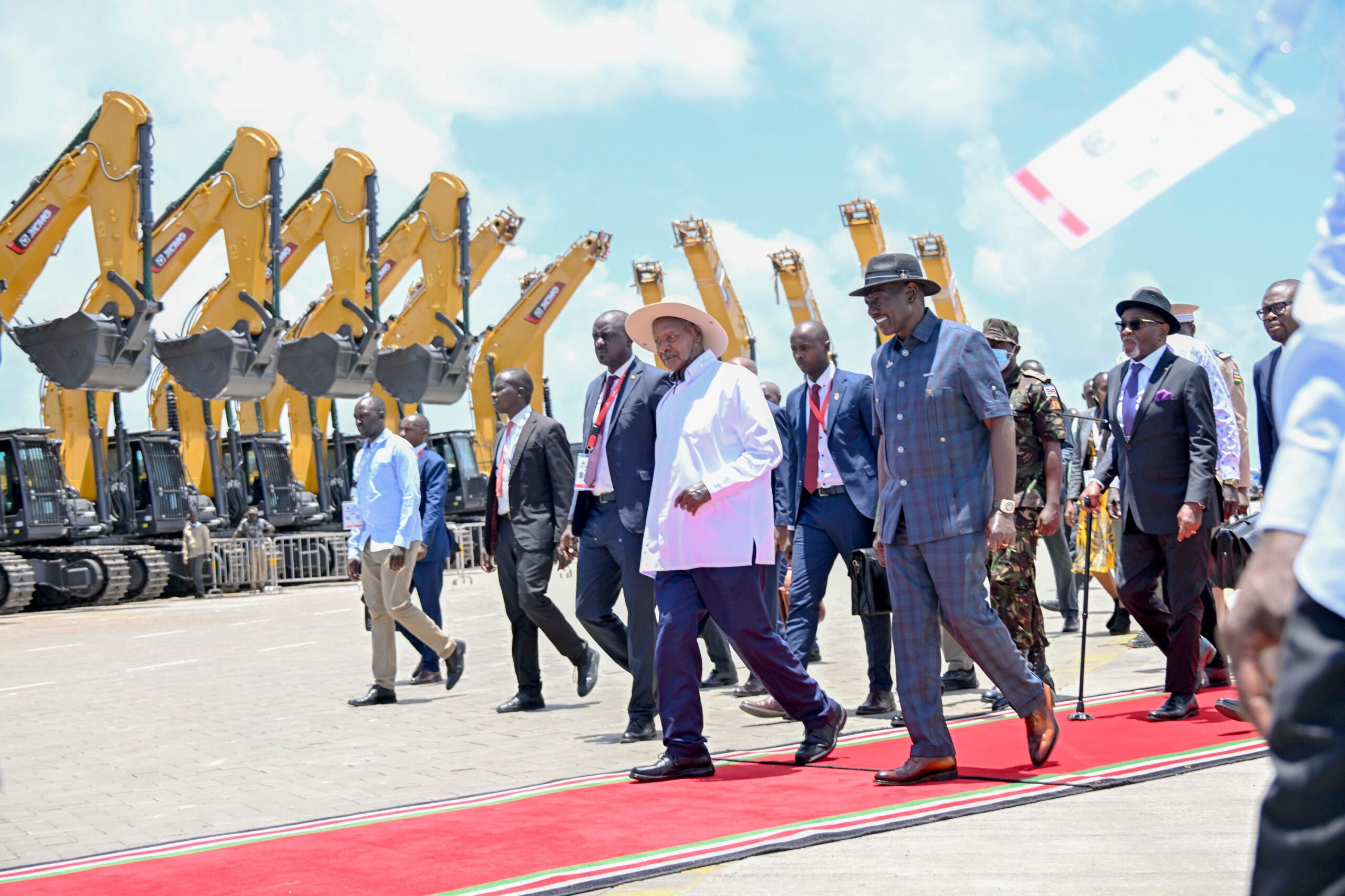
Of the heads of government from the East African Community, only Ugandan President Yoweri Museveni attended the groundbreaking, while Ethiopian Prime Minister Abiy Ahmed was the only leader from the wider Horn of Africa.

The limited regional presence prompted President William Ruto to explain the absence of several leaders who had been expected at the ceremony.
Ruto said some leaders had been held up by official engagements, while others sent representatives and messages of support for the refinery.
He said he had spoken to Mozambique President Daniel Chapo on Wednesday morning and was informed that the leader was on a State visit to Botswana.
“He would have wanted to be here. He has sent his blessings, his goodwill, and he is part of this project,” Ruto said.
Ruto also addressed the absence of Tanzanian President Samia Suluhu Hassan, saying he had spoken to her and that Tanzania had sent a delegation to represent her.
Suluhu’s absence came as she mourns the death of her husband.
Dangote Group chairman Aliko Dangote had earlier sent his condolences to the Tanzanian leader during the ceremony.
However, Tanzania’s representation at the launch was telling. While the ceremony brought together heads of state and government, Dar es Salaam sent Deputy Energy Minister Salome Makamba, rather than Vice President Deogratius Ndejembi, Prime Minister Mwigulu Nchemba or even Energy minister Dr. Juma Zuberi Homera.
While deputy minister presence ensured Tanzania was represented, Dar es Salaam may have deliberately sent a message that it does not endorse a project that could compete with its own interests.
The lower-level representation comes against the backdrop of Tanzania’s earlier involvement in plans for a regional refinery at Tanga, which collapsed into uncertainty after President Ruto announced the proposal without — according to President Suluhu —, first informing her.
Museveni’s own remarks at the Lamu launch suggested that regional alignment over the refinery is not yet settled.
He said Uganda would first engage President Samia to understand what happened to the Tanga proposal before deciding on investing in Lamu, while reiterating Uganda’s plans for a refinery at Hoima.
“I discussed with Mr Dangote and Presidents Ruto and Samia; we’re going to build a small refinery in Uganda. The refinery will produce for Uganda and interior parts of Africa. We had planned this long ago. We can’t change that,” Museveni said.
Ruto said he had also spoken to Burundi President Évariste Ndayishimiye, who committed to sending a delegation because he regarded the refinery as a regional project.
Rwanda President Paul Kagame had also made arrangements to attend but could not make it, Ruto said.
“I spoke to the President of Rwanda, my good brother Paul Kagame. He had even made all the arrangements to come, but for technical reasons, he didn’t manage to come here. He sends his goodwill,” Ruto said.
But while Ruto sought to underline regional support for the project, Museveni’s remarks offered a more complicated picture of Uganda’s position.
The Ugandan President said Kampala was not yet ready to invest in the Lamu refinery, indicating he first wanted to engage President Suluhu on the fate of the earlier plan to establish a refinery at Tanga.
Museveni said Uganda had previously considered investing in the Tanga project before the plan stalled.
Uganda remains one of the region’s major emerging oil producers and has its own plans for refining crude at Hoima.
That creates an overlap between the three proposed refining hubs in the region — Lamu in Kenya, Tanga in Tanzania and Hoima in Uganda — as East African countries seek to secure fuel supplies and capture more value from their petroleum resources.
Museveni also linked the success of major cross-border investments to deeper political integration in East Africa.
He argued that regional political integration would make it easier for countries to invest in and benefit from projects outside their borders.
“Take, for instance, the idea of Eastern Africans buying shares in the project. It means that while the project is here, they can still make profit,” Museveni said.
The Ugandan leader has also previously advocated for East African political federation as a way of removing barriers to regional trade and investment.
His remarks came against a backdrop of tensions over the earlier Tanga refinery proposal.
Ruto had previously announced plans involving Kenya, Uganda and Tanzania to develop a refinery at Tanga, an announcement that drew a public rebuke from President Sulu.
Duringg President Ruto’s visit to Tanzania, Suluhu questioned why the Kenyan President was discussing a project on Tanzanian soil without her knowledge.
However, speaking in Lamu, Ruto sought to emphasise that the Dangote project had broad regional backing.
He thanked PM Ahmed for attending, saying his presence demonstrated the importance of the refinery beyond Kenya.
“I know, my brother, you came here, and the sacrifices you have made to be here today. The people of Kenya appreciate the sacrifices you have made to be here with us,” Ruto said.
Abiy said the refinery would provide Ethiopia with an additional regional source of refined petroleum products.
“For Ethiopia, an additional regional source will broaden our supply options and create opportunities for trade and investment,” he said.
He added that the refinery would also stimulate economic activity around it and strengthen regional connectivity.
The project is located along the Lamu Port-South Sudan-Ethiopia Transport Corridor, which is intended to connect Kenya’s northern coast with Ethiopia and South Sudan.
The Dangote refinery is expected to process 700,000 barrels of crude oil a day and supply petrol, diesel, aviation fuel and other petroleum products to Kenya and regional markets.
Dangote has said regional governments can collectively take a 30 per cent stake in the project.