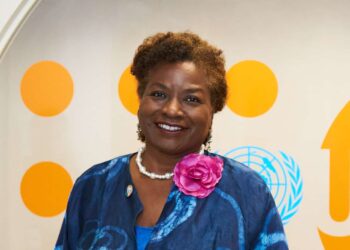

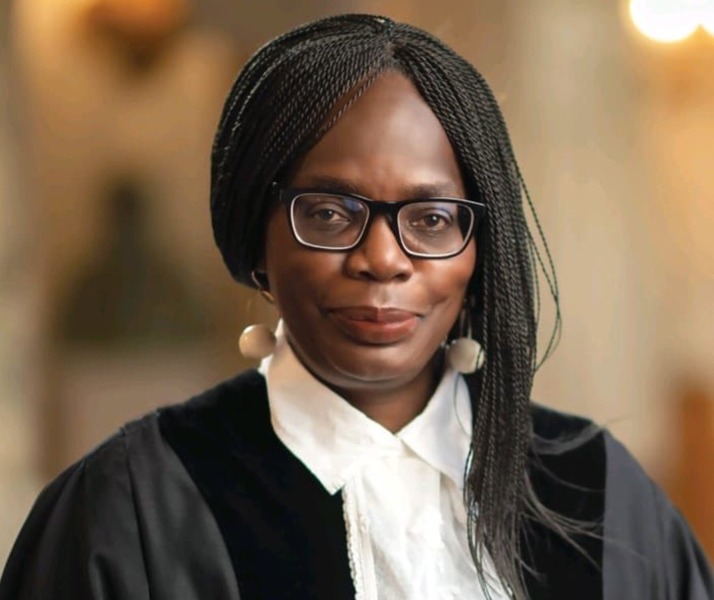
The election of Prof Phoebe Okowa to the International Court of Justice for a full nine-year term has secured Kenya a sustained presence in one of the most influential institutions of the United Nations.
Okowa’s victory on Tuesday represents a diplomatic achievement for Nairobi, an endorsement of Kenya’s legal expertise and an opportunity for African perspectives to contribute to the development of international jurisprudence.


It also opens an opportunity for Kenya to shape international legal debates at a time of growing geopolitical tensions.
The Kenyan legal scholar secured 183 votes in the UN General Assembly and 13 in the 15-member Security Council during elections in New York, meeting the requirement for election by both organs.
Her win followed a competitive race involving nine candidates seeking five positions and gives her a full term running from February 2027 to February 2036.
The nine-year tenure gives Kenya continuity in its engagement with international judicial affairs at a time when sovereignty, territorial integrity, armed conflicts and accountability are increasingly testing the international legal order.
Foreign Affairs PS Korir Sing’oei described the outcome as a demonstration of the international community’s confidence in Kenya’s commitment to a rules-based international order, multilateralism and its role as a unifying voice on the African continent.
The election also reflects the country’s diplomatic capacity to mobilise support across different geopolitical groupings within the UN system.
President William Ruto described the victory as “a powerful affirmation of the depth of legal expertise, integrity and excellence that our country continues to contribute to the international community”.
He said Okowa’s election was a moment of great pride for Kenya and wished her success in advancing the ICJ’s mission of upholding international law and promoting the peaceful resolution of disputes.
But beyond the diplomatic victory, Okowa’s election gives Kenya an opportunity to contribute to the development of international law through a jurist whose expertise spans some of the most consequential areas of contemporary international relations.
A Professor of Public International Law at Queen Mary University of London, Okowa has built an extensive career in academia, international legal practice and multilateral institutions.
Her areas of expertise include state responsibility, the use of force, environmental law and the peaceful settlement of disputes.
She previously served on the UN International Law Commission, an expert body mandated to promote the progressive development and codification of international law.
Director of Public Prosecutions Renson Ingonga said her election was significant because it would allow African legal perspectives and experiences to continue shaping international jurisprudence.
“It also underscores Africa’s important role in advancing international law and strengthening the rules-based international order,” the DPP said in a statement.
He also highlighted the relevance of her expertise at a time when the world faces “increasingly complex geopolitical tensions, cross-border disputes and emerging international legal challenges”.
These areas have particular significance for African countries, which continue to grapple with questions of sovereignty, territorial disputes, exploitation of natural resources, environmental damage and accountability for violations of international law.
Chief Justice Martha Koome described the election as a recognition of Okowa’s distinguished scholarship and commitment to international justice.
“This remarkable achievement is a testament to her distinguished legal scholarship, and unwavering commitment to international law and justice,” Koome said.
She added that it was “a resounding affirmation of the confidence the international community has placed in her”.
Former Chief Justice David Maraga also congratulated Okowa, describing the outcome as a “resounding victory” and an affirmation of the world’s confidence in her ability to contribute to international justice and the rule of law during a difficult period in global governance.
The United Nations in Kenya described the election as “a proud moment for Kenya” and recognition of Okowa’s contribution to international law.
The Iranian Embassy in Nairobi also welcomed the outcome, expressing confidence that her election would strengthen Kenya’s commitment to multilateralism, international justice and the principles of the UN Charter. However, despite the state support, ICJ judges are elected in their individual capacity and are expected to exercise independent judicial judgment rather than advance the foreign policy interests of their home countries.