
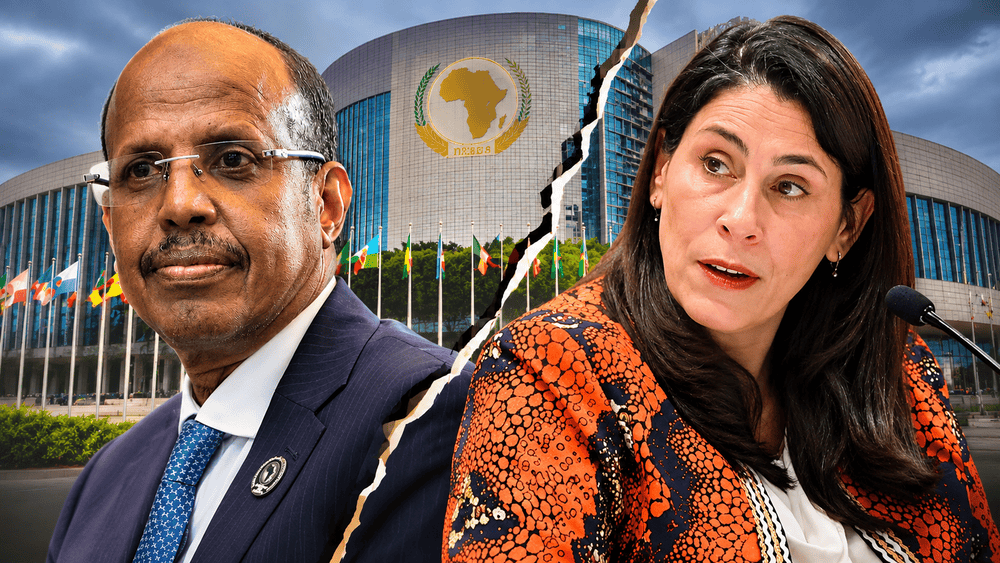
Algeria’s reported efforts to strengthen its influence within the African Union Commission have exposed tensions at the top of the continental institution.
According to insider reports, growing contest over senior appointments within the AU Commission is raising questions about the organisation’s independence and the 2029 leadership succession.
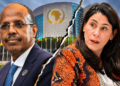
A story by investigative publication Africa Intelligence on Tuesday reported that Deputy Chairperson Selma Malika Haddadi, an Algerian diplomat, is seeking to expand her influence within the Commission as she positions herself to succeed Chairperson Mahmoud Ali Youssouf when the leadership returns to North Africa in 2029.
The report described an increasingly difficult relationship between Haddadi and Youssouf, suggesting the disagreement is rooted in competing approaches to the management of the Commission and Algeria’s broader diplomatic ambitions.
Haddadi was elected deputy chairperson in February 2025 alongside Youssouf, who comes from Djibouti. Their election placed representatives of Eastern and Northern Africa at the head of the Commission for a four-year term.
But the arrangement has reportedly become a source of friction, with claims Algiers is using its diplomatic networks to consolidate Haddadi’s position and secure greater influence over the institution’s administrative machinery.
According to Africa Intelligence, Algerian Foreign Minister Ahmed Attaf made several diplomats, paid by the Algerian government, available to Haddadi in 2025. Her cabinet reportedly has 20 members, including six Algerians, making it larger than that of the Commission chairperson.
The presence of diplomats funded by a member state within the office of a senior continental official is raising questions about institutional independence. This is particularly where national diplomatic interests could intersect with decisions affecting all AU member states.
The reported contest has also extended to control of senior administrative appointments.
One of the latest flashpoints concerns the appointment of Algerian diplomat Tayeb Toufik Dahar as director of human resources, a position responsible for recruitment and promotions across the Commission.
The appointment reportedly went ahead despite concerns over the recruitment process. According to details published by Le360, Dahar was the only one of three shortlisted candidates to score above the technical threshold of 70 per cent.
AU recruitment rules reportedly require at least three candidates to be presented to the chairperson, with the process reopened if only one candidate meets the required threshold.
Youssouf was reportedly pressed to approve the appointment, which was formalised in October.
The appointment is sensitive because the human resources department has considerable influence over the Commission’s staffing structure and the distribution of senior positions.
The diplomatic rivalry between Algeria and Morocco has added another dimension to the dispute.
In mid-October, Algeria’s ambassador to Ethiopia, Mohamed Khaled, reportedly met Youssouf to push for what Algiers described as a balance between Algerian and Moroccan representation in senior AU positions.
The intervention reportedly followed the September appointment of former Moroccan diplomat Fathallah Sijilmassi as the AU’s special envoy to the G20.
The developments point to the continuing rivalry between Algiers and Rabat, which has frequently shaped their diplomatic engagement across Africa.
Securing greater representation within the AU’s leadership structures would provide Algeria with an important platform for advancing its continental diplomatic priorities. The prospect of Haddadi succeeding Youssouf in 2029 adds to the significance of the reported manoeuvres.
The leadership question also touches on the credibility of the AU as a multilateral institution whose appointments and decisions should reflect continental interests rather than competition between individual member states.
However, the Commission has rejected the account of a deteriorating relationship between its two senior officials.
In a statement issued on November 4, the spokesperson for the Chairperson, Nuur Mohamud Sheekh, described the Africa Intelligence article as presenting a misleading account of their professional relationship.
“The Chairperson and Deputy Chairperson maintain a close and constructive working relationship, based on mutual respect, collegiality, and a shared commitment to the effective functioning of the Commission,” the statement said.
The Commission added that the two officials hold weekly consultations to review institutional matters, coordinate priorities and ensure coherence in its work.
“The Chairperson remains fully committed to working closely with the Deputy Chairperson in the discharge of their respective mandates and in advancing the priorities of the African Union and its Member States,” the statement added.