

Kenya is exploring China’s capital markets for infrastructure financing as fiscal pressures and stalled projects push the government to diversify its sources of borrowing.
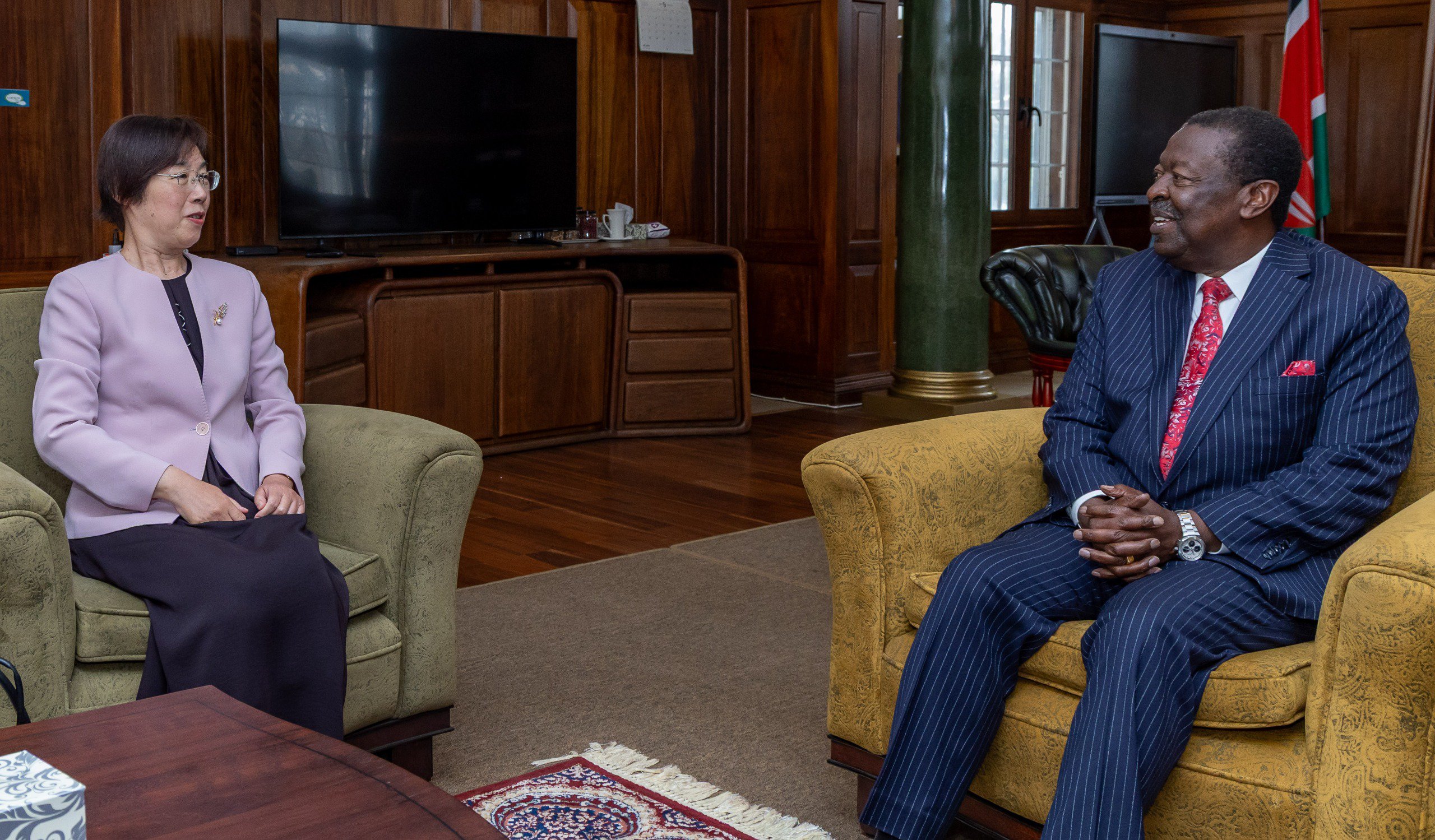
The plan emerged from a meeting between Prime Cabinet Secretary Musalia Mudavadi and Asian Infrastructure Investment Bank (AIIB) President Jin Liqun, where Kenya’s financing needs and opportunities to deepen cooperation with the Beijing-based multilateral lender were discussed.


The meeting provided fresh confirmation that Nairobi is considering a $300 million (about Sh39 billion) Panda bond, adding China’s domestic capital market to the financing options being explored by the government.
A Panda bond is a renminbi-denominated bond issued by a foreign government or institution in China’s domestic market. For Kenya, accessing the market would provide an alternative pool of investors as it seeks to finance infrastructure and development projects while reducing dependence on traditional external borrowing channels.
The discussions with the AIIB come as Kenya seeks to strengthen its partnership with the institution and tap into alternative financing instruments.
The AIIB has become an increasingly important development-financing partner for Kenya, particularly in infrastructure, energy, transport and other projects aligned with the country’s development priorities.
The push for new sources of financing comes against the backdrop of growing pressure on the national budget, with the government struggling to fund its ambitious infrastructure programme while dealing with revenue shortfalls, debt-service obligations and accumulated pending bills.
The latest Controller of Budget report highlights the scale of the problem.
During the first nine months of the 2025/26 financial year, the Exchequer released Sh206.81 billion under Article 223, of which only Sh19.47 billion was for development, compared with Sh185.34 billion for recurrent expenditure.
Parliament had approved Sh276.76 billion in additional funding under Article 223, comprising Sh68.77 billion for development and Sh207.99 billion for recurrent expenditure.
The additional allocations represented about six per cent of the Sh4.69 trillion gross national budget for the financial year.
The figures point to the difficult trade-off confronting the Kenya Kwanza administration: maintaining government operations while finding enough resources to implement its development agenda.
The administration’s manifesto placed infrastructure, manufacturing, energy, housing and transport at the centre of its economic transformation programme. But the implementation of some flagship projects has been slowed by inadequate funding, procurement delays and mounting pending bills.
The Controller of Budget has also raised concerns about stalled and underutilised projects.
At the county level, 237 projects valued at Sh13.7 billion had been identified as stalled, abandoned or underutilised, with an estimated Sh5.3 billion required to complete them.
The national government faces a similar challenge, with the gap between approved development programmes and available financing continuing to widen.
Pending bills have added to the pressure. By March 2026, they stood at Sh465.87 billion, including Sh194.71 billion for development projects.
The financing squeeze has encouraged Nairobi to broaden its search for lenders and investors beyond the traditional Eurobond and bilateral-loan model.
Kenya has been exploring financing from the AIIB and African Development Bank, while also strengthening financial partnerships with Japan, India and the United Arab Emirates.
The proposed Panda bond is particularly significant because it would give Kenya access to China’s deep domestic capital market.
China has traditionally been one of Kenya’s most important infrastructure partners, financing major projects including the Standard Gauge Railway and other transport and energy investments. A Panda bond would represent a different form of financial engagement, allowing Kenya to borrow directly from Chinese capital-market investors rather than relying solely on government-to-government loans.
It would also mark an attempt to diversify the currency and investor base of Kenya’s external debt.
The government has in recent years relied heavily on international commercial borrowing, particularly Eurobonds. However, expensive global borrowing conditions and heightened scrutiny over Kenya’s debt sustainability have made repeated access to commercial markets more challenging.
A Panda bond could potentially offer access to longer-term capital and a new investor base, although the renminbi denomination would expose Kenya to currency risks and the issuance would have to meet China’s regulatory and market requirements.
The proposed transaction therefore forms part of a broader financing strategy rather than a wholesale shift away from traditional lenders.
Japan remains an important partner. Kenya recently secured a Sh22 billion Samurai loan facility from Japan, with financing directed towards the automotive sector, reduction of energy losses and the government’s reform and development agenda.
India has also remained an important source of development financing, while the UAE has emerged as another potential partner through a proposed US$1 billion financing facility.
For Kenya, the diversification is increasingly driven by necessity.
The government needs substantial resources to implement projects promised under the Kenya Kwanza manifesto, but domestic revenues have repeatedly fallen short of targets, leaving the Treasury with limited room to finance development from ordinary budget allocations.
This has created a paradox: the government is searching for additional borrowing to complete infrastructure projects even as the Controller of Budget continues to flag projects that remain unfinished because of inadequate financing.
The Panda bond could help address part of that gap if the government succeeds in securing favourable terms and ensuring the funds are channelled into productive investments.
The Mudavadi-AIIB engagement therefore points to a broader shift in Kenya’s infrastructure-financing strategy: rather than depending predominantly on a handful of traditional lenders and international bond markets, Nairobi is seeking to build a wider network of financing partners and instruments.
The proposed Panda bond could open a new financing frontier for Kenya. But its real test will be whether the additional capital helps close the gap between the government’s ambitious development plans and the unfinished projects already on the ground.