
Russia is moving into South Sudan’s oil industry through a proposed acquisition of Malaysian energy giant PETRONAS’s interests in two major oil-producing consortia.
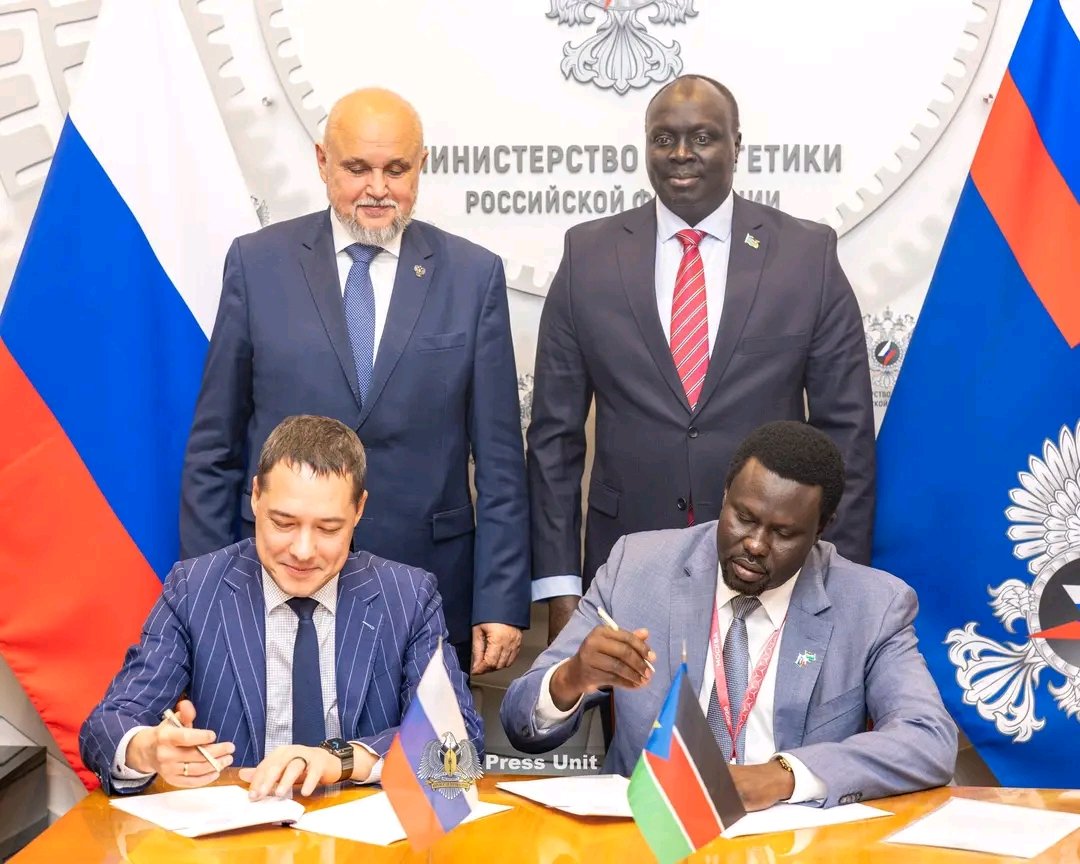
South Sudan and Russia signed preliminary agreements on October 29, paving the way for Russian state-owned oil company Zarubezhneft to take over the former PETRONAS stakes in the Dar Petroleum Operating Company (DPOC) and Greater Pioneer Operating Company (GPOC).


The MoU and Letter of Acceptance were signed in Moscow on the sidelines of the Russia-Africa Summit by South Sudan’s Petroleum Minister Awow Daniel Chuang and his Russian counterpart Sergey Tsivilev, deepening Moscow’s commercial engagement with South Sudan.
The proposed transaction gives Zarubezhneft an entry into two of South Sudan’s principal oil-producing ventures, where Chinese companies and India’s Oil and Natural Gas Corporation (ONGC) are among the existing partners.
PETRONAS held a 40 per cent interest in DPOC, which operates Blocks 3 and 7, and a 30 per cent stake in GPOC, which operates Blocks 1, 2 and 4.
The two consortia are central to South Sudan’s oil production, which provides the government with its main source of revenue.
According to the South Sudanese Ministry of Petroleum, DPOC’s other shareholders include China’s National Petroleum Corporation (CNPC), which holds 41 per cent, while GPOC has CNPC with 40 per cent and ONGC with 25 per cent. South Sudan’s state-owned Nile Petroleum Corporation (Nilepet) also holds interests in both ventures.
The proposed Russian entry follows PETRONAS’s decision to withdraw from South Sudan in August 2024 after a two-year divestment process, citing changes in the industry environment and its long-term investment strategy.
The Malaysian company had previously agreed to sell its South Sudanese oil and gas portfolio to UK-based Savannah Energy in a transaction valued at up to $1.25 billion. However, the deal collapsed amid disagreements over the proposed transfer, leaving the future ownership of the assets unresolved.
PETRONAS subsequently announced its withdrawal, while South Sudan sought new partners to maintain operations and attract investment into the sector.
The proposed acquisition offers Moscow an opportunity to expand its presence in Africa’s energy industry at a time when Russia is seeking to strengthen economic and strategic partnerships across the continent.
Russian President Vladimir Putin has used the Russia-Africa engagement to promote Moscow as an alternative economic and investment partner, with energy cooperation featuring prominently in its outreach to African governments.
During the summit, Russia signalled its intention to expand investment in oil and gas projects, energy infrastructure and other areas of cooperation with African countries.
Moscow is already implementing more than 30 energy projects across 16 African countries, reflecting its interest in expanding its role in the continent’s energy sector.
However, SouthSudan petroleum sector faces challenges including ageing infrastructure, declining production from some fields and disruptions to the export pipeline running through neighbouring Sudan.
Oil exports are particularly important to South Sudan because the country is landlocked and depends on Sudan’s pipeline network and Port Sudan facilities to transport its crude to international markets.
The government has thus been seeking investment and partnerships to strengthen production, improve infrastructure and reduce vulnerabilities in the oil industry.
Zarubezhneft’s proposed entry could bring another state-backed international player into a sector that has historically been dominated by Chinese, Malaysian and Indian interests.