
• Careers
  • Advertise
  • Contact us
Friday, November 7, 2025
  • Login
DiploBrief
Advertisement
  • Home
  • News
  • Politics
  • Business
  • Foreign
    • EAC
    • Horn of Africa
    • AU
    • Middle East
    • China Briefs
  • Diaspora
  • Diplomat’s Corner
  • Untold Stories
No Result
View All Result
DiploBrief
No Result
View All Result
Home Diplomat's Corner

PRAVEDNYK: Russia must not be allowed to continue its ‘hunger games’

The Brief by The Brief
27th November 2023
in Diplomat's Corner, Opinion
0
PRAVEDNYK: Russia must not be allowed to continue its ‘hunger games’

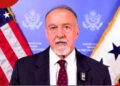
Ukraine Ambassador to Kenya Andrii Pravednyk

Share on FacebookShare on Twitter

By ANDRII PRAVEDNYK

Every year on the fourth Saturday of November, Ukraine commemorates the victims of communist crime – the artificially created Great Famine (Holodomor) of 1932–1933. 
Related posts

Kenya eyes economic partnership with Australia to deepen trade, security ties

Kenya eyes economic partnership with Australia to deepen trade, security ties

13th October 2025
Foreign Affairs denies external pressure  in awarding immunity to climate NGO

Foreign Affairs denies external pressure in awarding immunity to climate NGO

13th October 2025

This year we commemorate the 90th anniversary of one of the greatest human tragedies not only in our history but of mankind. Millions of innocent Ukrainians were starved to death by the Stalin regime. 

Barbaric seizure of Ukrainian land and crops was undertaken with the pre-planned political goal of subjugating the Ukrainian people. Additionally, the Stalinist communist regime launched attacks on the Ukrainian Church and the Ukrainian national, cultural and political elites. 

The Holodomor (combination of Ukrainian words standing for hunger and death) was a deliberate and ruthlessly implemented genocide aimed to destroy our people. 

The origins of the famine lay in the decision by Joseph Stalin to collectivise agriculture in 1929.  

Teams of Communist Party agitators forced peasants to relinquish their land, personal property and sometimes housing to collective farms. It sparked a series of peasant rebellions, including armed uprisings, in some parts of Ukraine. 

The Soviet secret police and the Red Army ruthlessly suppressed these protests. Tens of thousands of farmers were arrested for participating in anti-Soviet activities, shot or deported to labour camps in Siberia. 

As a retaliation towards Ukrainians the leadership of the Soviet Communist Party took a series of decisions that widened and deepened the famine in the Ukrainian countryside. Farms, villages and whole towns in Ukraine were placed on blacklists and prevented from receiving food. 

Peasants were forbidden to leave the territory of Ukraine in search of food. Organized groups of police ransacked the homes of peasants and took everything edible, from crops and personal food supplies to pets. 

Ukraine, with its history of resistance to Soviet rule, was a threat to the regime. Fearing that opposition to his policies in Ukraine could intensify and possibly lead to Ukraine’s secession from the Soviet Union, Stalin set unrealistically high grain procurement quotas accompanied by other harsh measures. 

In August of 1932, the decree of ‘Five Stalks of Grain’ stated that anyone, even a child, caught taking any produce from a collective field, could be shot or imprisoned for stealing ‘socialist property’. At the beginning of 1933, about 54,645 people were tried and sentenced; of those, 2,000 were executed. 

At the height of the Holodomor in June of 1933, Ukrainians were dying at a rate of 28,000 people per day. Between 7 and 10 million Ukrainians died during the Holodomor. 

Kremlin minions use the methods of genocide for the elimination of Ukrainian nationals, culture and language. Moscow’s barbarians kill Ukrainians, destroy our cities, towns and villages, as well as blow up cultural institutions. 

Ambassador Andrii Pravednyk   

While Ukrainians were dying, the Soviet state extracted 4.27 million tonnes of grain from Ukraine in 1932, enough to feed at least 12 million people for an entire year. The government could have organised famine relief and could have accepted help from outside of the USSR. Moscow rejected foreign aid and denounced those who offered it, instead exporting Ukraine’s grain abroad for cash. 

The Holodomor in Ukraine of 1932-1933 was officially recognised as the Genocide of the Ukrainian people by 28 states and the European Parliament. In 2023, 13 countries joined the international coalition recognising the Holodomor as a Genocide of Ukrainians. 

Today, nine decades after the Holodomor, Ukrainians are once again dying because of Russia’s continuous attempts to destroy the identity and aspirations of the Ukrainian people.  

Kremlin minions use the methods of genocide for the elimination of Ukrainian nationals, culture and language. Moscow’s barbarians kill Ukrainians, destroy our cities, towns and villages, as well as blow up cultural institutions. 

But Russian aggression against Ukraine poses a threat not only to Ukrainians but also to the whole world, exacerbating the problem of food security, putting hundreds of thousands of people in various countries of the world, particularly Africa, on the verge of survival. 

Right after withdrawing from the Black Sea Grain Initiative, Russia demonstrated its true attitude toward global food security by attacking the infrastructure of key Ukrainian seaports, Odesa and Chornomorsk, including grain and oil terminals used to secure agricultural exports from Ukraine. 

The world cannot afford to allow Russia to continue its ‘hunger games’. Only firm and unanimous reaction from the international community could bring the Russian aggressor state to its senses and force it to ensure an uninterrupted flow of food supplies through the vital Black Sea route. 

Andrii Pravednyk is the Ukraine Ambassador to Kenya        

Tags: HolodomorRussia-Ukraine conflict
Previous Post

CoP28 must underscore access to energy as basic human right – African Civil Society

Next Post

AfDB to host dialogue on Africa Climate Risk Insurance Facility at CoP28

The Brief

The Brief

Your platform for foreign, regional and diplomatic news and analysis

Next Post
AfDB to host dialogue on Africa Climate Risk Insurance Facility at CoP28

AfDB to host dialogue on Africa Climate Risk Insurance Facility at CoP28

CoP28: Three top Kenyan varsities back UN initiative to adopt 5G Tech Spaces to cut emissions

CoP28: Three top Kenyan varsities back UN initiative to adopt 5G Tech Spaces to cut emissions

Please login to join discussion
ADVERTISEMENT

YOU MAY ALSO LIKE

Opinion: Hidden pandemic of domestic violence alongside Covid-19

Opinion: Hidden pandemic of domestic violence alongside Covid-19

5 years ago
Serbia condemns Kenya’s recognition of Kosovo as a state

Serbia condemns Kenya’s recognition of Kosovo as a state

7 months ago
EU gives TradeMark Africa €25 million fund to close Kenya’s negative balance of trade

EU gives TradeMark Africa €25 million fund to close Kenya’s negative balance of trade

3 years ago
Sudan leader visits Khartoum base after months, vows to defeat RSF

Sudan leader visits Khartoum base after months, vows to defeat RSF

9 months ago

BROWSE BY CATEGORIES

  • AU
  • Business
  • China Briefs
  • Climate change
  • Culture
  • Diaspora
  • Diplomat's Corner
  • EAC
  • Featured
  • Foreign
  • Horn of Africa
  • Lifestyle
  • Middle East
  • National
  • News
  • Opinion
  • Politics
  • Recent
  • Uncategorised
  • United Nations
  • Untold Stories

BROWSE BY TOPICS

Aden Duale AfDB Africa African Union Al Shabaab AU China Climate change coronavirus COVID-19 DP William Ruto DRC EAC Eastern DRC Ethiopia EU Horn of Africa IGAD Kenya Kenya diaspora M23 Mike Sonko Monica Juma Moussa Faki Musalia Mudavadi President Uhuru Kenyatta President William Ruto Raila Odinga RJMEC RSF Russia Russia Ukraine War Rwanda Somalia South Sudan Sudan Sudan war Trade Uhuru Uhuru Kenyatta Ukraine UN UNSC US William Ruto

POPULAR NEWS

  • UNFPA boss faces abuse of office, nepotism allegations

    UNFPA boss faces abuse of office, nepotism allegations

    0 shares
    Share 0 Tweet 0
  • Ruto KDF changes signal next military chief

    0 shares
    Share 0 Tweet 0
  • The double-faced life of famed sharpshooter Dafton Mwitiki

    0 shares
    Share 0 Tweet 0
  • Willy Bett new envoy to China, Peter Munyiri in India as President Ruto finally names diplomats

    0 shares
    Share 0 Tweet 0
  • Women, CAS political rejects biggest winners in Ruto’s envoy jobs

    0 shares
    Share 0 Tweet 0

DiploBrief

Your platform for foreign, regional and diplomatic news and analysis

Follow us on social media:

Tel: +254 769 256 833

Email : editor@thebrief.co.ke

About us

  • About Us
  • Advertise with us
  • Sponsored Post
  • Guest Writer
  • Careers
  • Contact us

Categories

  • AU
  • Business
  • China Briefs
  • Climate change
  • Culture
  • Diaspora
  • Diplomat's Corner
  • EAC
  • Featured
  • Foreign
  • Horn of Africa
  • Lifestyle
  • Middle East
  • National
  • News
  • Opinion
  • Politics
  • Recent
  • Uncategorised
  • United Nations
  • Untold Stories

Recent News

Kenya ​defends ​rights ​record, ​rejects UN ​criticism ​amid ​rising ​scrutiny

Kenya ​defends ​rights ​record, ​rejects UN ​criticism ​amid ​rising ​scrutiny

30th October 2025
Kenya protests abduction of two activists in Uganda, demands answers

Two activists arrested during demos for release of Bob Njagi, Nick Oyoo

29th October 2025
  • Privacy policy

Copyright© 2024 DiploBrief

No Result
View All Result
  • Home
  • News
  • Politics
  • Business
  • Foreign
  • Diaspora
  • Diplomat’s Corner
  • Untold Stories

Copyright© 2024 DiploBrief

Welcome Back!

Login to your account below

Forgotten Password?

Retrieve your password

Please enter your username or email address to reset your password.

Log In