

BY MACHARIA WANGUI
More than 7,000 residents in Laikipia North risk being locked out of the 2027 General Election due to a lack of national identity cards,.


Highlighting a deepening crisis of access to civil registration among marginalised communities, members of the Pokot community in Sossian ward say years of neglect have denied them the basic documentation required to participate in democratic processes, including voter registration.
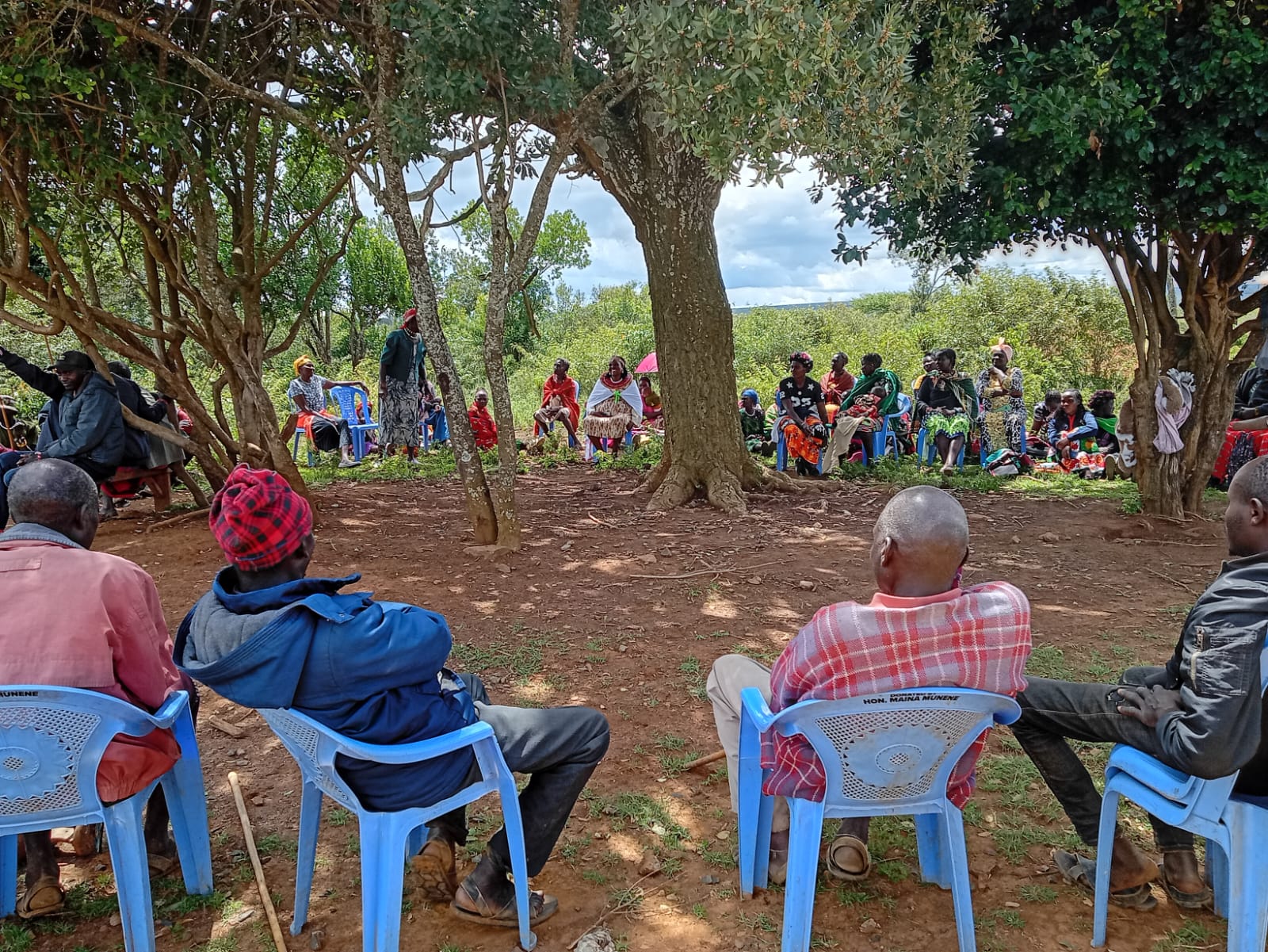
During a meeting on Thursday attended by over 250 residents, only 10 people present had national IDs, demonstrating the scale of exclusion in the area.
Community leaders have warned that unless urgent action is taken, thousands will be unable to register as voters.
“We as the Pokot people have come together since we have realised about 7,00 people in our villages have no ID cards. We are asking the President [William Ruto] to ensure our people have access to ID cards. Even if these people would want to vote for him, they can’t without having IDs,” community leader and 2027 aspirant Julia Lochingamoi said.
Lochingamoi said repeated appeals to authorities to establish registration services in the area have yielded no results.
“We can’t even register for the Social Health Authority (SHA) without and ID. Our elders here over 70 years have not accessed pesa ya wazee (Inua Jamii) because of lack of ID. We want our people to have access to IDs so that we can be like other Kenyan,” Lochingamoi said.
Lochingamoi urged that President Ruto directs the Ministry of Interior to urgently set up a permanent civil registration office in the ward, arguing that the absence of such services continues to disenfranchise entire communities.
The most affected areas are Louniek and Kariwo locations, where residents must travel long distances—often across difficult terrain—to access registration centres. For many, especially the elderly and economically vulnerable, the journey is prohibitive.
Beyond voting rights, the lack of identification documents has also locked out residents from critical government services, including social protection programmes such as Inua Jamii, which require formal identification for enrolment.
The situation in Laikipia reflects a broader national paradox. While some communities struggle to access IDs, government data shows that as of April 2026, more than 490,000 uncollected identity cards remain at registration offices across the country.
This dual crisisraises serious questions about the preparedness of the state to deliver an inclusive electoral process in 2027.
Under Kenyan law, possession of a national ID is a prerequisite for voter registration by the Independent Electoral and Boundaries Commission. Without it, eligible citizens are effectively barred from participating in elections, undermining the constitutional guarantee of universal suffrage.
Civil society groups have long warned that marginalised and indigenous communities, particularly in remote areas, face systemic barriers in accessing IDs. These include lack of nearby registration centres, bureaucratic hurdles, and, in some cases, historical vetting processes that disproportionately affect border communities.
In regions like Laikipia North, these barriers are compounded by insecurity, poverty, and limited state presence, creating a cycle of exclusion that persists across generations.
As the 2027 election approaches, the stakes are rising. Political actors are expected to intensify voter mobilisation efforts, but for communities without IDs, such efforts may be meaningless.