

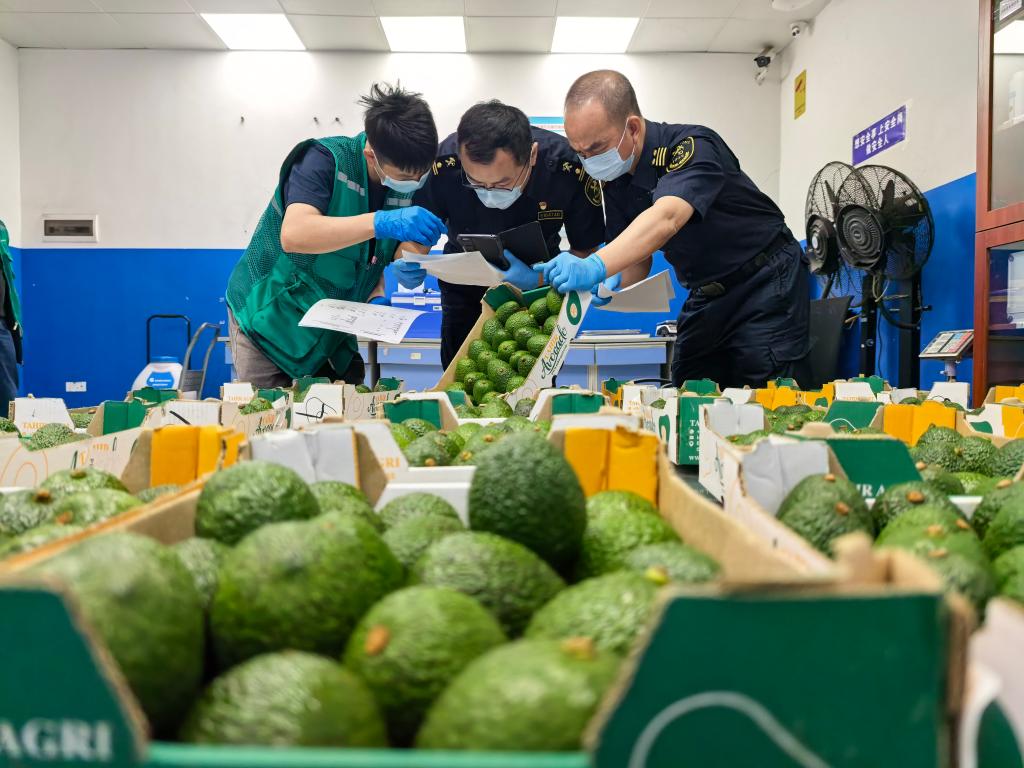
Kenyan avocado exports are set for a major lift after China rolled out a zero-tariff policy for African agricultural products, with the first shipments of duty-free produce, including fresh Kenyan avocados, already entering the Asian market.
China’s Foreign Affairs Ministry confirmed that 6.9 tonnes of Kenyan fresh avocados were among the earliest consignments cleared under the new regime.


“24 tons of apples from South Africa and 6.9 tons of Kenyan fresh avocados were among the first arrivals of African agricultural products under the #ZeroTariffPolicy. Welcome!” Director General for Africa at China Foreign Affairs Ministry Du Xiaohui said on X.
This marks the start of what Nairobi hopes will be a significant expansion of horticultural exports to the world’s second-largest economy.
The policy, which took effect in May, grants duty-free access to exports from the 53 African countries that have ties with Beijing, sharply improving the competitiveness of Kenyan produce that previously faced import taxes.
Industry players say the move could unlock higher volumes and better prices for farmers, especially smallholders who dominate the avocado value chain.
Kenya’s avocado sector has grown rapidly in recent years, emerging as one of the country’s top horticultural exports. Production has expanded alongside rising global demand, with export volumes increasing from about 72,000 metric tonnes in 2020 to 135,000 metric tonnes in 2025.
China has quickly become a key destination. Since gaining market access in 2022, Kenyan avocado exports to China have surged, reaching nearly 4,000 metric tonnes by 2025 and making Kenya the Asian giant’s third-largest supplier after Peru and Chile. Earlier data also shows exports rising sharply from just over 400 tonnes in 2022 to more than 6,000 tonnes by 2024, underscoring the pace of growth.
The latest tariff waiver is expected to accelerate that trajectory. Stakeholders say removing duties will allow Kenyan exporters to compete more effectively against established suppliers while expanding market share in China’s vast consumer base.
The development aligns with President William Ruto’s broader push to rebalance trade relations with China by increasing Kenyan exports. His administration recently concluded negotiations on a bilateral trade deal expected to grant duty-free access to up to 98 percent of Kenyan goods entering China, in a bid to narrow a long-standing trade deficit.
Ruto has repeatedly emphasised the need for Kenya to leverage its agricultural strength, particularly in tea, coffee and horticulture, to penetrate the Chinese market. The zero-tariff policy now offers a practical pathway to that goal.
Foreign Affairs Cabinet Secretary Musalia Mudavadi has also framed China as a strategic market for Kenya’s export diversification, arguing that deepening trade ties with Asia is critical amid shifting global trade dynamics and tightening standards in traditional European markets.
Similarly, Trade Cabinet Secretary Lee Kinyanjui has urged Kenyan exporters to position themselves to take advantage of improved access to China, particularly in value-added agricultural products. He has previously highlighted the need for compliance with phytosanitary standards and scaling up production to meet demand in the Chinese market.
Beyond fresh fruit exports, the policy could also spur investment in agro-processing. Industry players note that several Chinese firms have already established facilities in Kenya to produce avocado oil for export, pointing to potential gains in value addition and job creation.
Still, the benefits will depend on Kenya’s ability to scale up production, improve logistics, and move up the value chain. While the Chinese market offers vast opportunities, Kenya’s export profile remains heavily skewed toward raw agricultural commodities, limiting earnings potential.