

Kenya is banking on massive investment opportunities as it prepares to host the first Africa-France Summit in an Anglophone country.
The meeting, co-hosted with France under the theme Africa–France Partnerships for Innovation and Growth, brings together between 25-30 heads of state, investors and development financiers. According with the Foreign Affairs department, 1,500 business and economic leaders are expected to attend.


The huge gathering now presents a test for Kenya on whether it can convert high-level convening power into concrete economic commitments and investments.
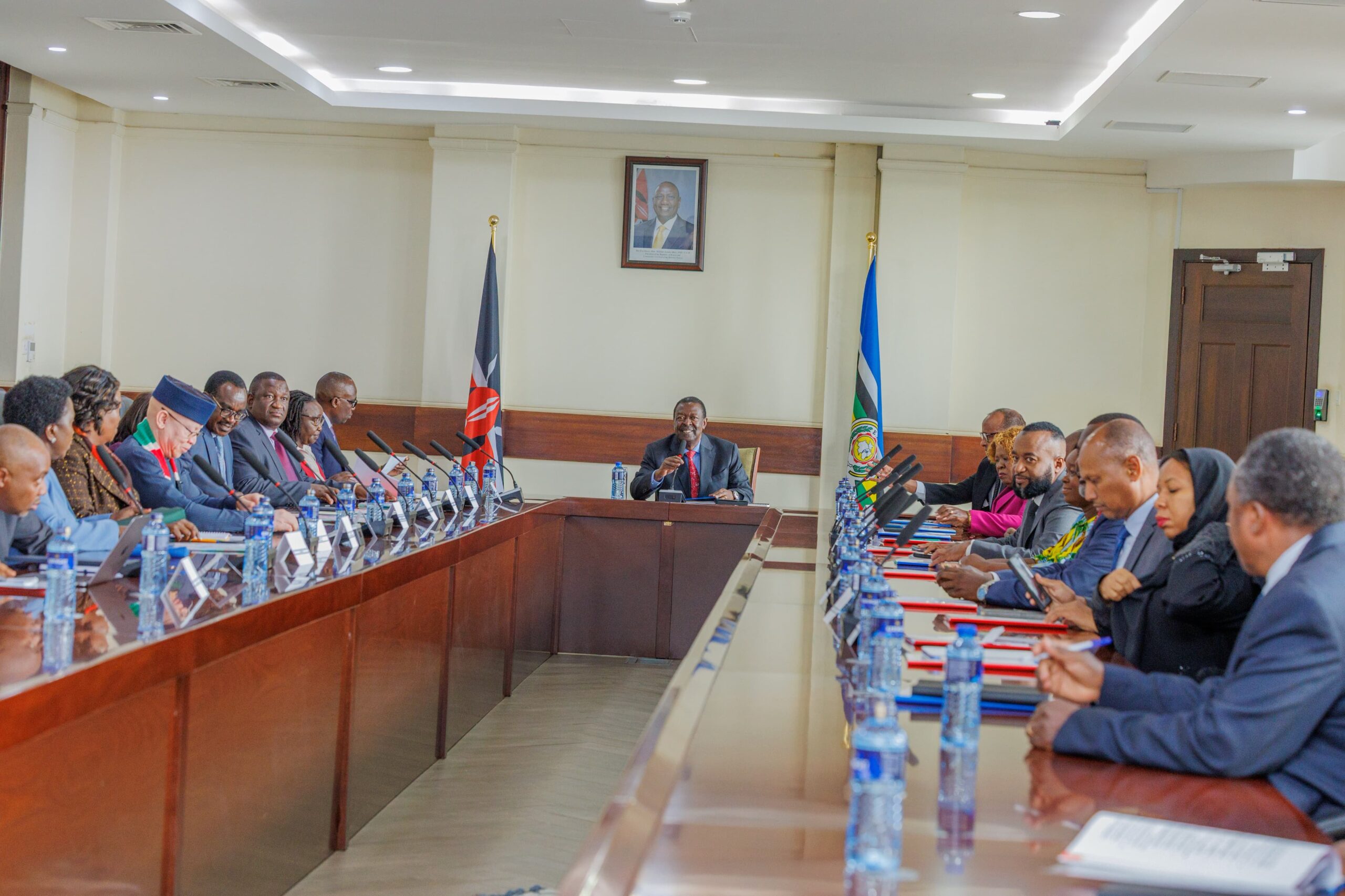
Foreign Affairs CS Musalia Mudavadi said the summit presents a huge opportunity to showcase artificial intelligence, science and innovation as well as technology.
“From a Kenyan perspective, there is an urgent need for us to have enough clean, affordable and sufficient energy. It must also be diversified so that Kenya can benefit from green energy. The tangibles that we have to deliver from this conference is jobs,” Mudavadi said on Wednesday
He added. That other opportunities include the human resource in Kennya and Africa as well as market.
Foreign Affairs CS Korir Sing’oei said other than the political leaders summit, there will be a Business Forum that will bring together about 1,500 to 2,000 participants from across the continent.
He noted that the meeting will offer an opportunity to look at investment opportunities that France and Africa can work on together across different sectors of the economy. These include supply chains in health, agriculture and technology.
He added that there are about 150 French companies doing business in Africa in various sectors.
“The challenge has been the fragmentation in terms of France telling the story of their impact as the fourth largest investor on the continent. We are thus seeking to create a platform for visibility creation to demonstrate how crucial and mutually beneficial these relations are,” the PS said.
He added that they are looking at France as a leader in innovation, with companies such as Airbus in aviation, automotive industries, energy including nuclear energy, which is an increasingly important source of renewable power.
“The aim is to support industrialisation in Africa, help with manufacturing capacity, and ensure technology transfer so that African countries can benefit from these partnerships. This platform is meant to enable real engagement between private sector actors across the continent and French players as well,” he added.
Additionally, he said, the summit will focus on trying to reform the global financial architecture by bringing African voices into the conversation.
The issue is access to capital, he said. For African countries, it is often prohibitively expensive to access finance. In some cases, it can be four times more expensive than in Europe for the same amount of money. “That difference creates an unfair investment environment”.
In terms of direct investment opportunities, one of the key areas Nairobi is focusing on is health manufacturing. About 60 per cent of health commodities used in Africa are imported.
It is in this regard that Kenya will be pushing to shift some of that manufacturing capacity to Africa to improve resilience and reduce dependency.
The second area is agriculture and industrialisation. Africa has the largest amount of arable land in the world, creating the need to optimise not only for food security but also for value addition and exports.
The third area Nairobi will focus on is technology, artificial intelligence, and innovation, from computing, connectivity, human capital to financing.
“We are hopeful that through partnerships between French and African enterprises, we can accelerate investment in this sector,” Korir said.
Nairobi has established itself as a preferred venue for global gatherings, most notably the Africa Climate Summit. That summit delivered pledges and visibility, but questions remain over how much has translated into concrete investment on the ground.
Speaking to this, Korir said there has been increasing convening activity in Kenya, including the ACS two years ago, and that Kenya also hosts a large number of UN offices in the global South. “We pride ourselves in being a consensus builder,” he said.
Under Ruto, the government has marketed Kenya as a regional hub for manufacturing, innovation and green industrialisation, while attracting foreign investment into manufacturing and infrastructure.
However structural issues such as energy costs, logistics bottlenecks and regulatory unpredictability continue to shape decisions about ease and cost of doing business.