
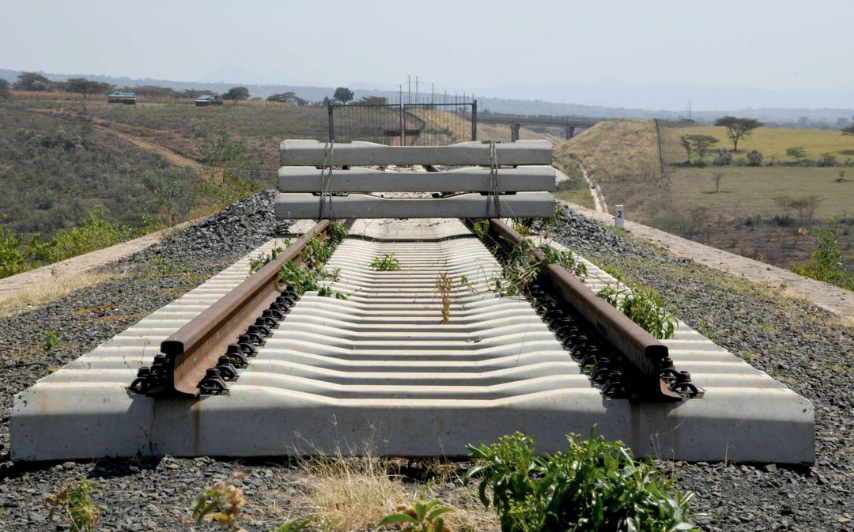
The long-stalled extension of the Standard Gauge Railway is set to resume construction, reviving one of Kenya’s most ambitious infrastructure projects.
The resumption of works on the Narok–Kisumu and Kisumu–Malaba phase follows a high-level meeting at State House, Nairobi, on Wednesday with top executives from China Communications Construction Company, the lead contractor for the project.


The delegation, led by Chairman Song Hailiang, included Vice-President Chen Zhong and China Road and Bridge Corporation Chairman Du Fei.
The restart of construction comes days after President William Ruto also signed the Miscellaneous Fees and Levies (Amendment) Act, 2026, into law — a pivotal move that unlocks financing for the railway’s western extension.
The new law allows the government to use up to 90 per cent of proceeds from the Railway Development Levy as collateral to secure loans for railway development. The levy, which generates approximately Sh36.8 billion annually, will now anchor borrowing for the Naivasha–Kisumu–Malaba stretch, which has stalled for years due to funding constraints.
Officials estimate the new phase will cost about Sh582 billion, with the government seeking roughly $3.9 billion (about Sh500 billion) in external financing. By securitising the RDL, the government is effectively creating a predictable revenue stream to reassure lenders and revive investor confidence in the project.
The SGR extension is central to Kenya’s ambition to position itself as a regional trade and logistics hub. Once complete, the line will connect the Port of Mombasa to landlocked neighbours including Uganda, Rwanda, Burundi, South Sudan and the DRC.
The railway is also expected to ease pressure on the Northern Corridor by shifting bulk cargo from road to rail, reducing transport costs, cutting transit times, and improving road safety.
The extension is poised to unlock economic potential in Western Kenya by enhancing connectivity and attracting investment. Kisumu is expected to emerge as a key multimodal hub, linking rail, road, and lake transport across the Lake Victoria basin.
The extension to Malaba will further align Kenya’s infrastructure with regional integration goals under the East African Community, potentially transforming cross-border trade flows.
However, the project still faces scrutiny over its high cost and the performance of existing SGR operations. Critics have questioned whether projected cargo volumes will justify the investment, particularly if regional partners delay their own connecting rail infrastructure.
Despite these concerns, the government maintains that the long-term strategic gains outweigh the risks, pointing to increased trade volumes and improved logistics efficiency as key benefits.
The law signed on March 13, 2026 alongside other measures to accelerate infrastructure development signals a shift toward innovative financing mechanisms such as securitisation to unlock stalled mega-projects.
With construction now underway, the success of the SGR extension will hinge on sustained financing, timely execution, and regional coordination particularly with Uganda to ensure seamless connectivity.
If delivered as planned, the Naivasha–Kisumu–Malaba line could redefine Kenya’s transport network and cement its role as the gateway to East and Central Africa, and also play a key role is Ruto’s re-election campaign.