

BY MACHARIA WANGUI
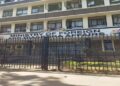
I recently got an opportunity to travel to El Molo in Loiyangalani ward in Marsabit county.
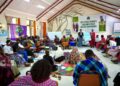

There, I witnessed first-hand the effect of climate change to the livelihoods and lives of the people living in the marginalized area.
It is a 660km journey that took us two days from Nairobi. You can drive via the Nairobi- Nyahururu- Mararal- Baragoi – South Horr- Loiyangalani or Nairobi-Nanyuki- Isiolo – Laisamis- South Horr – Loiyangalani routes.
A 231-km rough road awaits you, where you have to encounter dust, scorching sun, extreme heat, and steep slopes. Your patience and resilience will be tested to the core. A little briefing from our host in Nanyuki before departure prepared us for the tough journey we were embarking on.
Reality hits you when you branch at Laisamis, a 231-km road that has only 23km tarmacked. The rest is bare rocks, trenches created by flash floods, protruding and sharp rocks and the risk of ambush. While the landscape is beautiful in some areas, especially at twilight, driving is stressful.
Flash flood water here has made traveling a challenge, every time Kenya National Highways Authority marks and grades the road, water destroys it.
Loiyangalami lies at the shores of Lake Turkana, generations and generations have lived here in harmony with the lake but the last 10 years, the rising waters of Lake Turkana have disrupted the peace that had existed. Fishers here brave tough tides to earn a living, and those who desire to travel To Lodwar in Turkana, they have to undertake a seven-hour journey by boat, risking their lives. Many have lost their lives without trace.

The two days journey took us through mental and physical resilience, we had to cross lake Turkana thrice. Past the largest wind power project in Africa, Turkana wind power project, driving becomes precarious, Lake Turkana has risen to levels whereby drivers cross the lake to access the other side. In the last six years, the road had to be shifted more than thrice, on this particular day, road construction is ongoing on higher grounds.
The very existence of the communities living here is in grave danger. Their livelihood and life have been disrupted in unimaginable ways by the rising waters. People who have lived here for hundreds of years now have to contend with displacement, their culture ruined, their spiritual lives destroyed, the graves of their kins totally submerged by the rising water levels.
The most affected community is the El Molo community. The devastating effect of the rising water levels is evident and the village has been cut into an island by the rising water levels. Just three years ago, they used to walk freely across what is now a lake. Boats are now the only way to reconnect the villages, and they are not enough, thus causing inconvenience, especially for school-going children.

When the idea of Elmolo Bay Day and Boarding Primary School was born 35 years ago, the vision bearers didn’t envision a time when the thirst of education could be disrupted by the lake.
The initiators of the project carefully selected a relatively higher ground far away from the Lake. Little did they know that in 35 years, the dream would be dead. Half of the school is submerged.
Ahead of the opening for the third term of 2025, the Elmolo school management was grappling with various challenges as the school’s playing field, the toilets, classes and dining rooms were submerged.

On the far end where pupils spend their nights after a day full of activities, the dormitories are already submerged. The dorms have become inhabitable because of the cold emanating from the Lake water.
Some trees that were part of the school playground have been submerged, and this has posed another danger: Crocodiles have found an easy bleeding ground and teachers have to teach and also monitor pupils not to go near the bleeding ground to avoid attacks.
The local economic activities have also been affected. The fish factory has been totally submerged and all the residents here could do was point to where it used to be. The water has also been contaminated by the submerged pit latrines and has become the norm to find a human body or skull here or there as the cemetery is fully submerged.

Residents are calling upon the government, development partners and NGOs to come to their rescue, salvage the schools and relocate it to higher grounds.
“Naomba serikali na wahisani waje watusaidie kuokoa shule na pia kutujengea factory nyingine kuona ile tulijengewa ilisombwa na maji. (We call upon the government and the wellwishers to intervene and salvage our school, and also build as a fish factory as the one we had is totally submerged)
The Elmolo community clearly paints a dark picture of how indigenous and marginalized communities are neglected by their respective governments. Despite being very close to Lake Turkana Wind power project, they rely on solar power to power their activities. On this day, the solar panels powering the school are lying on the ground after being destroyed by Lake Turkana rising water.

The East Africa Rift valley is largely getting affected by the rising water level. Lake Nakuru, Lake Naivasha, Lake Bogoria, Lake Baringo and now Lake Turkana are all displacing people, destroying their livelihoods.
According to experts, the risking water levels in Rift Valley lakes are primarily caused by a combination of climate change, human activities, and geological factors.
Climate change leads to increased rainfall and runoff, while deforestation and unsustainable farming practices increase soil erosion and sedimentation, impacting the lakes’ hydrology. Geological factors, such as tectonic activity, may also be contributing to reduced underground drainage.