
Washington has imposed sanctions on the Rwanda Defence Forces and four top generals over support for the M23 rebel group.
The US on Monday announced the sanctions citing Kigali’s backing of M23 rebels fighting in eastern DRC in a move that could reshape politics and trade across the Great Lakes region.

In a statement, US Treasury said it had sanctioned the RDF and four senior officials for supporting the M23 rebel group, which Washington and the UN say has been responsible for violence and mass displacement in eastern Congo.
“The RDF has supported M23 as it seized territory in eastern DRC, including provincial capitals Goma and Bukavu, along with strategic mining sites in eastern DRC.
“M23’s offensives would not have been possible without the active support and complicity of the RDF and key senior officials,” Washington said.
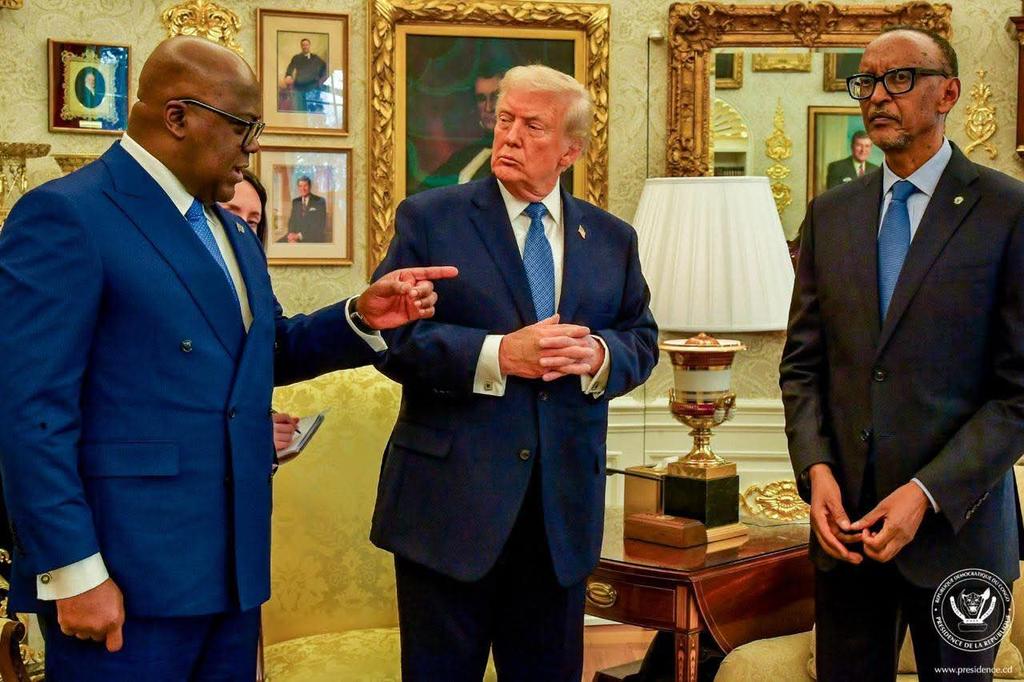
The action comes only two months after President Donald Trump hosted DRC President Felix Tshisekedi and Rwanda President Paul Kagame in Washington for the signing of the “Washington Accords for Peace and Prosperity”.
The deal had four key components that involved a permanent ceasefire, withdraw of forces, neutralization of armed groups and respect for sovereignty.
The two states committed to immediately stop active fighting and cross-border violence, while Rwanda was required to withdraw its troops and equipment from Congolese territory. On neutralization of armed groups, a formal, joint mechanism to disarm non-state actors, particularly the Democratic Forces for the Liberation of Rwanda was agreed on as well as the reaffirmation of territorial integrity and a commitment to end alleged support for armed groups like the M23.
The deal also included cooperation around security and access to critical minerals from the conflict-prone region.
But the situation on the ground has remained volatile. According to the US statement, M23 captured the strategic border city of Uvira shortly after the accord was signed, triggering civilian deaths and forcing thousands to flee their homes.
“President Trump is the Peace President, and Treasury will use all tools at its disposal to ensure that the parties to the Washington Accords uphold their obligations,” U.S. Treasury Secretary Scott Bessent said, adding that Washington expects the immediate withdrawal of Rwandan troops, weapons and equipment from eastern Congo.
What the sanctions mean
The sanctions effectively block any property or assets linked to the designated Rwandan military officials that fall under US jurisdiction. They also prohibit American individuals and companies from doing business with them. Financial institutions and international firms risk penalties if they engage in certain transactions involving those targeted.
In practical terms, the move could complicate Rwanda’s international financial dealings and increase scrutiny on businesses operating in areas linked to the conflict, particularly in the mineral trade.
Eastern Congo is rich in minerals such as coltan, cobalt and gold, which are critical for global technology and energy industries. The US statement said Rwanda benefited from access to mineral rich areas of eastern Congo as M23 gained territory with Rwandan support.
This places the newly signed mineral cooperation framework under pressure, raising questions about whether peace and resource deals can move forward while fighting continues.
Pressure on Rwanda
The sanctions increase diplomatic pressure on Rwanda, which has repeatedly denied backing M23 fighters.
However, Washington says thousands of Rwandan troops are operating in eastern Congo and providing training, weapons and advanced equipment including drones and air defence systems.
If the measures tighten international isolation or financial restrictions, Rwanda may face tougher engagement with Western partners and investors. It could also deepen divisions within the region, where tensions between Kigali and Kinshasa have simmered for years.
Implications for the DRC
For Congo, the sanctions are seen as a show of international support at a time when the government is struggling to contain the rebellion in its mineral rich eastern provinces.
The US statement said the Rwanda backed operations helped M23 seize territory including major cities such as Goma and Bukavu as well as strategic mining areas.
However, analysts warn that sanctions alone may not immediately change realities on the battlefield. Fighting in eastern Congo has often continued despite international pressure and previous diplomatic initiatives.
Risk for the wider region
The US warned that the continued presence of M23 fighters near the Burundi border raises the risk of a wider regional conflict. The Great Lakes region has a long history of cross border tensions involving several countries.
The escalation of the conflict has often disrupted trade routes, regional security cooperation and humanitarian operations.
Millions of people have already been displaced in eastern Congo, and further fighting could deepen the crisis. The UN says over 7.8 million people have been displaced internally, over five million of them in the eastern provinces of North Kivu, South Kivu and Ituri.