
Somaliland is intensifying its push for US recognition, betting that its strategic position on the Red Sea can reshape Washington’s calculus.
President Abdirahman Mohamed Abdullahi, popularly known as Irro, arrived in Washington on September 8 for an 11-day diplomatic offensive aimed at strengthening ties with the Trump administration and Congress.
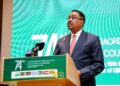
The visit, which runs until September 18, is his first to the United States since his election in November 2024 and the first by a Somaliland president to Washington since March 2022.
But beyond the official meetings, Somaliland is turning its growing strategic importance in the Horn of Africa into a case for formal US recognition.
Irro’s programme includes engagements with senior US officials, members of Congress and foreign policy and national security figures. He is also scheduled to address the Hudson Institute and participate in the Middle East-America Dialogue summit, bringing Somaliland’s case directly into Washington’s foreign policy establishment.
“We have real assets to bring to this partnership—and we are ready to deliver,” Irro said ahead of his Washington engagements.
The timing of the visit is significant. Israel’s decision in December 2025 to recognise Somaliland as an independent state gave Hargeisa its biggest diplomatic breakthrough since declaring independence from Somalia in 1991.
The move also created a new test for Washington, with Somaliland arguing that its recognition is no longer simply a question of its disputed status with Somalia, but one of wider American strategic interests in a region increasingly shaped by competition over the Red Sea.
At the centre of that argument is Berbera.
Located on the Gulf of Aden, the port gives Somaliland a strategic position close to one of the world’s most important maritime corridors. Somaliland has sought to develop Berbera into a regional trade and logistics hub, while its location offers potential advantages for maritime security and access to the wider Horn of Africa.
Somaliland is also presenting itself as a stable and democratic partner in a volatile neighbourhood for Washington.
Somaliland thus wants to be seen not simply as a territory seeking international recognition, but as a potential US partner in counterterrorism, maritime security and efforts to contain the expansion of Chinese influence.
Its relationship with Taiwan is an important part of that pitch.
Somaliland established representative offices with Taiwan in 2020, despite opposition from China and Somalia. The two sides have since expanded cooperation in areas including healthcare, agriculture, digital governance and maritime security.
This has given Somaliland an additional credential in Washington at a time when US-China competition is increasingly extending into Africa.
The diplomatic campaign is also gaining traction on Capitol Hill.
Republican Congressman Scott Perry has introduced the Somaliland Independence Act, legislation that would authorise the US president to recognise Somaliland as an independent country.
Congressman John Rose has separately introduced legislation aimed at deepening US-Somaliland commercial relations and expanding Somaliland’s access to the international financial system.
Senator Ted Cruz has also urged President Donald Trump to recognise Somaliland.
The growing congressional interest provides Hargeisa with an important opening. While congressional support does not automatically translate into a change in US foreign policy, it puts Somaliland’s status more firmly into the American foreign policy debate.
But recognition remains far from guaranteed, with the biggest obstacle being Somalia.
Mogadishu considers Somaliland part of its sovereign territory and has consistently opposed efforts by foreign governments to recognise Hargeisa as an independent state.
A US decision to recognise Somaliland would therefore represent a major break with Washington’s longstanding position on Somalia’s territorial integrity.
It could also complicate US security cooperation with Mogadishu, particularly its efforts to counter al-Shabaab, the militant group that remains one of the biggest security threats in the Horn of Africa.
Washington would also have to consider the wider regional implications.
Somaliland’s strategic location has become more significant as instability around the Red Sea and Gulf of Aden has increased. The region has emerged as a centre of competition involving the US, China, Israel, Gulf powers and regional governments.
Ethiopia’s interest in securing reliable access to the sea has added another layer to the geopolitics surrounding Somaliland.
These developments have created an opportunity to recast the recognition debate for Hargeisa.