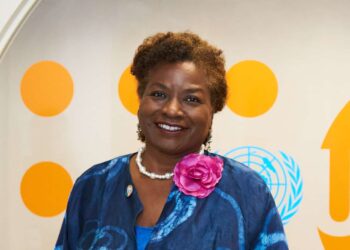


BY AGNES GITAU
Amid geopolitical shifts, economic headwinds, and social upheaval, Africa’s resilience continues —proving that even in the uncertainty, there is room for growth and renewed hope.


Sub-Saharan Africa enters 2025 with a cautious sense of optimism, with the International Monetary Fund (IMF) forecasting 4% GDP growth. This signals a modest recovery from last year’s growth of 3.2%.
This outlook however, must be tempered with an understanding of the entrenched structural challenges: Debt burdens, political uncertainty, climate crisis, geopolitical rivalries, and a widening gap in socio-economic inclusion.
- East Africa: The region continues to lead, with Rwanda, Ethiopia, Uganda and Tanzaniaprojected to grow above 6% in 2025.
Infrastructure investments, agricultural and tourism sector recovery, and ongoing economic reforms, increased private sector participation, are driving this growth. Kenya’sgrowth prospects for 2025 is just over 5% in light of the financial challenges occasioned by the Gen Z protests against high cost of taxation, bad governance and human rights abuses.
- West Africa: Ivory Coast demonstrates strong economic resilience and is projected to grow at 6% in 2025, while Guinea and Mali remain weighed down by persistent political instability.
- South Africa and Nigeria: These economic powerhouses are expected to see modest recoveries, though structural weaknesses and policy inertia pose risks to sustained growth.
ELECTIONS TO WATCH 2025
Tanzania
Samia Suluhu Hassan, Tanzania’s first female president, has pursued a reform-oriented agenda since assuming office in 2021, favouring diplomatic engagement, foreign investment promotion, and pro-business reforms.
This has resulted in increased investor confidence that consequently achieved a record of $6.5 billion in foreign direct investment last year, reflecting a 21.6% increase over the previous year.
The 2025 elections represent President Suluhu’s first direct mandate from voters. While her administration has introduced investor-friendly reforms, political tensions remain: Tanzania’s opposition remains fractured, reducing its electoral competitiveness but also limiting checks on executive power.
While the administration has reopened some political and media freedoms, lingering restrictions on civic space remain a concern. The peaceful and transparent conduct of Tanzania’s 2025 elections will be critical for consolidating economic gains, maintaining investor confidence, and ensuring political legitimacy. Without an inclusive and transparent process, gains made under Hassan’s reform agenda risk being reversed.
Ivory Coast
President Alassane Ouattara,who has been in power since 2011, previously stated his intention to retire but suggested he might reconsider, if his long-standing political rivals withdrew from the political arena.
A report by Reuters recently indicated that the ruling party, the Rally of Houphouëtists for Democracy and Peace (RHDP), is urging President Ouattara to seek a fourth term, despite his earlier indications of stepping down. The ruling party’s push for Ouattara’s candidacy may lead to heightened political tensions, especially if opposition parties perceive this move as undermining democratic principles.
Transparent, inclusive, and peaceful elections are essential to maintain Ivory Coast’s economic momentum and avoid repeating past cycles of post-election violence. The international community, including regional blocs such as ECOWAS, will play a critical role in supporting electoral integrity.
GLOBAL GEOPOLITICS: WALKING A TIGHTROPE

Can the continent of Africa successfully balance these competing powers to secure long-term economic growth, or will it remain a geopolitical chessboard?
Africa’s entry into the G20 through the African Union’s (AU) permanent membership is widely celebrated as a diplomatic milestone, a symbolic recognition of the continent’s growing importance on the global stage. But beyond the symbolism lies a pressing question: Will this translate into tangible policy outcomes for Africa, or will it remain a largely ceremonial achievement?
As South Africa assumes the G20 presidency in 2025, Africa finds itself in a rare position of both representation and leadership. This dual role amplifies the continent’s potential to shape global policy discussions on debt relief, trade reform, and climate finance, but the benefits of this seat at the table will depend on Africa’s ability to forge unity, articulate clear demands, avoid fragmented lobbying efforts, and leverage its collective bargaining power effectively.
To safeguard their economies, African leaders must diversify trade partnerships with regions such as China, EU, India, Turkey, the Gulf States and members of the BRICs, proactively engage with policymakers, and leverage Africa’s non alignment position to push for an Africa economic agenda and build resilience.
On trade, Africa’s G20 presence provides a platform to demand reforms at the WTO that benefit smaller economies, particularly around agricultural subsidies. With the African Continental Free Trade Area (AfCFTA) projected to boost intra-African trade by 52% by 2030, aligning G20 support with these efforts could amplify the continent’s economic resilience.
US President Donald Trump’s return to the White House casts a shadow of uncertainty over US-Africa relations, raising concerns about aid, inconsistent diplomatic engagement, and the fate of the African Growth and Opportunity Act (AGOA).
Will AGOA be renewed under Trump’s transactional approach to foreign policy? If not, how will African nations cushion the blow?
To safeguard their economies, African leaders must diversify trade partnerships with regions such as China, EU, India, Turkey, the Gulf States and members of the BRICs, proactively engage with policymakers, and leverage Africa’s non alignment position to push for an Africa economic agenda and build resilience. The region must effectively navigate a U.S. foreign policy likely to prioritise security partnerships and commercial returns over developmental assistance?
Meanwhile, Africa remains a focal point in the ongoing US-China geopolitical rivalry. China’s Belt and Road Initiative (BRI) has channelled billions of dollars into infrastructure projects across Africa, offering much-needed roads, ports, and power grids but at the cost of increased debt vulnerabilities.
Conversely, U.S. initiatives such as Prosper Africa and the alternative The Lobito corridor focus on private-sector growth, technological partnerships, and governance reforms.
It will be crucial how the continent navigates this to extract maximum value from both relationships without becoming overly dependent on either.
The answer lies in strategic non-alignment—pursuing pragmatic bilateral agreements, improving debt transparency, and prioritising infrastructure projects that foster regional integration.
DELIVERING THE AFCTA PROMISE
Launched in 2021 with the ambitious goal of creating the world’s largest free trade area by population—a $3.4 trillion market — AfCFTA promised to boost intra-African trade by 52% by 2030. Four years on, those lofty aims remain largely unrealised, prompting urgent questions about AfCFTA’s future.
This really must be the decisive year that transforms rhetoric into results, or just another chapter of big declarations overshadowed by limited action. Only measurable outcomes and firm accountability—both from the AfCFTA Secretariat and its member states—can ensure the initiative fulfills its transformative mandate.
At the G20, Africa has a chance to transcend symbolism and push for concrete outcomes in debt relief, climate financing, and fair trade practices. Success will depend on political will, regional coordination, and data-driven advocacy.
What will it take for AfCFTA to work? Clear prioritisation of AfCFTA goals in national economic agendas, a sustained investment in logistics and energy infrastructure, development of innovative funding mechanisms tailored to AfCFTA projects and a strengthened secretariat mandate with enforcement capabilities and adequate funding.
In conclusion, 2025 presents an opportunity for Africa to redefine its global standing, an opportunity for the continent to rise, navigate the ongoing fragmentation and strategic rivalries. The return of President Trump introduces uncertainty in US-Africa relations, with AGOA renewal hanging in the balance. Meanwhile, Africa must continue to balance the competing agendas of China and the US with a focus on long-term national interests.
At the G20, Africa has a chance to transcend symbolism and push for concrete outcomes in debt relief, climate financing, and fair trade practices. Success will depend on political will, regional coordination, and data-driven advocacy.
Whether Africa emerges as a strategic actor or remains a passive participant will depend on its ability to balance global partnerships, assert its collective voice, and pursue pragmatic, homegrown solutions.
Agnes Gitau is the Executive Director at the Eastern Africa Association and partner at GBS Africa. She is an international development professional working at the intersection of policy and politics to promote sustainable partnerships for development.
By Agnes Gitau