
National Assembly legislators have rejected the Sh63 billion proposed budget for the 2027 General Election terming it unviable.
The Justice and Legal Affairs Committee on Tuesday said the cost estimates presented by the electoral agency must be reviewed downward before Parliament can approve the funding.


The cost includes Sh12.4 billion for wages, voter registration at Sh6.9 billion, KIEMS kit replacement at Sh6.2 billion, and Sh2.6 billion for media engagement.
Other costs that drew the committee’s attention are the Sh3.8 billion for the modification of 45,000 KIEMS kits and Sh5.6 billion in legal fees pending bill.
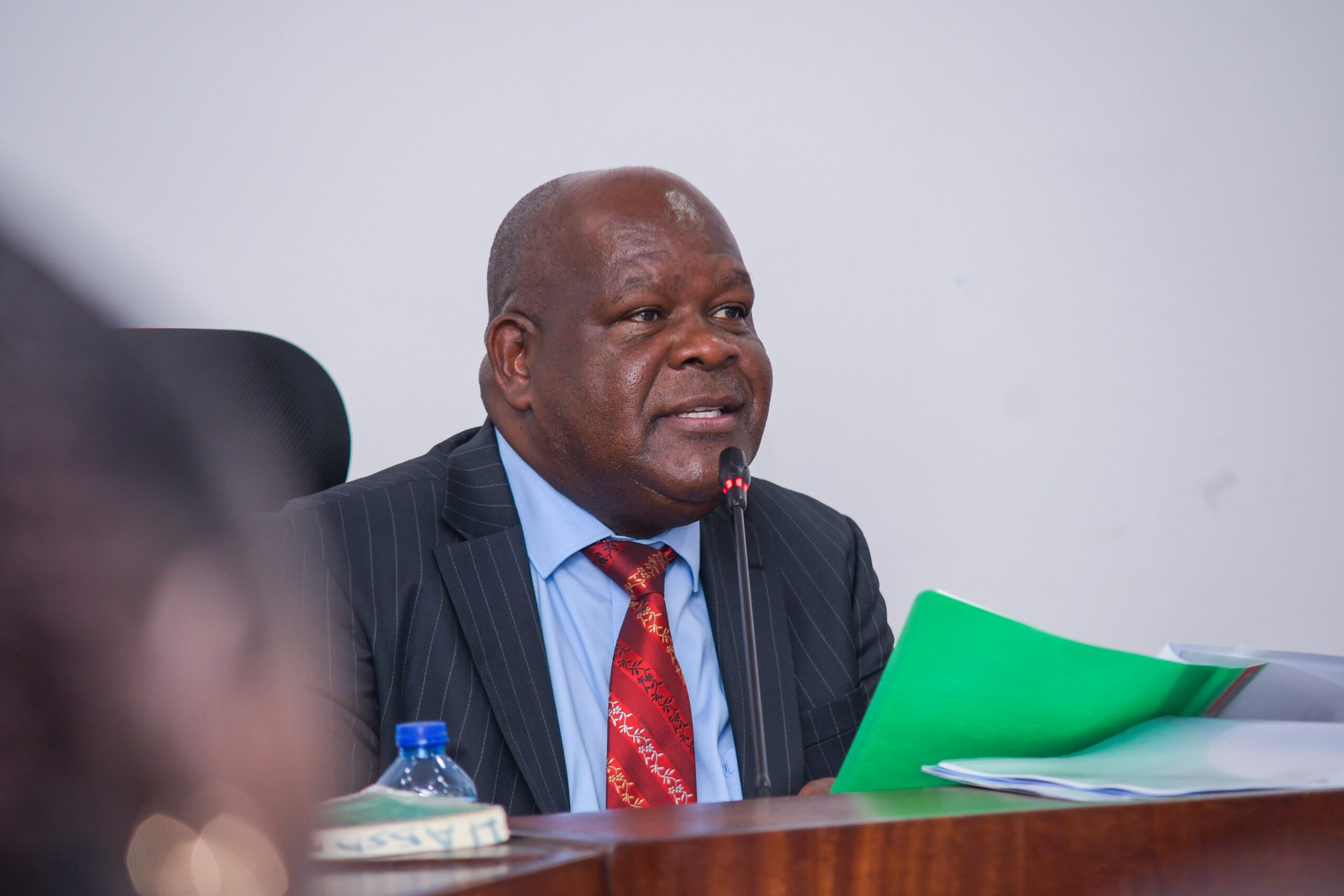
The electoral commission, led by vice chairperson Fahima Abdalla, Commissioner Anne Nderitu and Commissioner Alutalala Mukwana, and acting CEO Moses Sunkuli, was appearing before the committee on the 2026 Budget Policy Statement. They also discussed electoral reforms, preparations and funding of the 2027 elections.
“As you can read from the mood of the committee members, we are convinced that the cost of this election can come down. We request that you work on that budget. We can’t provide Sh63 billion, so find areas to cut costs,” Committee vice chairperson Mwengi Mutuse (Kibwezi West) said.
Mutuse added that even with that amount, the IEBC would be outside the provisions of the Budget Policy Statement.
The committee also raised queries over the cost of the upgrade of the KIEMS kits.
“Tell us why to acquire a new kit, you are asking for Sh135,000 and to upgrade the 14,000 kits, assuming it means upgrading the software, it translates to Sh175,000. So in the next seven days, provide us with a clarification of why so,” Mutuse added.
The vice chairperson, who was acting on behalf of the committee chairperson, went ahead to warn the IEBC against buying he KIEMS kits until the committee is satisfied with the cost.
Already, the United Opposition has rejected the use of Smartmatic technology — the makers of the kits — in the 2027 elections.
In defence of the budget cost, Commissioner Nderitu noted that Kenya’s election becomes costly because of the integrity features and the load placed on the system.
“The analysis that was brought here established it costs about Sh35 to print a ballot. I want to confirm that this includes all the logistics of handling the ballot paper up to the polling station. However, due to trust deficit, our ballot papers have extra security features>
“We also hold six elections in one, which is not the case with some of our neighbours. So it may not give the correct impression when you compare our elections with some of our neighbours,” Nderitu said.
Kenya’s elections are among the most complex in Africa, with voters electing six positions on the same day: President, governor, senator, MP, Woman Representative and MCA
The scale of logistics involved, Nderitu said, have steadily driven up the cost of elections in the country over the past decade. These includes training electoral officials, transport, technology procurement and voter registration.
The 2022 General Election cost the country about Sh44.6 billion, while the 2017 election and the subsequent repeat presidential poll significantly pushed up expenditure due to legal disputes and fresh voting in some areas.
The concerns also come at a time when the government is under pressure to reduce public spending amid a high debt burden and competing priorities such as healthcare, education and infrastructure.
Committee members argued that while credible elections are essential for democracy, the cost must be balanced against the country’s economic realities.
The issue of technology has also become a politically sensitive matter ahead of the next polls.
Opposition leaders have recently raised concerns over the role of Smartmatic, the technology firm linked to the KIEMS kits used in previous elections, arguing that the electoral commission should reconsider its involvement as it is tarnished globally.