
BY D.W WAGACHA
Irrefutably, the Ol Kalou constituency by-election triggered considerable reverberations with the potential to make significant recalibrations on the Kenyan political landscape.


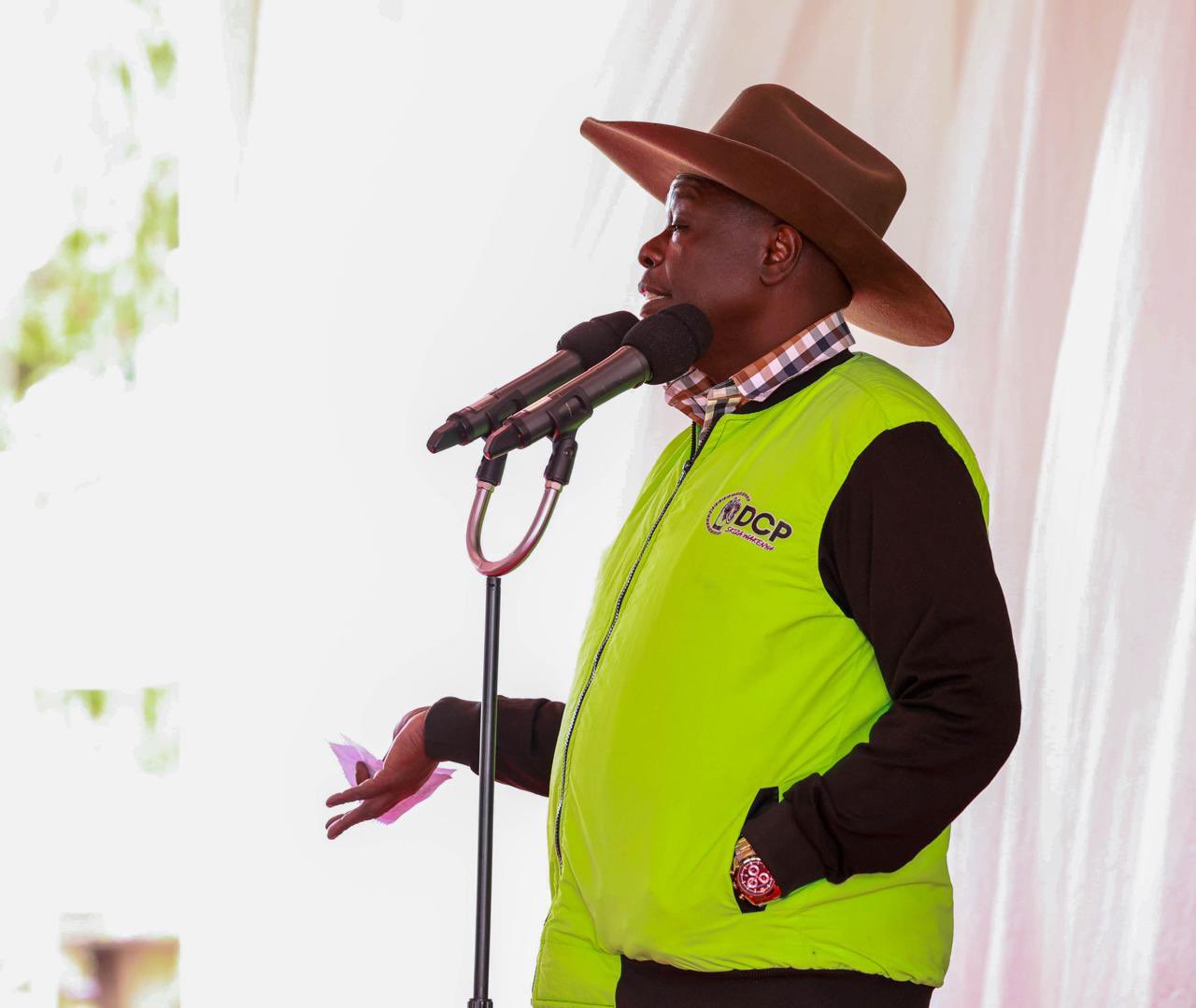
The Democratic Citizens Party (DCP), led by former Deputy President Rigathi Gachagua secured the seat with 35,440 votes, against President William Ruto’s ruling United Democratic Alliance (UDA) that garnered 5,450 votes.
So profound are these ramifications that there is a near-unanimous consensus amongst political commentators that the elections may serve as a precursor to the August 10, 2027 general election.
In the most salient detail, the by-election prompted elevated concerns about potential threats of violence and electoral malpractices over the rampant political intimidation, violence, and financial coercion as a possible bellwether for the 2027 polls. The by-election not only reinvigorated the intense rivalry between UDA and DCP in the immediate term but also appears to have triggered immense political strategic manoeuvres ahead of the 2027 elections.
For Gachagua, Ol Kalou is symbolic and strategic — it casts the party into a formidable political entity. It was here that Gachagua laid the gauntlet at UDA Ruto’s feet during their second public meeting, two years after his impeachment, at the memorial service of former Ol Kalou MP David Njuguna Kiaraho, whose demise precipitated the by-election.
Gachagua castigated the President over his impeachment, which he termed the politics of betrayal and tribalism, before deriding him for his political miscalculation, believing he would be relegated to political oblivion weeks after his ouster as the DP. Following his impeachment, his critics began referring to him as Wamunyoro, his village name, a historical Kenyan euphemism for sending home into political obscurity.
Additionally, Gachagua’s absence during the campaigns depicted a party that has reached political maturity with vibrant internal systems and luminaries able to spearhead the party’s events in the absence of the party leader. Thus, elevating Gachagua’s status above the fray as party leader and quintessentially would have hedged him in the event the party lost.
IMPACT IN MT KENYA REGION
In the immediate term, the victory enhances Gachagua’s primary strategy of consolidating his pole position as the kingpin and the region as his political stronghold, launching “Operation Fagia.” A campaign to vote out leaders from the Mt. Kenya allied to Ruto, which is a culmination of Gachagua’s protracted efforts to outflank alternative centres of political influence in the region.
Gachagua escalated these efforts after the impeachment, although they commenced earlier during his tenure as the DP and are widely believed to have triggered the fallout with some of the leaders in the region, who then proceeded to support his ouster.
Several political incidents elucidate these affirmations, with the most revealing involving Murang’a Governor Dr Irungu Kang’ata, who decamped to the DCP from UDA on July 24, following a frosty relationship with Gachagua. In February 2025, Nyeri Governor and then staunch ally of Gachagua Mutahi Kahiga, warned Kang’ata — arguably one of the best-performing governors since the dispensation of the devolved governance system — that his re-election is not guaranteed because loyalty to Gachagua supersedes development records.
Relations between Gachagua and Kang’ata flared days before the Ol Kalou election, when the governor, then allied to the opposition Linda Mwananchi Movement, associated with Nairobi Senator Edwin Sifuna attempted to campaign in the constituency. Perhaps alarmed that Kang’ata could potentially become an alternative source of influence, Gachagua issued a terse public admonishment to the governor, “usilete kiherehere” (meddlesomeness) in Ol Kalou, warning him that he risks being used by DCP detractors to undermine the by-election.
Most probably aligning his second-term ambitions with the prevailing political realities, Nyandarua Governor Kiarie Badilisha also decamped to the DCP.
Another tactic Gachagua has gradually employed to diminish UDA influence in the region has been the vilification of Ruto’s point men, dismissing them as ‘children’ to portray them as inconsequential novices offering poor political advice.
He has achieved the strategic disavowal of Ruto’s point persons in the region by leveraging the Mau Mau agitation for independence, whose epicentre was the Mt Kenya region, by consistently referring to them as tukunias. This is a historical term originating during the Mau Mau era, describing suspected freedom fighters and oath-confessors who were used by the colonial authorities to betray other fighters. The narrative not only evokes emotive sentiments against subjugation and betrayal reminiscent of the Mau Mau era, but also reinforces Gachagua’s claim that he is the son of the Mau Mau.
In March, Gachagua exhorted the residents of the region to refrain from jeering Ruto during his tours in the region, but to heckle and jeer local leaders. Facing harsh political realities on the ground, the stinging defeat in Ol Kalou appears to have triggered sharp divisions within the pro-Ruto Mt. Kenya brigade, with Public Service Cabinet Secretary Geoffrey Ruku calling for a split of the region.
Resoundingly, the results of the Ol Kalou elections dealt the death knell to the Jubilee Party, threatening to relegate the former ruling party, whose stronghold was the Mt. Kenya region, to the confines of political abyss. Jubilee’s dismal performance, garnering 198 votes, as the incumbent of the party in Ol Kalou buttressed this assertion. The result assuaged anxieties from DCP supporters, who were apprehensive that the influence of the Jubilee Party leader and former President Uhuru Kenyatta threatened to undermine the fortunes of their party as the dominant political entity in the region.
NATIONALLY
The Ol Kalou election generated substantial, inescapable currents at the national political theatre, as a series of frenzied and disoriented reactions from leading UDA luminaries attempted to paper over the DCP win.
Health Cabinet Secretary Aden Duale caused disquiet in government with some leaders from the Mt Kenya region, following accusations of ethnic profiling and hate speech. Duale dismissed the DCP win as inconsequential, claiming the contest was between the DCP and the Jubilee party. Others have escalated their offensive by highlighting Gachagua’s unsuitability as a national leader and urging the authorities to act against him for incitement and sponsoring political goons.
Kindiki appears set to be the first significant casualty of a national figure in the aftermath of the Ol Kalou, with growing scepticism about his ability to marshal sufficient political support for the government. This is despite his aggressive posturing before the elections, when he warned his predecessor, Gachagua, of a bruising battle.
Political calculations that weighed heavily on his appointment as DP when replacing Gachagua were premised on the fact that he would retain the support of the mountain region for the government and curtail Gachagua’s influence. The convergence of this and the growing demands for the DP position by the Orange Democratic Movement (ODM) fraternity in the broad-based government makes his position ever more perilous.
Buttressing their uncertainties, his detractors allude to the narrow 500-vote winning margin of the UDA winner of the Mbeere North constituency by-election in November 2025, ahead of the Democratic Party (DP) opposition candidate backed by Gachagua.
Media reports that the DP is enduring political frustrations, including shifting some of his duties and sidelining his aides, similar to the tribulations Gachagua faced before his ouster, exacerbate his perilous position as the DP.
Although it remains unclear when the DP’s political tribulations commenced, what is certain is that his detractors are intent on using the Ol Kalou results to have him replaced, in the classic political tactic of “killing with a borrowed knife.”
The Ol Kalou victory fostered the impression that Gachagua has consolidated his dominance of the Mt. Kenya region, affording him vital political currency to engage as a principal actor in national politics. Particularly, when appreciating the horse-trading transactional dynamics of national politics, having the support of a consequential voting bloc grants him significant leverage during negotiations with other political actors.
Although Gachagua has hinted at running for the presidency, it remains uncertain whether he genuinely intended to do so or was merely using political rhetoric. The ambition faces critical hurdles, including his high-profile impeachment, which the High Court upheld, that threatens his presidential ambitions on a technicality. Gachagua has since filed a notice to appeal at the Court of Appeal to challenge the High Court decision.
However, political hurdles remain the most significant challenge because reversing the perceptions they have created of him remains an uphill task. Accused of parochial tribalism and advancing the interests of the Mt. Kenya region, Gachagua has increasingly become a political punching bag on the national political scene, where his rivals cynically cast him as an existential threat to national cohesion.
His controversial share-holding remarks, which intimated that government appointments were a preserve of the regions that voted for the administration, became his Achilles heel. Gachagua is unable to counter the narrative, despite this being the primary power-sharing formula in Kenyan politics, where pro-government supporters traditionally get priority and the lion’s share in political appointments. Furthermore, his tough talking and abrasive approach in politics alienates him from a sizable national constituency, some of whom feel that this confirms the prevailing narratives of him as a destabilising political figure.
The Ol Kalou elections confirmed Gachagua’s political resilience post-impeachment, underpinning his growing credentials as a proactive participant in the national political theatre in the medium to long term. While his consolidation of support and dominance in the Mt. Kenya region indisputably provides him with an essential anchor critical during negotiations with other regional factions, it will almost certainly underdeliver on his presidential ambitions.
Wagacha is an independent researcher who has contributed commentary and work focusing on governance, security and public policy