
The US has imposed sanctions on Rwanda’s Ministry of Defence and a financial institution linked to the country’s security services over alleged support for the M23 rebel group and mineral smuggling from eastern DRC.
The US Treasury Department on Wednesday, October 28, announced the measures targeting the Rwandan Ministry of Defence and Zigama Credit and Savings Society.


Washington accuses Zigama of facilitating military support for M23 and transactions involving minerals from territories controlled by the armed group.
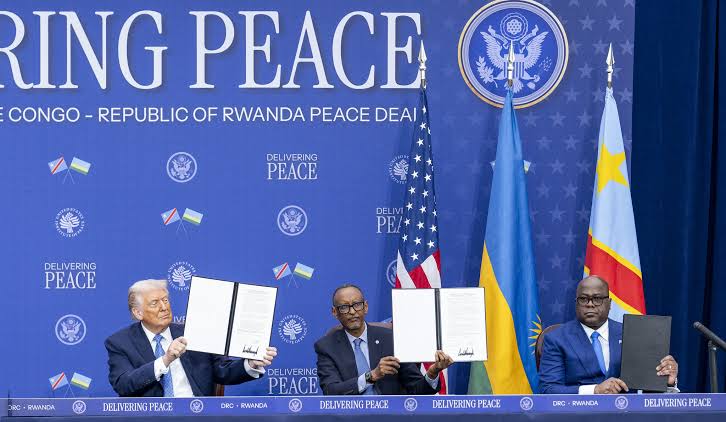
The move sustains pressure on Kigali to honour commitments under the Washington Accords for Peace and Prosperity, signed by the DRC and Rwanda in December 2025, which seek to end the conflict and promote regional economic cooperation.
“Rwanda must halt its support for M23 and withdraw its troops from eastern DRC,” US Treasury Secretary Scott Bessent said.
The Treasury said Zigama had facilitated transactions for M23 and its political wing, the Congo River Alliance, amounting to tens of millions of dollars.
According to the Treasury, M23 has seized mining areas in North and South Kivu, including gold mines in South Kivu and the Rubaya coltan-mining area in North Kivu.
Washington adds that civilians working in M23-controlled mining areas have faced forced labour, dangerous working conditions and illegal taxation.
The US government further alleges that Rwanda’s security forces have maintained oversight of gold extracted from M23-controlled sites and that a Zigama branch facilitated its transportation to Kigali.
The Treasury further accused Zigama of facilitating payments to entities in China and other countries for weapons, ammunition and military equipment for the Rwanda Defence Force, as well as travel and accommodation associated with military training.
Rwanda has previously rejected allegations that it supports M23.
WASHINGTON ACCORDS UNDER PRESSURE
The sanctions come as the US seeks to enforce the Washington Accords, signed by the Congolese and Rwandan presidents on December 4, 2025.
The agreement combines efforts to address the security crisis in eastern DRC with a regional economic framework intended to expand trade and investment, improve transparency in critical-mineral supply chains and attract investment to the Great Lakes region.
The US Treasury accused Rwanda’s Defence Ministry of directing the deployment of thousands of RDF troops across North and South Kivu, where they allegedly operate alongside M23 and provide military equipment, supplies, logistical support and training.
It also alleged that Rwandan forces had introduced surface-to-air missile systems and electronic jamming equipment into the conflict, creating risks for civilian aviation.
M23 captured Goma and Bukavu, the provincial capitals of North and South Kivu respectively, in early 2025, according to the Treasury.
The United Nations and Western governments have also accused Rwanda of supporting M23, allegations Kigali has denied. Reuters reported on Wednesday that the latest sanctions came as fighting continued despite diplomatic efforts to implement the peace agreement.
FINANCIAL CONSEQUENCES
The designations block property and interests in property belonging to the targeted institutions that fall within US jurisdiction or the possession or control of US persons. US persons are generally prohibited from conducting transactions involving the designated entities unless authorised or exempt.
The measures may also expose other parties to sanctions risks if they engage in prohibited transactions involving the blocked entities.
The latest action follows earlier US sanctions targeting the Rwanda Defence Force in March 2026 over alleged support for M23.
By targeting the Defence Ministry and a financial institution, Washington is widening its measures beyond individual military commanders to institutions it says help sustain the armed group.