
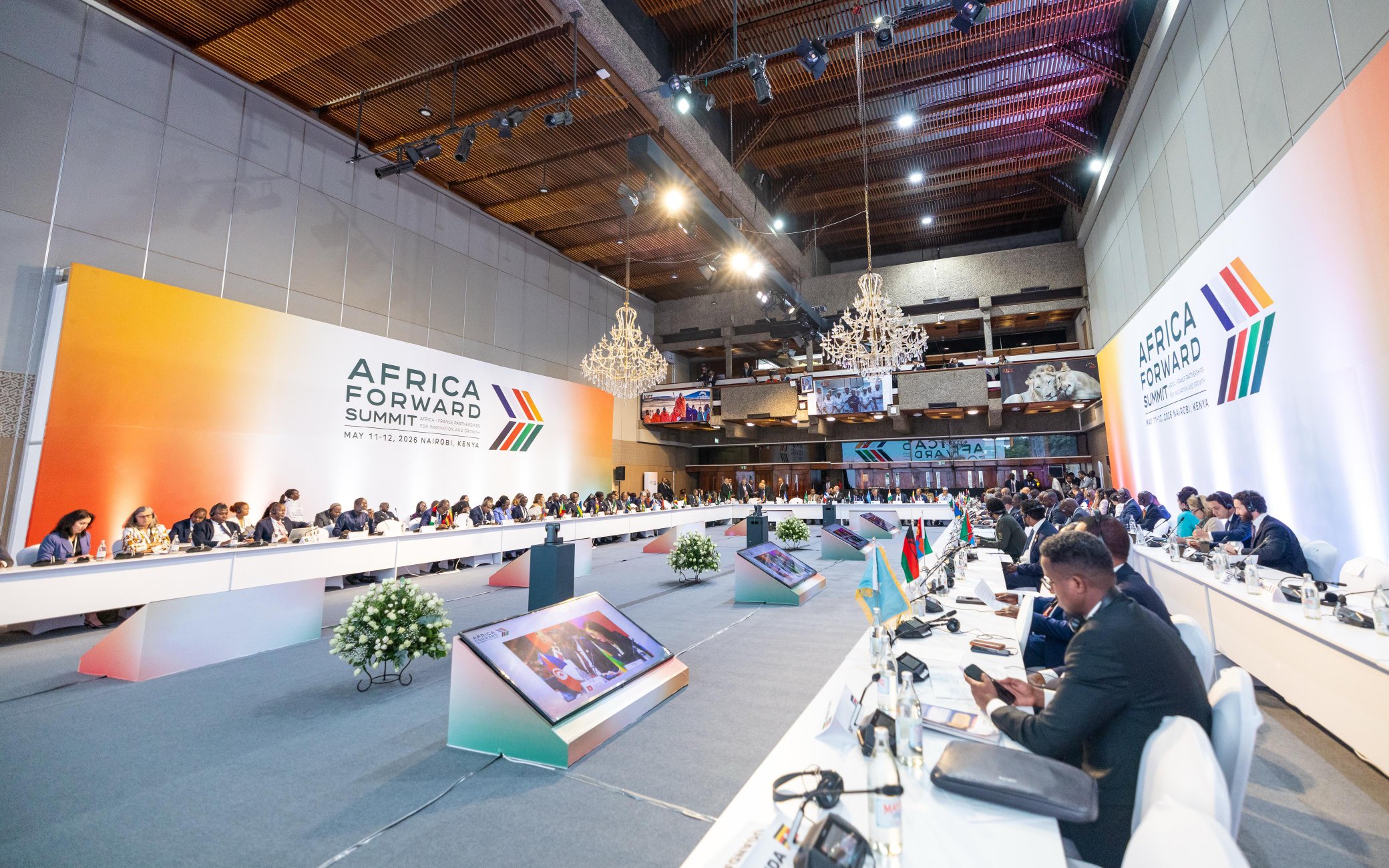
When President William Ruto and President Emmanuel Macron unveiled the Africa-France Nairobi Declaration at the Africa Forward Summit, the language in the room was technical.
The document that captured the two-day Africa-France meeting was characterised by jargon such as “sovereign equality”, “strategic partnership” and “new era of cooperation”.


However, what many Kenyans, and by extension Africans, are asking is simple: How will this conference be of help to me?
The Nairobi Declaration is framed as a people-centred document aimed at resetting how France and African countries like Kenya relate, after decades of accusations of extraction, neo-colonialism and imperialism.
It shifts focus away from aid and charity models toward investment, co-creation and long-term partnerships. It also places more emphasis on people-centred development, especially youth, women and small-scale producers.
For many Kenyans, especially the youth, the most immediate concern remains employment. The declaration strongly highlights job creation through agriculture, infrastructure, green energy and digital innovation.
To transform agriculture into a sustainable and value-added sector, the leaders recommended its shift into a modern, competitive and climate-resilient industry.
“We commit to strengthen agricultural technical and higher education to better integrate youth into the local labour market,” the declaration said.
They also recommended agro-industrialisation and development of integrated value chains, particularly in sectors that offer opportunities for scale.
“Empower youth, women and smallholders through finance, land tenure, digital tools in precision agriculture and agri-fintech as well as innovation incubators and skills development…. Strengthen food security and nutrition, promote healthy diets for all and stimulate rural-urban economic linkages,” the declaration said.
In practical terms, the recommendations mean that, if implemented, more funding and technical support could flow into sectors that already employ millions of Kenyans.
Agriculture, for example, is no longer framed as subsistence farming but as a value chain industry that includes agro-processing, storage, logistics and export markets.
This could translate into better prices for farmers, more agro-based SMEs, and new jobs for young people in rural areas. It also points to increased use of digital tools in farming, from mobile-based weather updates to fintech solutions for credit access.
Another strong theme in the declaration is inclusion. Youth and women are repeatedly mentioned as key drivers of economic transformation.
The focus on young people and innovation throughout the meeting, including dedicated breakout sessions, could translate into incubators, startup funding and skills programmes tied to technology and climate innovation. For women, especially in rural economies, which was repeatedly emphasised, it points to improved access to land, finance and markets.
The leaders also agreed to close digital divides, including for women, youth, rural communities, persons with disabilities and underserved populations.
“We recognize Africa’s youth as a strategic asset. We commit to expand education, training and skills development; support innovation eco-systems and entrepreneurship; and promote knowledge exchange and institutional partnerships. We affirm that human capital is the foundation of sustainable transformation,” it said.
This is critical for Kenya, where many young people are educated but unemployed, and where women still face barriers to economic participation.
The declaration also called for strengthening universal health coverage and building resilient health systems.
“We recognize the importance of strong health systems in ensuring human security and development while advancing health sovereignty by strengthening Africa’s capacity to protect the health of its populations and mobilizing sustainable investment in resilient health systems,” the document reads in part.
In this regard, the leaders committed to advancing Universal Health Coverage and resilient, people-centred health systems through “strengthened primary healthcare, equitable access and reduced financial hardship”.
For the mwananchi, this comes down to whether a patient can walk into a public hospital and actually receive treatment, whether drugs are available, and whether maternal care is reliable.
According to the African Development Bank, despite progress, health systems in Africa continue to struggle with infrastructure shortages, a high prevalence of infectious diseases, and severe understaffing and underfunding.
Kenya is not exempt from this reality, with the UHC conversation and health funding under the Social Health Insurance Fund remaining a daily concern for many citizens.
Climate change, which continues to trigger crises across Africa, also featured strongly in the conference as an immediate economic and security challenge.
For farmers in counties affected by drought or floods, particularly in the North Eastern region, this could translate into investment in irrigation, climate-smart agriculture and early warning systems. It could also mean financing for renewable energy projects in off-grid areas.
If implemented effectively, these interventions could reduce the cycle of disaster response that often defines rural livelihoods in Kenya.
The declaration also opens doors for infrastructure partnerships, including transport, logistics and industrial development.
This is where large-scale investment typically concentrates. Roads, ports, energy corridors and industrial zones are capital-heavy projects that attract foreign partners.
Investments in this sector could translate into lower transport costs, better market access and improved connectivity.
However, Kenya is no stranger to international agreements filled with promise. The challenge has always been implementation.
The Africa-France Nairobi Declaration is ambitious. It touches almost every key area of development, including jobs, agriculture, health, climate, education and infrastructure.
But for Kenyans, the value of such a deal will ultimately be judged on whether life actually becomes easier.