

BY D.W WAGACHA
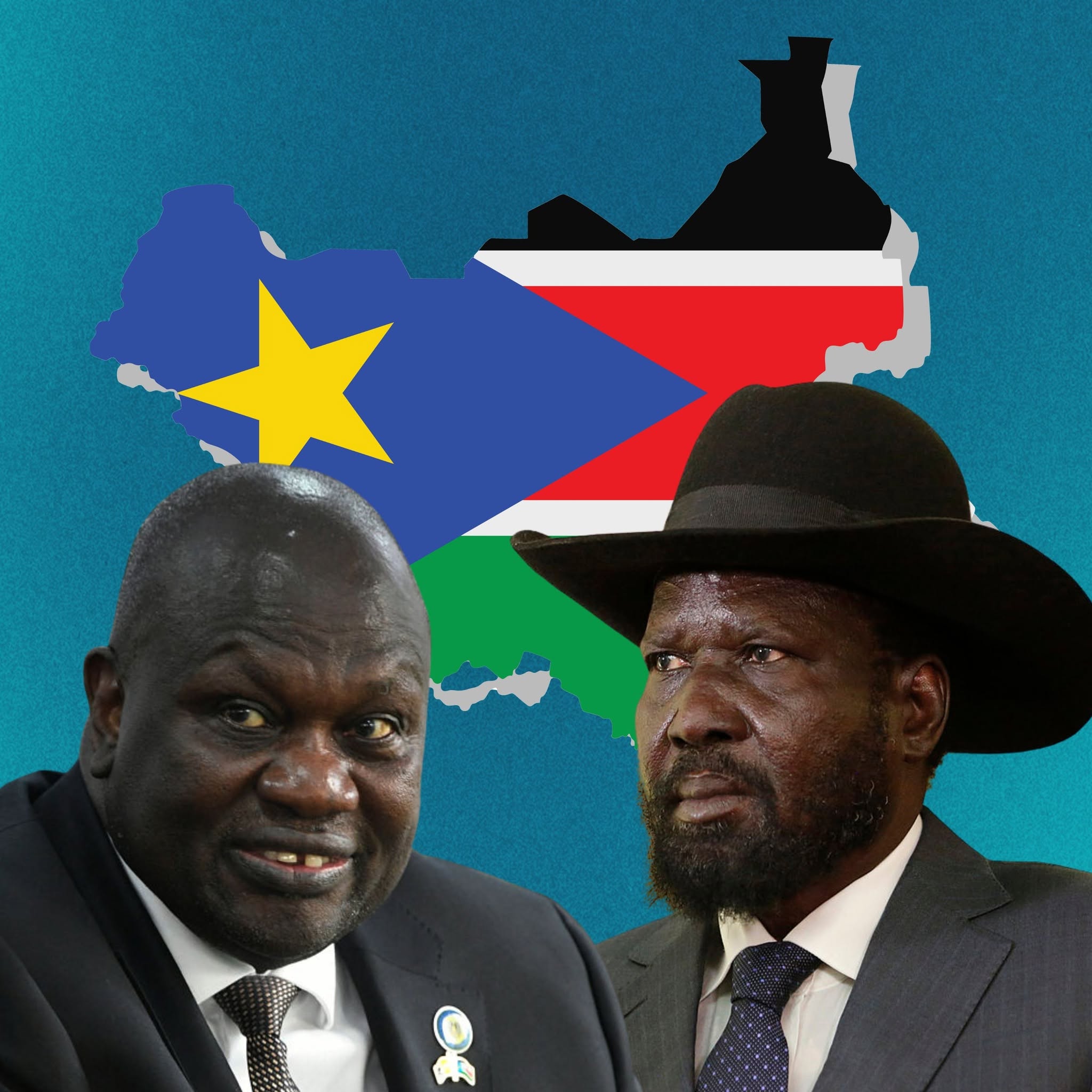
The detention and prosecution of suspended South Sudan First Vice President Dr Riek Machar arguably marked the collapse of the transitional government, sparking considerable political tensions in the country.


The Revitalised Transitional Government of National Unity (R-TGoNU) was established on February 22, 2020, under the 2018 Revitalised Agreement on the Resolution of the Conflict in the Republic of South Sudan (R-ARCSS), following the collapse of the previous transitional government in July 2016.
The charges proffered against Machar, a co-principal to the 2018 agreement and the leader of the main opposition Sudan People’s Liberation Movement/Army-in-Opposition (SPLM/A-IO), put the R-ARCSS on the precipice.
A situation culminating from episodes of systematic political brinkmanship manoeuvres between the SPLM-IO and the Sudan People’s Liberation Movement (SPLM), led by President Salva Kiir, over political hegemony.
The SPLM-IO suspended its participation in critical R-ARCSS security mechanisms, with a geospatial expansion of fighting between the SPLM/A-IO and allied militia groups against the South Sudan People’s Defence Forces (SSPDF) extending across Unity, Jonglei, Upper Nile, Western Bahr el Ghazal, Central and Western Equatoria states.
These political developments have extended the scrutiny from South Sudan’s transitional process to include the complex and fragile nature of power-sharing arrangements in post-conflict states across the continent.
Drawing comparative insights from the Government of National Unity in Kenya and Zimbabwe, such arrangements frequently entrench intense competition among political elites, leading to cycles of delayed transitions and fragile stability.
TRANSITIONAL GOVERNMENTS
Essentially, transitional governments are viewed as critical and temporary components in managing the civic succession from conflict, authoritarianism, or a political crisis towards a stable, all-inclusive governance system.
These transitional authorities achieve this by guaranteeing the participation of actors from significant groups in the political decision-making and reducing the danger of one group becoming dominant, particularly in the executive, legislature, and security sector, by dividing power among rival groups.
Transitional authorities manage complex processes, including implementing critical reforms, restructuring the security sector, negotiating new constitutions, disarmament and reintegration of combatants, establishing accountability mechanisms and structures, preparing for elections and improving service delivery.
VESSELS FOR POLITICAL MACHINATIONS
The inability of transitional authorities to resolve political power competition between actors, but attempts to contain it within its constraints to prevent escalation into destructive conflict, remains a critical vulnerability of transitional governments.
Although the parties are initially hesitant to abandon the process, actors view the transitional authorities as vessels to consolidate their positions at the political apex while weakening their competitors. With the capture, political brinkmanship and machinations by the main actors undermine the transitional process.
Critically, as buttressed by the developments in South Sudan, the inability of either party to gain a significant political advantage over the other elevates the risk of political violence.
Contrary to their desired designs to regulate power differentiation between political actors, incumbents appear to have a greater preponderance within transitional authorities. Essentially, they retain control of critical state machinery, which is deployed to maintain and acquire loyalty during the transitional period. These include dockets such as defence, foreign and internal affairs,finance and other critical ones that control political patronage networks. However, control of the security sector, as the Commander-in-Chief, or its equivalent, of the armed forces of the given country, offers the incumbent an unassailable advantage in the transitional period.
Cognizant of this incumbency differential power advantage, Kenyan President Mwai Kibaki was sworn in during the night following the disputed December 2007 elections. As international pressure for a negotiated political settlement to the crisis increased, Kibaki appointed seventeen cabinet ministers, including those for finance, defence, internal security, and justice, from his alliance.
In Zimbabwe, President Robert Mugabe replicated the same strategy, unilaterally making critical senior government appointments, including the Central Bank Governor, the police service commission, high and supreme court judges and 10 provincial governors, without consulting his power-sharing partner, the Movement for Democratic Change (MDC).
South Sudan best illustrates the advantage proffered to the incumbency in a highly militarised and marketised political environment, where governance institutions are deeply marred by tribalism, nepotism, corruption and mismanagement.
Underscoring the political fragility of transitional authorities in the country, the initial 2015 Resolution of the Conflict in South Sudan (ARCSS) collapsed in July 2016 because of its inability to moderate and manage political machinations. In 2018, after intense negotiations to revive the 2015 agreement, the warring parties signed the R-ARCSS.
To mitigate political domination by a single faction, the R-ARCSS, unlike its predecessor, broadened the participation of military and political actors, promoted critical regional states, Uganda and Sudan, as peace guarantors and laid emphasis on security sector reforms. Finally, the R-ARCSS determined a 10-state government structure, unlike the ARCSS, which did not prevent the government from unilaterally increasing the number of states to 32, exacerbating political tension.
CONTAINING THE OPPOSITION
Despite the foolproofing efforts of the R-ARCSS, the SPLM/A has consistently used its influence and control of the state security apparatus to hobble the political machinery of its political rivals. Kiir initiated the containment of Machar in Juba upon his return to form the R-GoNU, thereby alienating him from his political strongholds, forces and commanders.
The containment strategy gradually eroded Machar’s political stature and strength within the SPLM/A-IO, as accentuated by the multiple defections and splintering of the party. Ultimately, with Machar sufficiently weakened and isolated, the government detained and placed him under house arrest in March before he was charged with treason in September.
Incumbent access and control of the state machinery remain a potent tool to contain the opposition through co-option and coercion, and often takes either of two tactics.
MAKING OF JUNIOR PARTNERS
The first tactic is phycological and involves denying members of the opposition equal access to the trappings of power that are accorded to senior government officials. This creates an impression of opposition members as junior partners in the GNU. Machar’s outright denial of accessing these perks and privileges as part of the strategy to contain him in Juba highlights the most extreme implementation of the tactic. In Kenya, the incumbency under Kibaki employed the tactic sparingly, albeit frequently, to frustrate the Orange Democratic Movement (ODM) faction in the GNU from April 2008 to April 2013. It led to a highly publicised outburst, popularly referred to as the ‘nusu mkeka’ (half a carpet) speech, by Raila Odinga, the ODM leader and co-principal in the GNU. He castigated the incumbency for erecting an incomplete podium bereft of the requisite accessories and the absence of senior government officials during a public event he was officiating, wondering if the same would have occurred if Kibaki were present.
The second tactic is to avail the perks and privileges to compromise opposition members in the transitional government, leaving the incumbency as the dominant political entity. The Mugabe-led Zimbabwe African National Union – Patriotic Front (ZANU-PF) faction utilised the strategy to neutralise the MDC leader and co-principal in the unity government, Morgan Tsvangirai. The trappings of power mellowed and muted the once fiery Tsvangirai, as he increasingly became an inconsequential figure compared to members of his party, including the Minister of Finance, Tendai Biti and Education Minister, David Coltart. In 2012, ZANU-PF officials and intelligence agents allegedly used these privileges to orchestrate a trap to portray and humiliate Tsvangirai as an unreliable and self-indulgent person over his messy love life days before his wedding.
OPPOSITION SPLINTERING
Inherent in their nature as heterogeneous rather than monolithic entities, defined by differing interests, motivations, and ambitions, political parties are susceptible to factionalism within their ranks. For opposition parties participating in transitional authorities, the inability to manage these divergent views, expectations and ambitions exacerbates differences, leading to the parties splintering. With the unmanaged expectations, some actors seek to enhance their political stature and ambitions by manipulating their proximity to state power and resources, even as junior partners.
In South Sudan, Stephen Par Kuol, the Peacebuilding Minister, was controversially named the SPLM/A-IO interim Chairman, in what observers believe is part of an elaborate plan by the ruling SPLM/A to replace Machar.
In Kenya, the disintegration of the ODM began following differences between Raila and senior politicians over mistrust and perceptions of the party disregarding the vision of its core members. Notably, William Ruto, ODM’s second deputy, and Uhuru Kenyatta formed the Jubilee Alliance, which defeated Raila’s ODM in the 2013 general election, marking the end of the unity government.
Despite incumbent parties exhibiting similar internal dynamics, they appear to surmount these divisions by coalescing their shared concerns about regime survival, curtailing the influence and proximity of their partners in transitional authorities to the instruments of power. Instead, the factionalism in the incumbency manifests as competition between hardliners and moderates, whose contention is over the extent to which they should go to maintain power.
The risk to opposition parties in transitional authorities from political fragmentation and decline remains elevated and credible in the absence of systems that indisputably guarantee parity with the incumbent. Bereft of such assurances, the incumbency will almost certainly weaken the opposition through coercion, manipulation and co-option tactics.
D. W. Wagacha is a conflict and security research analyst with a focus on the Horn of Africa.