
Renewed tensions between Ethiopia and Eritrea are emerging as a key driver behind a fresh wave of refugees into Kenya.
While Kenya has long hosted refugees fleeing instability in Somalia and South Sudan, the latest data from the Economic Survey 2026 suggests a broader regional dynamic is now at play.


The total number of registered refugees and asylum seekers rose to 835,793 in 2025, reflecting a 1.4 per cent uptick linked in part to insecurity in the Horn of Africa. However, it is the drastic increase in refugee numbers that reflect a new wave in refugee traffic into the country.
Although Eritrean refugees still make up a smaller share compared to Somalis and South Sudanese, the survey indicates that their numbers are growing at a faster rate.
According to the report, Eritrea recorded the highest increase of refugee and asylum seekers of 99.8 per cent from 3,259 in 2024 to 7,839 in 2025.
This is corroborated by arrests of Eritreans who were in November last year found in the country illegally.
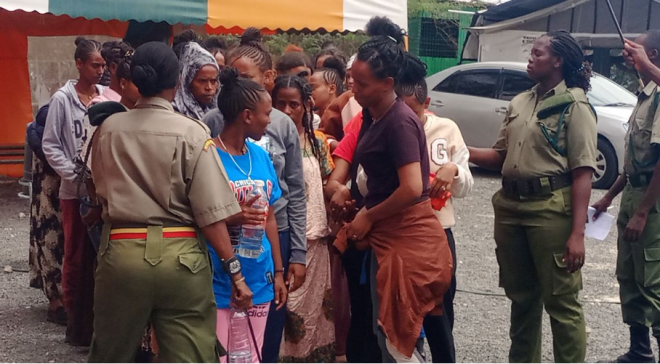
The 44 Eritreans were found in a home in Tongaren, Bungoma county. The Eritreans said they fled their country seeking safety, citing ongoing conflict back home. They sought to be granted asylum by the Kenyan government and/or accommodation in refugee camps until peace is restored in Eritrea.
In December, another group of 44 Eritreans and Ethiopians was arrested and detained at the Kibish border in Turkana county as they attempted to cross into Kenya.
Police said the Ethiopians and Eritreans had already crossed the border and were found sitting in a bushy area in Kaguta, reportedly waiting for traffickers to move them further into Kenya.
At the samae time, police said they had also intercepted 10 Somalis in Kanduyi, Bungoma county, who were being transported in a salon car from Uganda. The group reportedly told police they were headed to Eldoret and had come from a refugee camp in Uganda.
According to the 2026 survey, Somalia remained the leading country of origin with the highest number of refugees and asylum seekers accounting for 54.9 per cent of all registered refugees in Kenya followed by South Sudan at 24.3 per cent.
The sharp increase in Eritrea numbers add to the country’s already significant displaced population and reshaping migration trends across the Horn of Africa region.
This increase is closely tied to renewed uncertainty along the Ethiopia–Eritrea corridor, where fragile peace arrangements have come under strain following years of conflict and uneasy rapprochement.
The Migration Policy in an April 2025 paper headlined Severe Repression in Eritrea Has Prompted Decades of Exodus said Kenya is also a leading destination for Eritreans, who were historically feeling to Uganda and Sudan.
“Kenya is also a leading destination for Eritreans. However, rights groups point to increasing instability and risks there. Some report that Eritreans fleeing Sudan have had trouble registering as refugees in Kenya. Eritreans attempting to transit Kenya have also been detained and threatened with forced repatriation,” the report said.
Kenya, has historically hosted refugees from the Horn of Africa but is also now emerging as a key destination for Eritreans due to its relative stability and established refugee infrastructure.
Most new arrivals from the region are being absorbed into the Kakuma refugee camp in Turkana county, which recorded a 4.3 per cent increase in population to 310,755.
At the same time, a growing number are bypassing camps altogether. The survey shows that refugees living in urban areas such as Nairobi and Mombasa rose by 8.1 per cent to 118,313, underscoring a shift toward self-settlement and economic survival in cities.
This trend reflects both necessity and opportunity for refugees fleeing Ethiopia, Eritrea, South Sudan and Somalia. Urban centres offer access to informal employment, diaspora networks, and in some cases, pathways to resettlement or onward migration. However, it also places additional strain on already stretched urban services, including housing, healthcare, and education.
Meanwhile, the Dadaab refugee complex in Garissa county, historically the largest in the country, saw a 2.3 per cent decline to 406,725 residents, suggesting a gradual redistribution of refugee populations within Kenya.
The emerging pattern points to a more complex refugee landscape, where multiple regional crises intersect. The Ethiopia–Eritrea tensions may not yet rival the scale of displacement seen in Somalia or South Sudan, but they are contributing to a steady and potentially sustained flow of people seeking refuge.
The survey also found that the number of adults increased by 6.5 per cent, while children declined slightly by 3.3 per cent. The statistic means tmany of those arriving are young adults fleeing forced conscription, political repression, or economic hardship, some of the conditions often associated with both Eritrea and conflict-affected parts of Ethiopia.
This comes at a time Kenya is struggling with resources to handle the refugee numbers, amid global aid cuts. The country continues to balance its international obligations to protect refugees with domestic concerns over security, resource allocation, and social cohesion.