

The United States has issued visa bans to senior South Sudan leaders and their families for “for undermining or impeding a sustainable peace by engaging in corruption that fuels conflict”.
Through a statement on Wednesday, the State Department said the visa restrictions are specific to certain individuals and are not directed at the South Sudanese people or the government.
“The decision to pursue visa restrictions reflects the commitment of the United States to support South Sudanese aspirations to combat corruption, strengthen democracy and the rule of law, and live in peace,” the State Department said.
The US notes that nearly 13 years after declaring its independence, South Sudan remains a precariously fragile state beset by insecurity and poverty, a situation it blames on its leaders.
It accuses the national leadership of failure to exhibit the political will necessary to create the conditions for sustainable peace, democratic governance, the rule of law, and prosperity for the South Sudanese people.
“They have yet to demonstrate the political will to establish an environment conducive to free and fair elections taking place, as scheduled, in December 2024. Leaders of all parties share responsibility for this failure and for the elite capture of the nation’s riches, at the expense of the country’s peace and the general wellbeing,”it said.
The Biden administration further regrets that widespread corruption perpetuates the suffering and, directly and indirectly, supports conflict, thereby undermining the progress South Sudanese envisioned when they declared statehood.
“The United States remains committed to supporting the South Sudanese peoples’ long unmet expectations for peace, democracy, human rights, and a government that uses public resources for the common good”.
VIOLENCE TO HINDER ELECTIONS
Under Section 212(a)(3)C) of the Immigration and Nationality Act, the banned leaders and certain family will be generally ineligible for visas to the United States.
A report by the UN Commission on Human Rights in South Sudan on March 1 warned that mass violence and gross human rights violations have continued continue unabated ahead of landmark elections due in December 2024.
“Crucial steps in the 2018 peace agreement, including the the adoption of a permanent constitution, the unification of armed forces, and the establishment of transitional justice institutions, “remain outstanding or incomplete,” the report said.
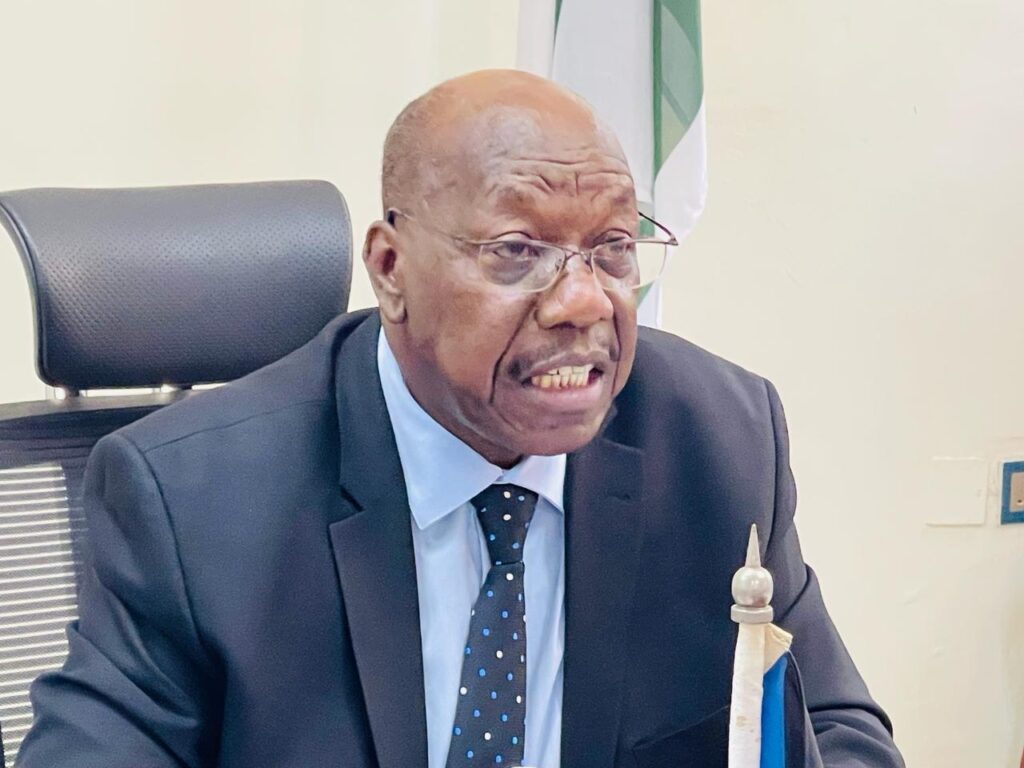
The Reconstituted Joint Monitoring and Evaluation Commission on the South Sudan peace process headed by Maj Gen (Rtd) Amb Charles Gituai shares these concerns.
As such, Amb Gituai has said there is need for dialogue between Parties to the Agreement to agree on the way forward, including the completion of the training and graduation of the Necessary Unified Force needed for providing election security.
“With 10 months to elections in South Sudan, it is concerning that key pre-requisite tasks have not been completed, no consensus among the parties on the elections,” Amb Gituai told the 1202nd meeting of the AU Peace and Security Council on February 27.
According to the UN report, patterns of violence, violations and entrenched impunity continue to blight the lives of an extremely vulnerable population,, warning that the already dire humanitarian situation in the country will only deteriorate.
This is the second time in just two weeks that the US is announcing visa restrictions.
On February 29, the State Department said it was imposing visa restrictions on “multiple South Sudanese nationals directly responsible for the kidnappings of South Sudanese activists abroad and for their involvement in transnational repression”.
The US said the restrictions under the “Khashoggi Ban” sought to address the ongoing threat the South Sudan Transitional Government poses to South Sudanese activists and dissidents wherever they are.
The Khashoggi Ban is a policy to bar foreign government agents engaged in extraterritorial counter-dissident activities from traveling to the United States.
“The United States remains concerned about the multiple credible reports of South Sudanese nationals who have been threatened, killed, or kidnapped in neighboring countries, as well as persons who have been forcibly returned to South Sudan to face politically motivated reprisals,” the State Department said.
KIDNAPPING OF BAK IN KENYA
In February 2023, South Sudanese activist Morris Mabior Awikjok Bak was abducted from his home in Nairobi, Kenya, according to a Human Rights Report.
Media outlets in Juba reported that Bak had been “extradited to Juba to face charges” for abusing government officials, citing sources in South Sudan’s National Security Service.
Bak had fled South Sudan for Kenya in April 2021.
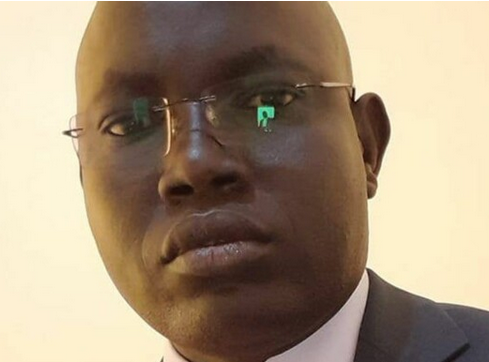
The Pan African Lawyers Union (PALU) filed a lawsuit against both Kenya and Sudan, accusing them of the purported arrest and detention of Bak at teh East African Court of Justice.
A year later on march 12, Nairobi denied involvement in the disappearance of Bak, saying he was not a person of interest to or under investigations by the Kenyan government.
“Records at the Anti-Terrorism Police Unit show that the subject has never been arrested or investigated by the police,” Vitali Kibet, Officer Commanding the Anti-Terrorism Police Unit in Nairobi, said.
Kenya is party to the 1951 UN and 1969 African refugee conventions, which provides that it protects the rights of refugees and asylum seekers.
According to HRW, the principle of non-refoulement is the cornerstone of both conventions, prohibiting the forced return of refugees to a country where they would face threats to their lives or freedom on account of their race, religion, nationality, membership of a particular social group, or political opinion.
Countries hosting refugees and asylum seekers are also responsible for providing protection and ensuring their physical security.