

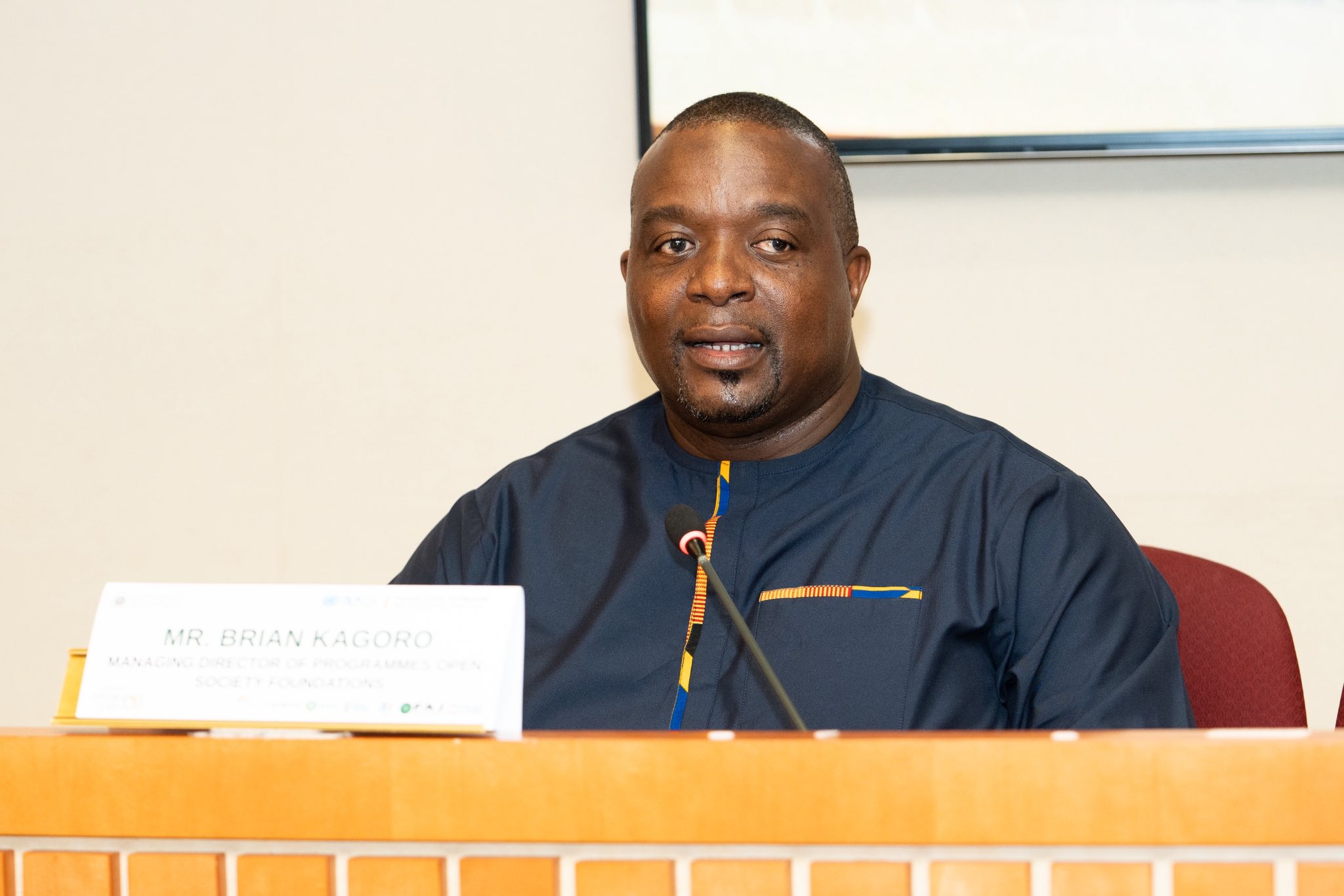
Civil society groups have protested and condemned the detention and deportation of Brian Kagoro, Africa director at Open Society Foundations.
The groups have separately condemned the move as part of a growing crackdown on civic space in Kenya.


Kagoro, a Zimbabwean constitutional lawyer, was intercepted at JKIA on Sunday and deported the following day over allegations that he funded the Gen Z demonstrations.
According to the Kenya Human Rights Commission, immigration officials detained Kagoro while officers from the National Intelligence Service interrogated him for about 14 hours. He was verbally declared persona non grata and removed from Kenya without due process, reportedly being sent back to South Africa.
KHRC warned that the incident signals an escalating crackdown on human rights defenders, describing the deportation as illegal, unjustified and politically motivated.
The organisation said the move amounts to an assault on the work of human rights defenders across the region and pointed to what it termed a wider trend of transnational repression in East Africa.
It noted that the CIVICUS Monitor has classified Kenya, Tanzania and Uganda as “repressed” in its recent reports, reflecting concerns over democratic backsliding and shrinking civic space.
KHRC said that if credible allegations existed against Kagoro, they should have been tested in court. Administrative expulsion without transparency, evidence or judicial scrutiny, it argued, undermines the rule of law and erodes confidence in public institutions.
The commission also linked the incident to what it described as a troubling pattern of targeting activists, citing the case of its senior legal adviser Martin Mavenjina, who it said was illegally renditioned to Uganda in July 2025. According to the group, the government has since refused to allow his return to Kenya, reinforcing fears of an entrenched policy against human rights defenders.
The International Commission of Jurists – Kenya also condemned the detention and expulsion, terming it a crackdown on civic space.
ICJ-Kenya chairperson Christine Alai also said Kagoro’s experience reflects a broader pattern of repression against independent civic actors, civil society organisations and the media. She described it as misuse of state security and immigration systems to clamp down on dissent through claims of foreign interference and subversion.
Alai argued that such actions contradict the Constitution, particularly provisions guaranteeing freedom of association, expression and access to information. She warned that the move risks silencing independent voices and further shrinking the already limited space for accountability and the defence of human rights.
Responding to allegations that Kagoro was involved in the Gen Z protests, ICJ-Kenya said his work focused on civic education and citizen empowerment. Consequently, helping citizens understand and claim their constitutional rights is a core element of democratic participation and should not be treated as a security threat, it said.
The Pan-African Lawyers Union, based in Arusha, Tanzania, also condemned the deportation, describing it as arbitrary and unlawful and a serious affront to due process and constitutionalism.
CEO Donald Deya said Kenya’s continental leadership should be matched by respect for constitutional guarantees at home. He noted that Kagoro has long contributed to Pan-Africanism, regional integration and governance reforms, including work linked to the transition from the OAU to the AU.
Deya added that the issue goes beyond one individual and raises broader questions about continental cooperation. Africans, he said, should be able to travel, speak and engage across borders without fear of arbitrary state action, warning that continental integration cannot coexist with selective exclusion.
Human rights groups described Kagoro as a respected Pan-Africanist and democracy advocate who has worked for decades to advance democratic freedoms and accountability across Africa and has engaged in Kenya in different capacities over the years.
As the country approaches the 2027 polls, KHRC warned the government appears to be deflecting responsibility for the Gen Z protests by attributing them to foreign influence.
Initially, the government blamed some local political leaders, including former Deputy President Rigathi Gachagua, as well as Russia and later the Ford Foundation. But the commission said this narrative overlooks the domestic grievances that drove thousands of young Kenyans to the streets, including economic hardship, governance concerns and frustrations over declining accountability.
The group further argued the government’s own actions suggest acknowledgment of state responsibility, citing the gazettement of a panel of experts on compensation for victims of demonstrations and public protests, which was later declared unconstitutional.
KHRC has called on the Kenya National Commission on Human Rights and the Commission on Administrative Justice to open independent investigations into the growing pattern of renditions targeting activists.
Kagoro’s case emerged at the same time as an alleged attempt to abduct and deport Tanzanian human rights defender Mshabaha Mshabaha Hamza on Sunday.
According to Amnesty International, officers from Lukenya and Kyumbi police posts, the DCI and other security agencies intervened and rescued Hamza after he resisted his attackers.
Court documents indicate Hamza was dumped at Lukenya stage, drugged and injured, before police intercepted the vehicle involved and arrested three suspects: Edward Mwangi Mwai, a Kenyan residing in South Africa; Nelson Wanjohi Kirika, the driver; and Aziz Hamad, a Tanzanian national.
Hamza is a Tanzanian human rights defender involved in regional advocacy on democracy, accountability and justice, particularly following the 2025 post-election violence in Tanzania.